Tyrrhenian Painted Frog

Tyrrhenian Painted Frog

Discoglossus sardus

LCLeast ConcernNTVUENCR
Daily sighting probability ~30% · Possible
at Corsica Regional Natural Park (Parc naturel régional de Corse)

In 3 days ~60% in a week ~90%

88 Verified sightings at Corsica Regional Natural Park (Parc naturel régional de Corse) From 2019 to 2026
88 In 1 park
April Best month
☀️🌙 Day & Night When it's spotted

About the Tyrrhenian Painted Frog

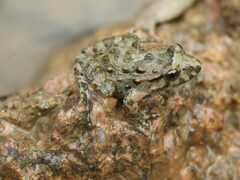
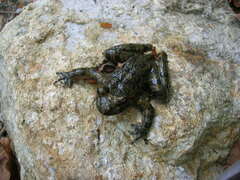
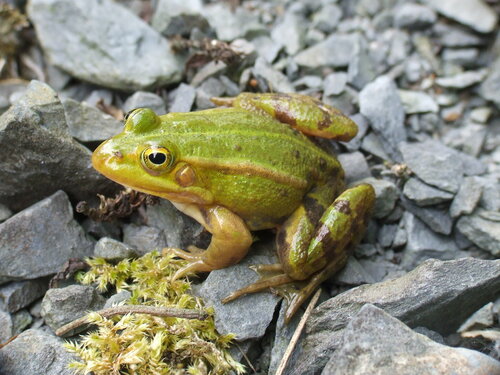
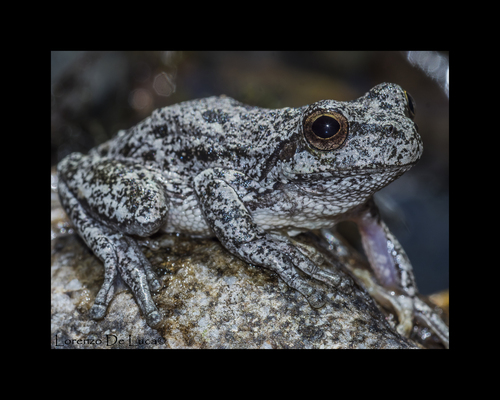
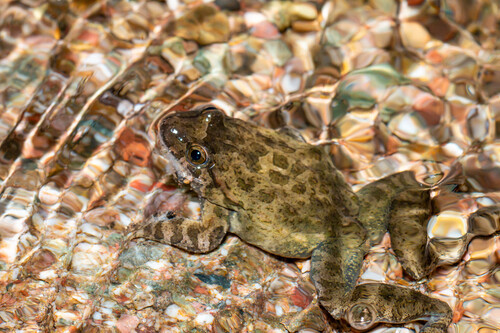
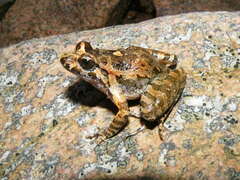
The Tyrrhenian painted frog (Discoglossus sardus) is a species of frog in the family Alytidae (formerly Discoglossidae). Endemic to the Tyrrhenian Sea basin, it is found in a handful of Western Mediterranean islands, namely Sardinia, Corsica, and the Tuscan Archipelago. A species with high stakes in terms of conservation, it is very similar to the related Corsican painted frog, Discoglossus montalentii, with whom it shares part of its habitat in Corsica.

Its natural habitats are temperate forests, rivers, intermittent rivers, freshwater marshes, and intermittent freshwater marshes. It can be found from sea level up to more than 1 700 meters of altitude. Able to endure slight water pollution, it is nevertheless threatened by habitat loss.

The species isn't immediately threatened and is classified as Least Concern (LC) on the IUCN Red List. It still fragile and subject to several threats justifying strong conservation efforts in both France and Italy, where it is fully protected and part of Annex 2 of the Habitats Directive. On top of habitat loss caused by urbanization, the species is sensible to chytridiomycosis, a skin disease threatening amphibian species across the globe.

Not well known from the wider public, the Tyrrhenian painted frog figures among the emblematic species of several protected area, including the Port-Cros National Park in France.
Wikipedia →

Global Distribution

Parks Where Found

# Park Country Daily sighting probability
1 Corsica Regional Natural Park (Parc naturel régional de Corse) 🇫🇷 France
~30%

More parks will be added in future updates.

Before you go

What are the chances of seeing a Tyrrhenian Painted Frog in Corsica Regional Natural Park (Parc naturel régional de Corse)?

Possible

About 30% of wildlife watchers report a Tyrrhenian Painted Frog sighting in Corsica Regional Natural Park (Parc naturel régional de Corse) on a given day, based on 88 verified sightings from GBIF citizen-science data from 2019 to 2026. It is the 6th most-seen of the 7 amphibians we can rate there. Over three days the chance rises to about 60%, and over a week to about 90%, if each day is a fresh chance.

When is the best time to see a Tyrrhenian Painted Frog in Corsica Regional Natural Park (Parc naturel régional de Corse)?

January and March–April

In those months about 40% of wildlife watchers report a Tyrrhenian Painted Frog in Corsica Regional Natural Park (Parc naturel régional de Corse) on a given day, against under 5% in February, the lowest month.

What time of day is best to see a Tyrrhenian Painted Frog?

Between 9 pm and midnight

Across all the parks we cover, that three-hour window holds the most Tyrrhenian Painted Frog sightings with a recorded time, and about half of them come between 6 pm and 6 am: it is seen both by day and at night.

Where else can you see a Tyrrhenian Painted Frog?

Only Corsica Regional Natural Park (Parc naturel régional de Corse), in our data

Corsica Regional Natural Park (Parc naturel régional de Corse) is the only park on Wallace's Line with enough records to rate Tyrrhenian Painted Frog sightings: about 30% of wildlife watchers there report one on a given day.

Where does the Tyrrhenian Painted Frog sighting chance come from?

GBIF citizen-science records

It is estimated from how often the Tyrrhenian Painted Frog is recorded against all the amphibians logged in Corsica Regional Natural Park (Parc naturel régional de Corse) (88 verified sightings from 2019 to 2026), calibrated against known sighting rates. Figures are rounded to the nearest 10% because citizen-science data supports honest approximations, not decimals, and months with records from fewer than five people show "—". How it works.

← Back to Corsica Regional Natural Park (Parc naturel régional de Corse)