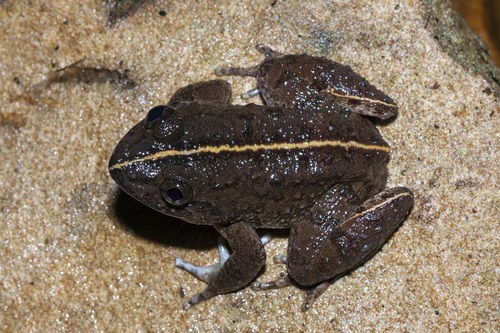
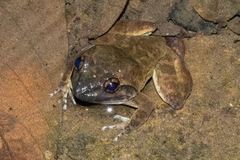
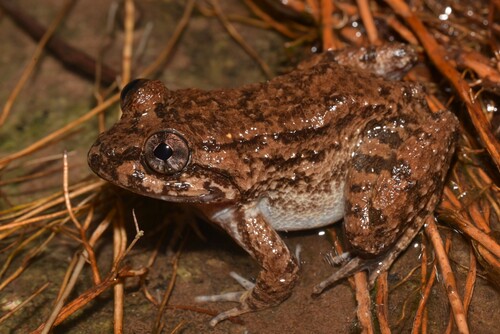
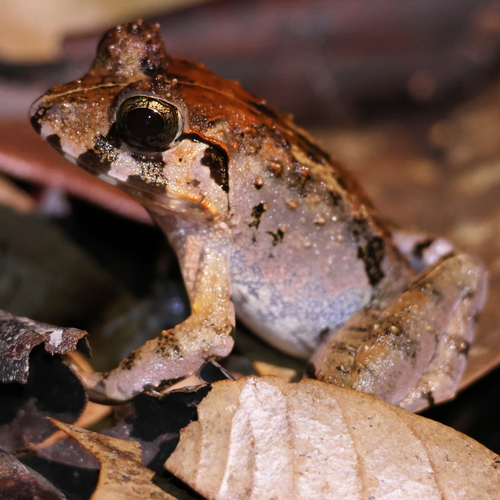
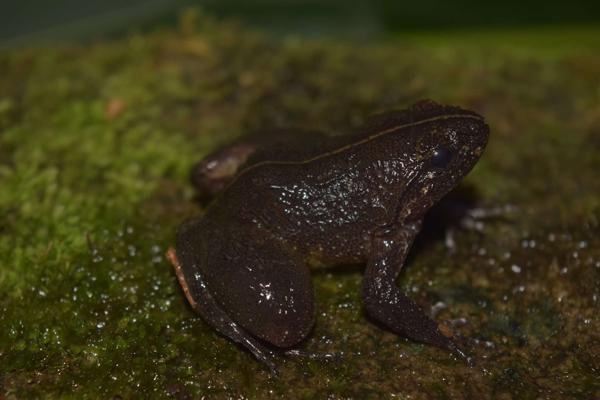
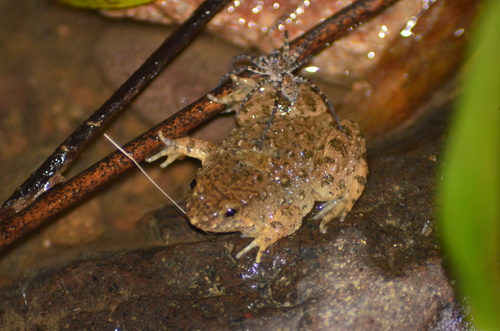
Limnonectes is a genus of fork-tongued frogs of 91 known species, but new ones are still being described occasionally. They are collectively known as fanged frogs because they tend to have unusually large teeth, which are small or absent in other frogs.
These frogs are found throughout East and Southeast Asia, most commonly near forest streams. Multiple species of Limnonectes may occupy the same area in harmony. Large-bodied species cluster around fast rivers, while smaller ones live among leaf-litter or on stream banks. The Indonesian island of Sulawesi is home to at least 15 species of this frog, only four of which have been formally described.
Tadpoles of this genus have adapted to a variety of conditions. Most species (e.g. Blyth's river frog L. blythii or the fanged river frog L. macrodon) develop normally, with free-swimming tadpoles that eat food. The tadpoles of the corrugated frog (L. laticeps) are free-swimming but endotrophic, meaning they do not eat but live on stored yolk until metamorphosis into frogs. Before, L. limborgi was assumed to have direct development (eggs hatching as tiny, full-formed frogs), but more careful observations have shown...