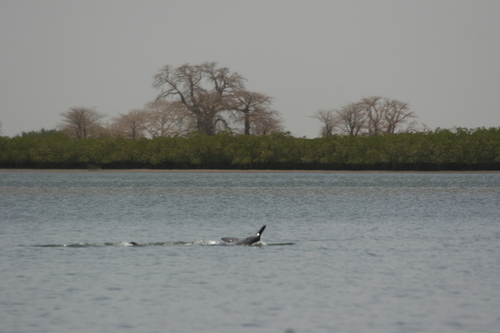
The Atlantic humpback dolphin (Sousa teuszii) is a species of humpback dolphin that is found in coastal areas of West Africa. It is regarded as critically endangered by the IUCN. Apart from its geographical range, it can be distinguishable from the Indo-Pacific humpback because of their distinct skin coloration and other morphological characteristics. Atlantic humpbacks have a gray or white color, unlike the Indo-Pacific humpbacks which have pink mottling. Males, in particular, can have distinct humps under their dorsal fins. They can also be distinguished by a robust body with a well-defined rostrum. They are typically slate gray on the back and sides, fading to light gray ventrally. The dorsal fin is small, slightly falcate, and triangular, and sits on a distinctive and well developed dorsal hump.
Atlantic humpbacks can also be distinguishable from the other species (S. plumbea, S. chinensis, S. sahulensis sp. nov., etc.) because of a significantly lower number of teeth. On average, they have about 30 teeth per row versus other species having around 33–37. To complement this, they typically have a shorter and wider skull than the other species.
At birth, this species...