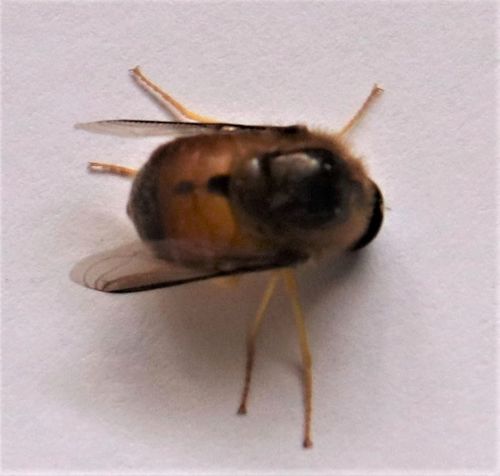
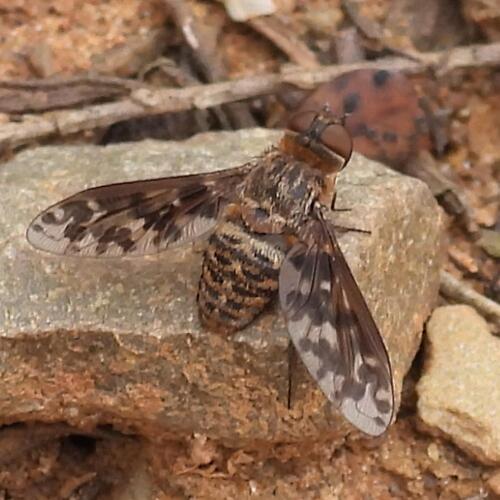
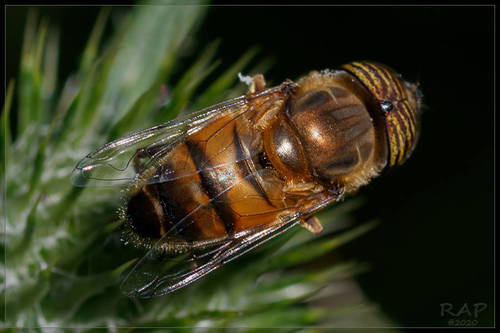
Chrysomya putoria

Chrysomya putoria

Chrysomya putoria

Daily sighting probability ~10% · With luck
at Addo Elephant National Park

In 3 days ~20% in a week ~30%

9 Verified sightings at Addo Elephant National Park From 2019 to 2026
9 In 1 park
February Best month
🌅 Crepuscular When it's spotted

About the Chrysomya putoria

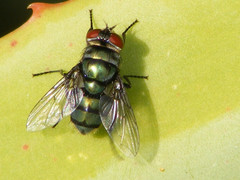
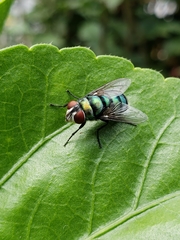
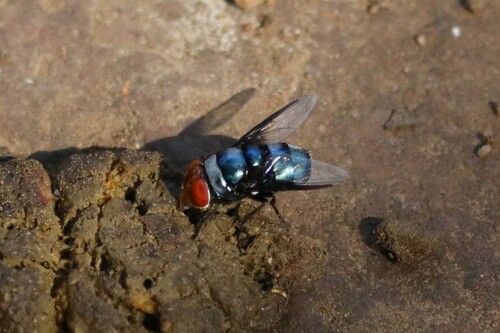
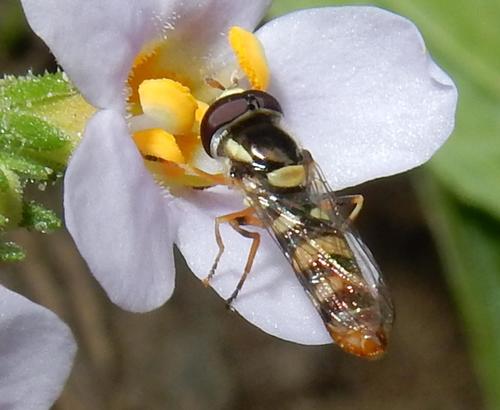
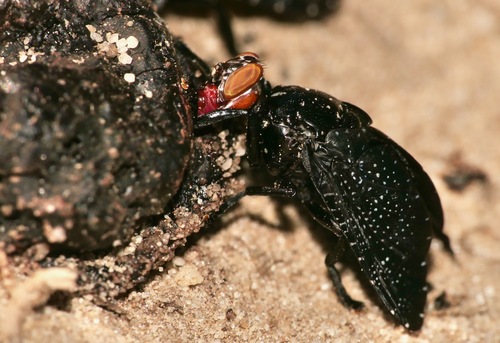
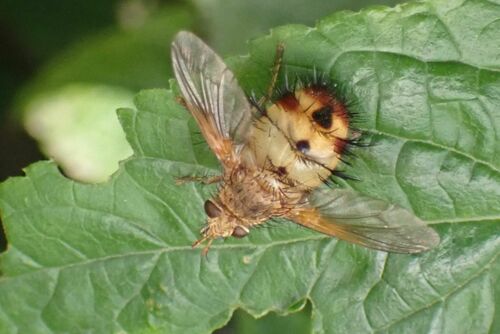
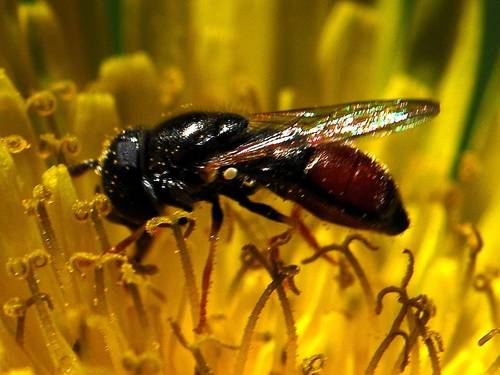
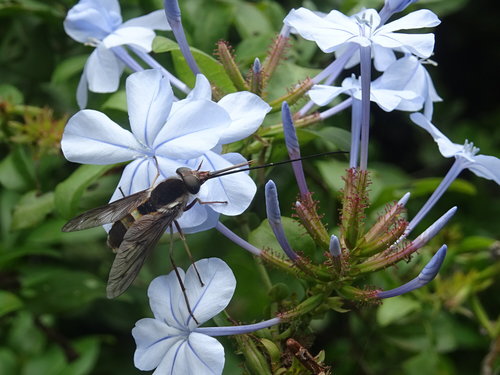
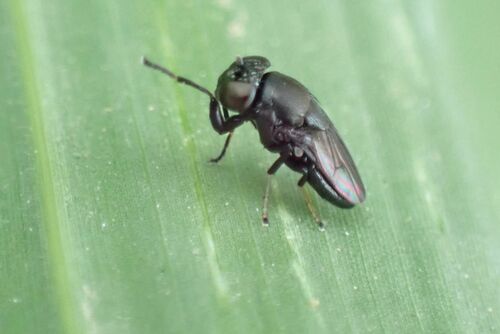
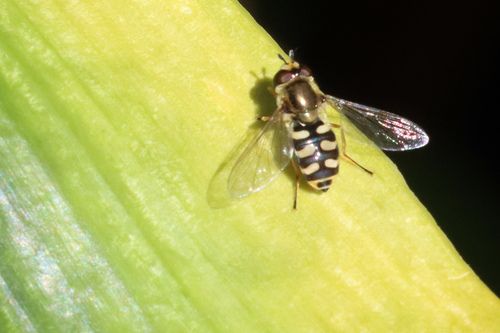
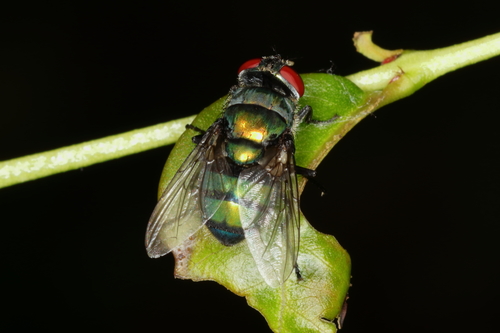
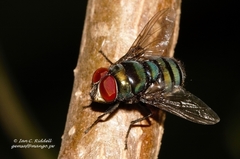
Chrysomya putoria, also known as the tropical African latrine blowfly, is a fly species belonging to the blowfly family, Calliphoridae. C. putoria is native to Africa and has recently spread to the Americas. These flies pose significant health risks, especially due to their close association with human settlements. Adult flies can carry pathogens, while larvae may cause myiasis by growing and feeding on the flesh of domestic animals and humans. Other myiasis-causing flies in the same genus are C. bezziana and C. megacephala. C. putoria and other flies that feed on decomposing tissue are used as important tools in forensic entomology to establish the post-mortem interval, or the time elapsed since death.

The adult body is 8–10 mm (0.31–0.39 in) long, slightly larger than the average housefly, and metallic green, with an occasional tinge of metallic dark blue or bronze. The face of C. putoria is generally dark in color. Their wings are translucent, and the posterior edge of the abdomen is striped with black bands. While both sexes have black frons, the female has a much broader frons located between its widely-spaced eyes. This species has easily visible dusting on the... Wikipedia →
Global Distribution

Parks Where Found

# Park Country Daily sighting probability
1 Addo Elephant National Park 🇿🇦 South Africa
~10%

More parks will be added in future updates.

Before you go

What are the chances of seeing a Chrysomya putoria in Addo Elephant National Park?

With luck

About 10% of wildlife watchers report a Chrysomya putoria sighting in Addo Elephant National Park on a given day, based on 9 verified sightings from GBIF citizen-science data from 2019 to 2026. It is the 114th most-seen of the 198 insects we can rate there. Over three days the chance rises to about 20%, and over a week to about 30%, if each day is a fresh chance.

When is the best time to see a Chrysomya putoria in Addo Elephant National Park?

January to April

In those months about 10% of wildlife watchers report a Chrysomya putoria in Addo Elephant National Park on a given day, against under 5% in May to December, the lowest months.

What time of day is best to see a Chrysomya putoria?

Between 4 and 7 pm

Across all the parks we cover, that three-hour window holds the most Chrysomya putoria sightings with a recorded time, and about 6 in 10 of them come between 6 pm and 6 am: it is most active around dawn and dusk.

Where else can you see a Chrysomya putoria?

Only Addo Elephant National Park, in our data

Addo Elephant National Park is the only park on Wallace's Line with enough records to rate Chrysomya putoria sightings: about 10% of wildlife watchers there report one on a given day.

Where does the Chrysomya putoria sighting chance come from?

GBIF citizen-science records

It is estimated from how often the Chrysomya putoria is recorded against all the insects logged in Addo Elephant National Park (9 verified sightings from 2019 to 2026), calibrated against known sighting rates. Figures are rounded to the nearest 10% because citizen-science data supports honest approximations, not decimals, and months with records from fewer than five people show "—". How it works.

← Back to Addo Elephant National Park