Bordered Carl

Bordered Carl

Coptotriche marginea

Daily sighting probability ~10% · With luck
at Bavarian Forest National Park

In 3 days ~20% in a week ~30%

9 Verified sightings at Bavarian Forest National Park From 2019 to 2026
9 In 1 park
August Best month
☀️🌙 Day & Night When it's spotted

About the Bordered Carl

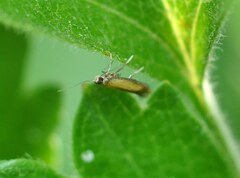
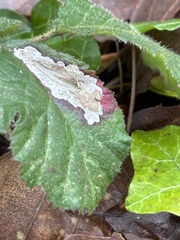
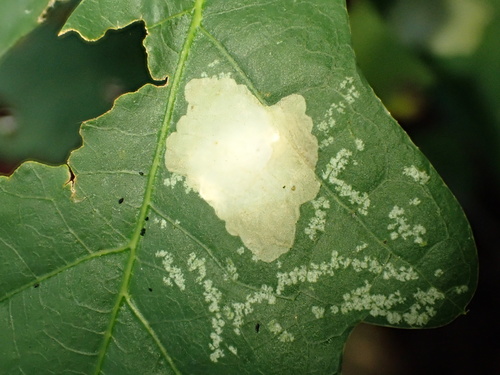
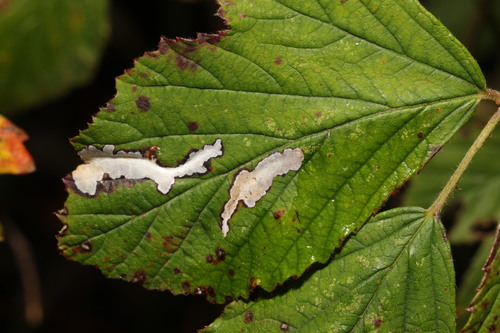
Coptotriche marginea is a moth of the family Tischeriidae, found in most of Europe. It was named by the English botanist, carcinologist and entomologist, Adrian Hardy Haworth in 1828, from a specimen found in England. The larvae mine the leaves of brambles (Rubus) species.

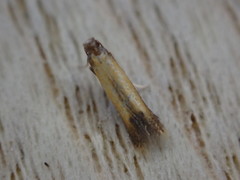
The wingspan is 7–8 mm. Adults are brownish with a slight metallic sheen. The forewings are ochreous-yellow.The costa anteriorly narrowly, posteriorly broadly suffused with dark purplish-fuscous. The termen suffused with dark purplish-fuscous with a dark fuscous tornal dot. The hindwings are rather dark grey.

They are on wing from May to June and again in August. Ovum Eggs are laid on the upper surface on a bramble leaf, especially Rubus fruticosus. Larvae The larvae feed on European dewberry (Rubus caesius), Rubus canescens, Armenian blackberry (Rubus armeniacus), blackberry (Rubus fruticosus), Rubus grabowskii, Rubus hypargyrus, raspberry (Rubus idaeus), evergreen blackberry (Rubus laciniatus), Rubus macrophyllus, Rubus nemorosus and stone bramble (Rubus saxatilis). They mine the leaves of their host plant. Occupied mines can be found in June and again from September to March.

Pupa Pupation... Wikipedia →
Global Distribution

Parks Where Found

# Park Country Daily sighting probability
1 Bavarian Forest National Park 🇩🇪 Germany
~10%

More parks will be added in future updates.

Cities Where Found

# City Country Daily sighting probability
1 Liverpool 🇬🇧 United Kingdom
~10%
2 London 🇬🇧 United Kingdom
<5%

Before you go

What are the chances of seeing a Bordered Carl in Bavarian Forest National Park?

With luck

About 10% of wildlife watchers report a Bordered Carl sighting in Bavarian Forest National Park on a given day, based on 9 verified sightings from GBIF citizen-science data from 2019 to 2026. It is the 585th most-seen of the 1115 insects we can rate there. Over three days the chance rises to about 20%, and over a week to about 30%, if each day is a fresh chance.

When is the best time to see a Bordered Carl in Bavarian Forest National Park?

July and August

In those months about 10% of wildlife watchers report a Bordered Carl in Bavarian Forest National Park on a given day, against under 5% in September to June, the lowest months.

What time of day is best to see a Bordered Carl?

Between 10 pm and 1 am

Across all the parks we cover, that three-hour window holds the most Bordered Carl sightings with a recorded time, and about 7 in 10 of them come between 6 pm and 6 am: it is seen both by day and at night.

Where else can you see a Bordered Carl?

Only Bavarian Forest National Park, in our data

Bavarian Forest National Park is the only park on Wallace's Line with enough records to rate Bordered Carl sightings: about 10% of wildlife watchers there report one on a given day.

Where does the Bordered Carl sighting chance come from?

GBIF citizen-science records

It is estimated from how often the Bordered Carl is recorded against all the insects logged in Bavarian Forest National Park (9 verified sightings from 2019 to 2026), calibrated against known sighting rates. Figures are rounded to the nearest 10% because citizen-science data supports honest approximations, not decimals, and months with records from fewer than five people show "—". How it works.

← Back to Bavarian Forest National Park