About the Deer Ked
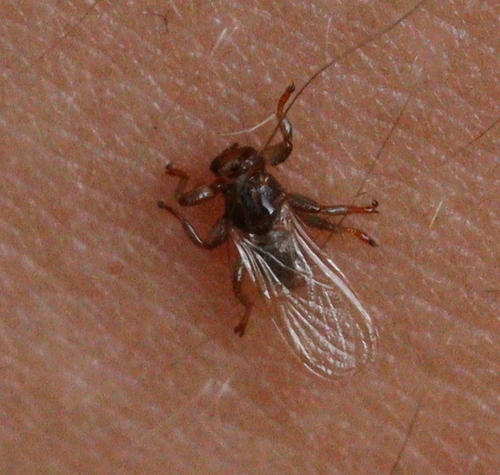
Lipoptena cervi, the deer ked or deer fly, is a species of biting fly in the family of louse flies, Hippoboscidae. These flies are commonly encountered in temperate areas of Europe, Siberia, and northern China. They have been introduced to North America. They are parasites of elk, deer, and other deer family members, burrowing through the fur and sucking the blood of the host animals. Adults are only 5–7 mm (0.20–0.28 in) in length and brownish in colour. Their bodies are flat and elastic, making their removal difficult. L. cervi is a poor flier and can only fly for short distances. Once the insect reaches its target, it sheds its wings and starts burrowing through the fur.
Although their life cycle depends on deer, they may on rare occasions bite humans, producing responses ranging from unnoticeable to highly allergic. Initially, the bite may be barely noticeable and leaves little or no trace. Within 3 days, the site may develop into a hard, reddened welt. The accompanying itch is intense and typically lasts 14 to 20 days. Occasionally, an itch papule may persist for up to a year. The main annoyance in humans is the inconvenience and unpleasantness of removing keds from... Wikipedia →