About the Ear Moth
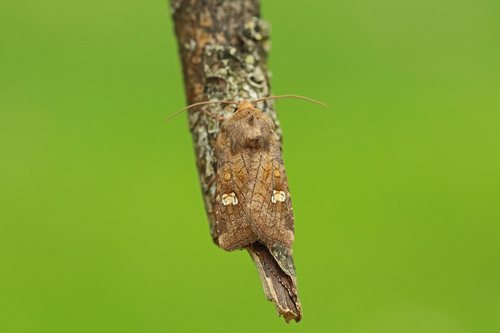
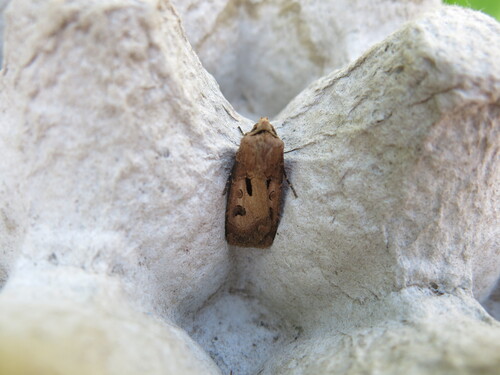
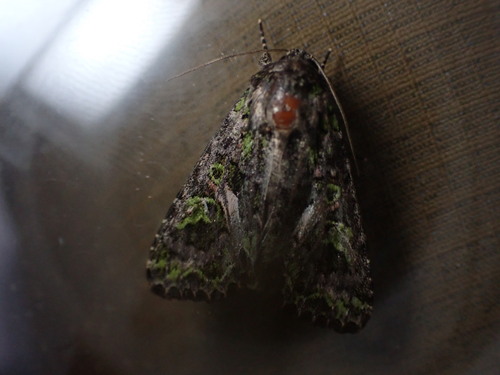
Amphipoea oculea, the ear moth, is a moth of the family Noctuidae. It was first described by Carl Linnaeus in 1761 and it is found in most of the Palearctic realm. It is widespread and common in southern England, and also occurs in Ireland and throughout continental Europe, with the exception of Albania, Greece and Turkey. It is one of four species that are difficult to tell apart, requiring the examination of the genitalia. The larvae feed in the stems and roots of low plants and grasses.
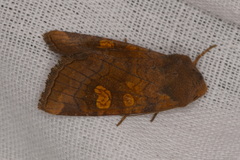
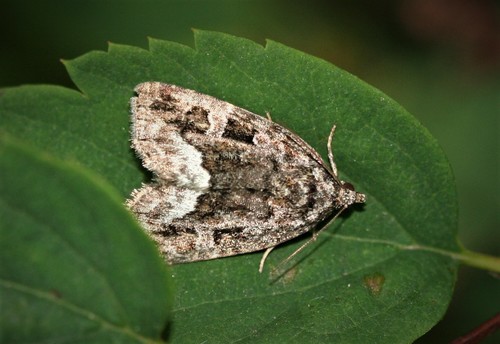
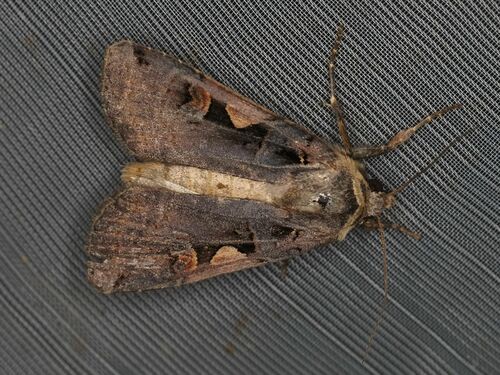
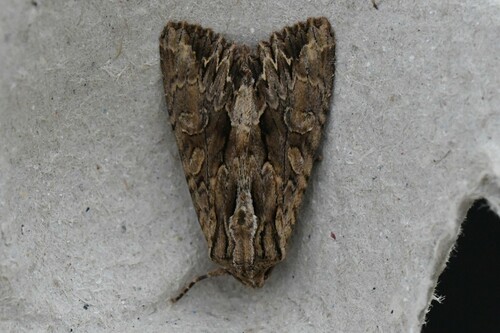
The wingspan is 29–34 mm. Forewing pale or dark ferruginous brown; the veins brown; inner and outer lines double, brown, wide apart; the inner curved outwards between, and toothed inwards on, the veins; the outer with the inner arm thin, lunulate-dentate, the outer thick, continuous and parallel; a thick dark median shade running between the stigmata; submarginal line indistinct, waved, angled on vein 7, above which it is preceded by a dark costal patch; orbicular stigma rounded, orange, with a brown ring; reniform white, with the veins across it brown and containing on the discocellular a brown-outlined lunule, of which the centre is yellowish; the colour with brown outline; hindwing... Wikipedia →