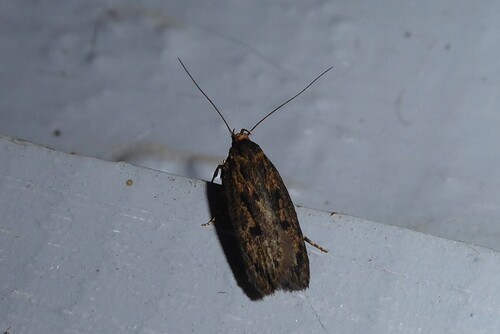
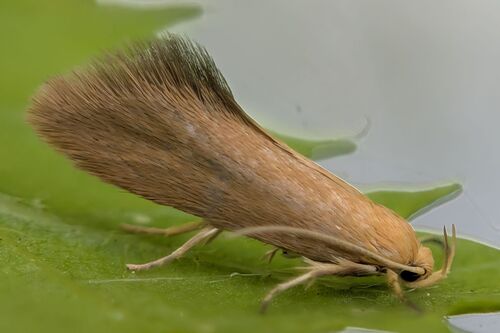
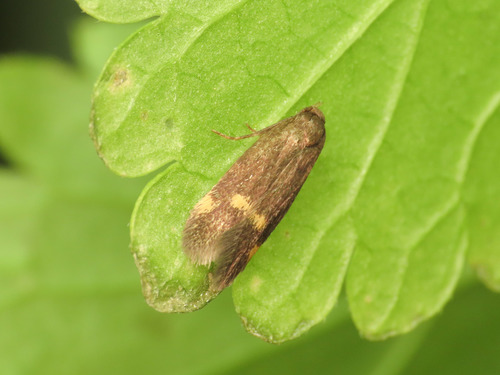

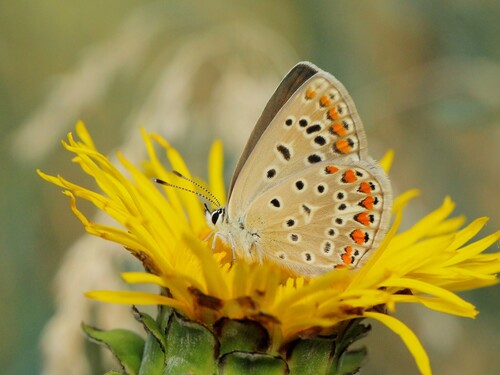

Gold-Base Tubic

Gold-Base Tubic

Oecophora bractella

Daily sighting probability ~10% · With luck
at Bavarian Forest National Park

In 3 days ~20% in a week ~40%

12 Verified sightings at Bavarian Forest National Park From 2019 to 2026
12 In 1 park
June Best month
☀️🌙 Day & Night When it's spotted

About the Gold-Base Tubic

Oecophora bractella is a species of gelechioid moth, native to Europe but introduced to western North America. It belongs to the subfamily Oecophorinae of the concealer moth family (Oecophoridae). As the type species of its genus Oecophora, its affiliations and phylogeny (which are not completely known however) determine the delimitation of that family and subfamily.

In its native Europe, it inhabits woodland. The species is not often found in the outlying regions; in the UK for example it has only been recorded from a few patches of old-growth forest in the English Midlands (e.g. Wyre Forest), southern England, and southern Wales (e.g. in the Wye valley).

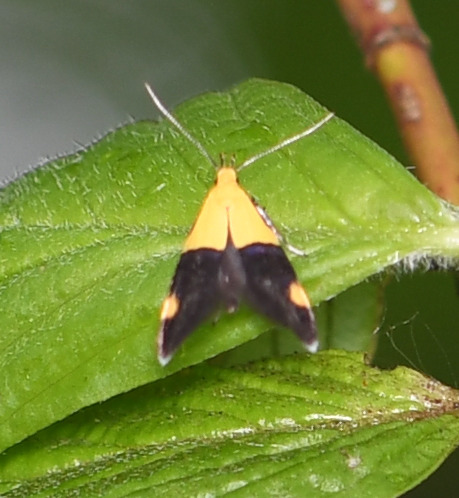
The adults' wingspan is 12–16 mm. Conspicuously bicolored black and yellow, they also have some iridescent blue markings on the forewings. The adult moths fly from May to July depending on the location; they are semi-diurnal and can be encountered during the day, but usually are active at dawn. The caterpillars feed on dead and decaying wood, and possibly also on fungi.

This species has suffered from considerable confusion regarding its scientific name. It was first described... Wikipedia →

Global Distribution

Parks Where Found

# Park Country Daily sighting probability
1 Bavarian Forest National Park 🇩🇪 Germany
~10%

More parks will be added in future updates.

Cities Where Found

# City Country Daily sighting probability
1 Vancouver 🇨🇦 Canada
<5%
2 Seattle 🇺🇸 United States
<5%

Before you go

What are the chances of seeing a Gold-Base Tubic in Bavarian Forest National Park?

With luck

About 10% of wildlife watchers report a Gold-Base Tubic sighting in Bavarian Forest National Park on a given day, based on 12 verified sightings from GBIF citizen-science data from 2019 to 2026. It is the 436th most-seen of the 1115 insects we can rate there. Over three days the chance rises to about 20%, and over a week to about 40%, if each day is a fresh chance.

When is the best time to see a Gold-Base Tubic in Bavarian Forest National Park?

May–June and August

In those months about 10% of wildlife watchers report a Gold-Base Tubic in Bavarian Forest National Park on a given day, against under 5% in July and September–April, the lowest months.

What time of day is best to see a Gold-Base Tubic?

Between 7 and 10 am

Across all the parks we cover, that three-hour window holds the most Gold-Base Tubic sightings with a recorded time, and about 7 in 10 of them come between 6 am and 6 pm: it is seen both by day and at night.

Where else can you see a Gold-Base Tubic?

Only Bavarian Forest National Park, in our data

Bavarian Forest National Park is the only park on Wallace's Line with enough records to rate Gold-Base Tubic sightings: about 10% of wildlife watchers there report one on a given day.

Which relatives of the Gold-Base Tubic live in Bavarian Forest National Park?

Same family: Oecophoridae

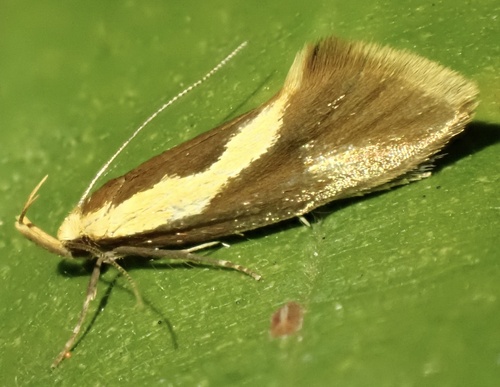
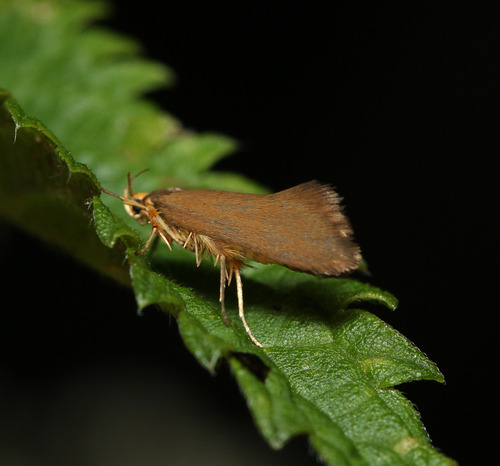
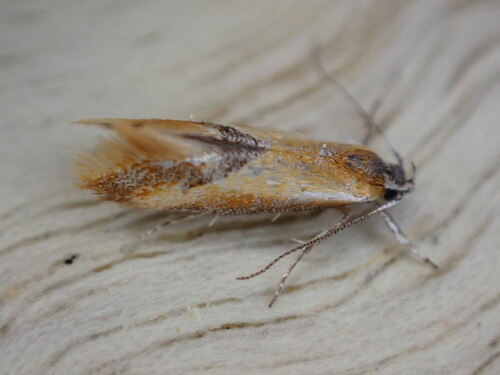
The closest relatives of the Gold-Base Tubic that you can see in Bavarian Forest National Park (family Oecophoridae, Concealer Moths) are Forked Tabby (about 10%), Golden-Brown Tubic (about 10%) and Lesser Tawny Crescent (about 10%), with each one's daily chance of a sighting.

Where does the Gold-Base Tubic sighting chance come from?

GBIF citizen-science records

It is estimated from how often the Gold-Base Tubic is recorded against all the insects logged in Bavarian Forest National Park (12 verified sightings from 2019 to 2026), calibrated against known sighting rates. Figures are rounded to the nearest 10% because citizen-science data supports honest approximations, not decimals, and months with records from fewer than five people show "—". How it works.

← Back to Bavarian Forest National Park