Rivulet

Rivulet

Perizoma affinitata

Daily sighting probability ~10% · With luck
at Bavarian Forest National Park

In 3 days ~10% in a week ~30%

7 Verified sightings at Bavarian Forest National Park From 2019 to 2026
7 In 1 park
May Best month
☀️ Diurnal When it's spotted

About the Rivulet

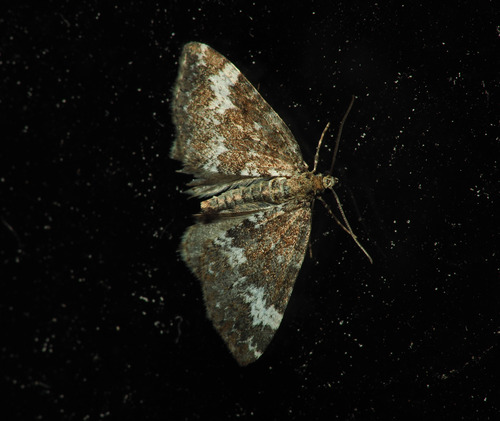
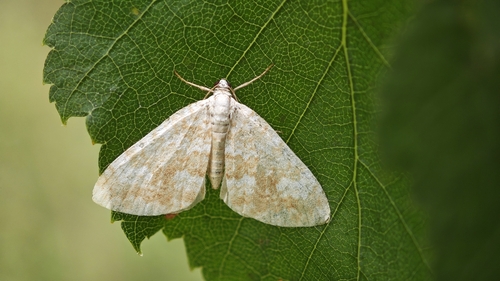
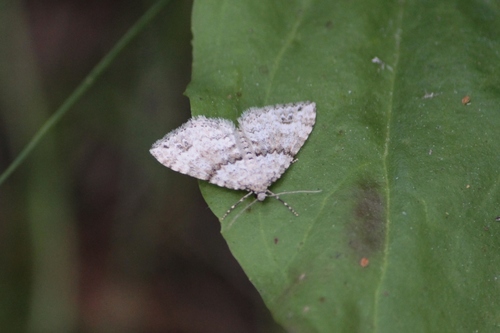
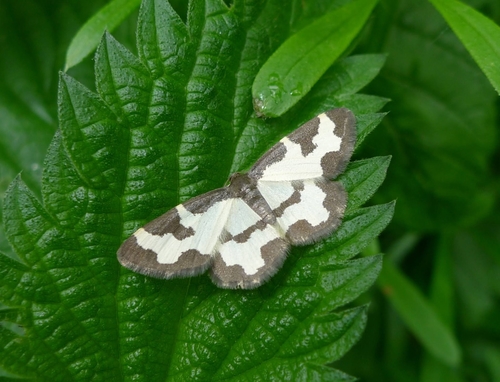
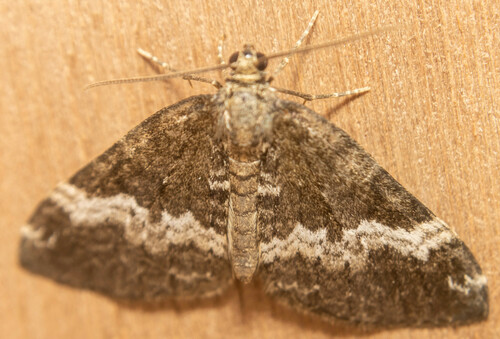
Perizoma affinitata, the rivulet, is a species of moth of the family Geometridae. It was first described by James Francis Stephens in 1831 and it is found in most of Europe. Its wingspan is 24–30 mm and is characterized by the narrow white postmedian band of the forewing and especially by the dark hindwing, with only a narrow, divided white or whitish band. Northern and western Germany, and rather less extreme from England and according to Otto Staudinger it is distributed in central and northern Europe and Romania. - rivinata Fisch.-Rossl. has the white on the forewing much extended and the hindwing broadly or almost wholly white. It belongs chiefly to northern or mountain districts, but sometimes occurs as an aberration with the type England, N. Norway, the Alps, Carpathians. - magistraria Trti. and Verity is larger, the forewing grey, not brown, but darker than in hydrata and with broader white band; hindwing greyish with double whitish band; underside like that of rivinata. Terme di Valdieri, Maritime Alps.

The larva is rather powerful, pale pink with a dark head capsule and the dorsal side of the first body joint. The species is found in forest edges, hedges and on flower meadows. The larvae feed on Silene species, including Silene dioica. The larvae can be found from June to September. The species overwinters as a pupa. Wikipedia →
Global Distribution

Parks Where Found

# Park Country Daily sighting probability
1 Bavarian Forest National Park 🇩🇪 Germany
~10%

More parks will be added in future updates.

Before you go

What are the chances of seeing a Rivulet in Bavarian Forest National Park?

With luck

About 10% of wildlife watchers report a Rivulet sighting in Bavarian Forest National Park on a given day, based on 7 verified sightings from GBIF citizen-science data from 2019 to 2026. It is the 727th most-seen of the 1115 insects we can rate there. Over three days the chance rises to about 10%, and over a week to about 30%, if each day is a fresh chance.

When is the best time to see a Rivulet in Bavarian Forest National Park?

April and May

In those months about 10% of wildlife watchers report a Rivulet in Bavarian Forest National Park on a given day, against under 5% in June to March, the lowest months.

What time of day is best to see a Rivulet?

Between 8 and 11 am

Across all the parks we cover, that three-hour window holds the most Rivulet sightings with a recorded time, and about 7 in 10 of them come between 6 am and 6 pm: it is a daytime animal.

Where else can you see a Rivulet?

Only Bavarian Forest National Park, in our data

Bavarian Forest National Park is the only park on Wallace's Line with enough records to rate Rivulet sightings: about 10% of wildlife watchers there report one on a given day.

Which relatives of the Rivulet live in Bavarian Forest National Park?

Same genus: Perizoma

The closest relatives of the Rivulet that you can see in Bavarian Forest National Park (genus Perizoma, Rivulets) are Small Rivulet (about 10%) and Sandy Carpet (about 10%), with each one's daily chance of a sighting.

Where does the Rivulet sighting chance come from?

GBIF citizen-science records

It is estimated from how often the Rivulet is recorded against all the insects logged in Bavarian Forest National Park (7 verified sightings from 2019 to 2026), calibrated against known sighting rates. Figures are rounded to the nearest 10% because citizen-science data supports honest approximations, not decimals, and months with records from fewer than five people show "—". How it works.

← Back to Bavarian Forest National Park