

Southern Wood Ant

Southern Wood Ant

Formica rufa

Daily sighting probability <5% · Rare
at Bavarian Forest National Park

In 3 days ~10% in a week ~30%

6 Verified sightings at Bavarian Forest National Park From 2019 to 2026
6 In 1 park
March Best month
☀️ Diurnal When it's spotted

About the Southern Wood Ant

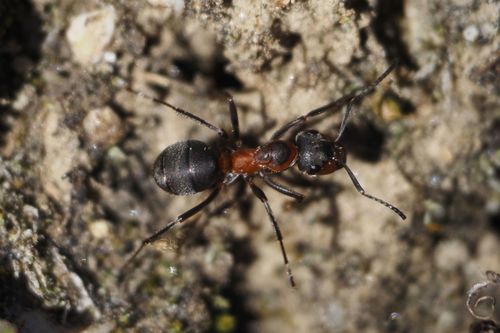
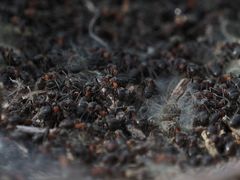
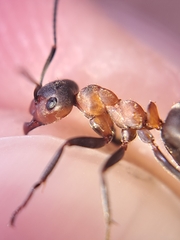
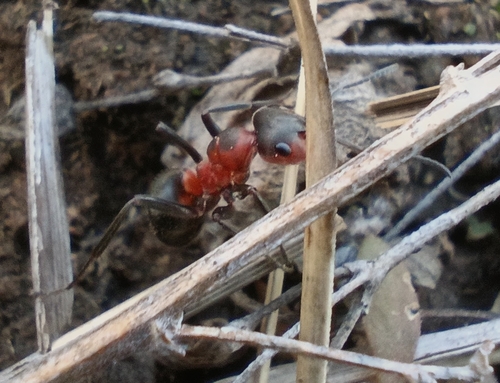
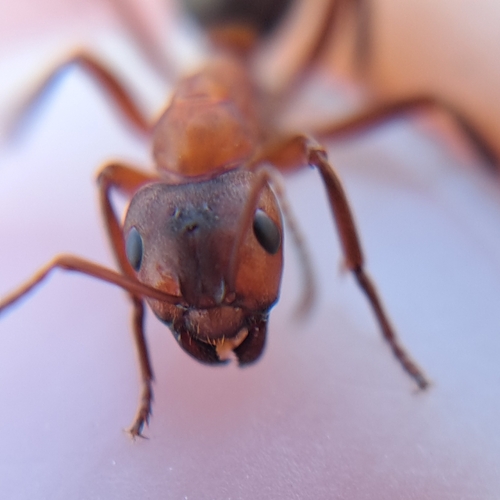
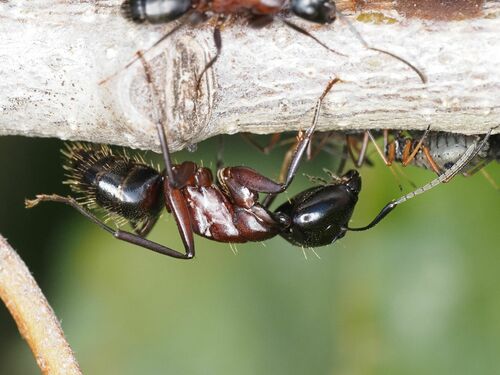
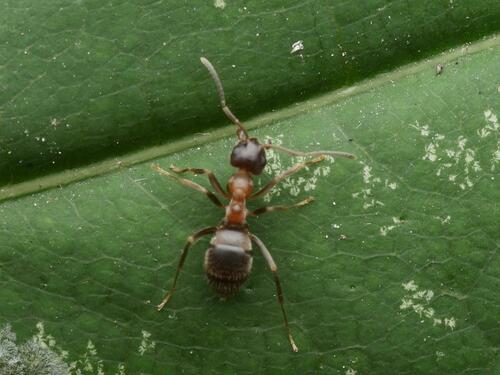
Formica rufa, also known as the red wood ant, southern wood ant, or horse ant, is a boreal member of the Formica rufa group of ants, and is the type species for that group, being described by Linnaeus. It is native to Eurasia, with a recorded distribution stretching from the middle of Scandinavia to northern Iberia and Anatolia, and from Great Britain to Lake Baikal, with unconfirmed reports of it in the Russian Far East. There are claims that it can be found in North America, but this is not confirmed in specialised literature: no recent publication where North American wood ants are listed mentions it as present and records from North America are listed as dubious or unconfirmed in a record compilation. The workers' heads and thoraces are colored red and the abdomen brownish-black, usually with dark patches on the head and promesonotum, although some individuals may be more uniformly reddish and even have some red on the part of the gaster facing the body. In order to separate them from closely related species, specimens needs to be inspected under magnification, where difference in hairiness is among the telling characteristics, with Formica rufa being hairier than, for example, Formica polyctena but less hairy than Formica lugubris. Workers are polymorphic, measuring 4.5–9 mm in length. They have large mandibles and, like many other ant species, are able to spray formic acid from their abdomens as a defence. Formic acid was first extracted in 1671 by the English naturalist John Ray, by distilling a large number of crushed ants of this species. Adult wood ants primarily feed on honeydew from aphids. Some F. rufa colonies are large networks of connected nests with multiple queens, while others have a single queen. Wikipedia →

Global Distribution

Parks Where Found

# Park Country Daily sighting probability
1 Bavarian Forest National Park 🇩🇪 Germany
<5%

More parks will be added in future updates.

Before you go

What are the chances of seeing a Southern Wood Ant in Bavarian Forest National Park?

Rare

Under 5% of wildlife watchers report a Southern Wood Ant sighting in Bavarian Forest National Park on a given day, based on 6 verified sightings from GBIF citizen-science data from 2019 to 2026. It is the 964th most-seen of the 1115 insects we can rate there. Over three days the chance rises to about 10%, and over a week to about 30%, if each day is a fresh chance.

When is the best time to see a Southern Wood Ant in Bavarian Forest National Park?

March

In that month about 20% of wildlife watchers report a Southern Wood Ant in Bavarian Forest National Park on a given day, against under 5% in April to February, the lowest months.

What time of day is best to see a Southern Wood Ant?

Between 11 am and 2 pm

Across all the parks we cover, that three-hour window holds the most Southern Wood Ant sightings with a recorded time, and nearly all of them come between 6 am and 6 pm: it is a daytime animal.

Where else can you see a Southern Wood Ant?

Only Bavarian Forest National Park, in our data

Bavarian Forest National Park is the only park on Wallace's Line with enough records to rate Southern Wood Ant sightings: under 5% of wildlife watchers there report one on a given day.

Where does the Southern Wood Ant sighting chance come from?

GBIF citizen-science records

It is estimated from how often the Southern Wood Ant is recorded against all the insects logged in Bavarian Forest National Park (6 verified sightings from 2019 to 2026), calibrated against known sighting rates. Figures are rounded to the nearest 10% because citizen-science data supports honest approximations, not decimals, and months with records from fewer than five people show "—". How it works.

← Back to Bavarian Forest National Park