Yellow-Line Quaker

Yellow-Line Quaker

Agrochola macilenta

Daily sighting probability <5% · Rare
at Bavarian Forest National Park

In 3 days ~10% in a week ~30%

6 Verified sightings at Bavarian Forest National Park From 2019 to 2026
6 In 1 park
October Best month
🌙 Nocturnal When it's spotted

About the Yellow-Line Quaker

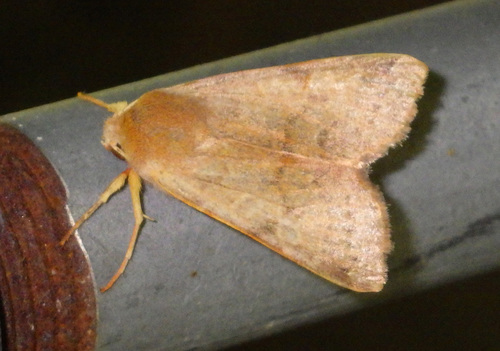
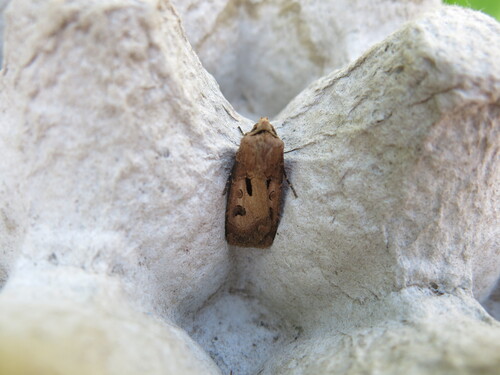
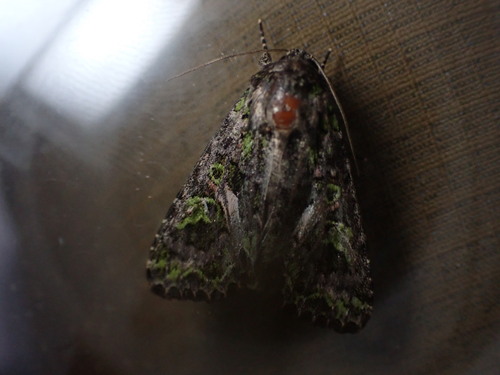
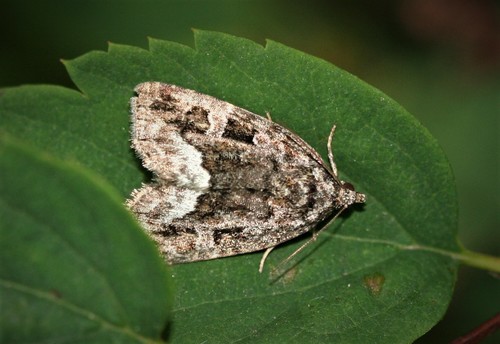
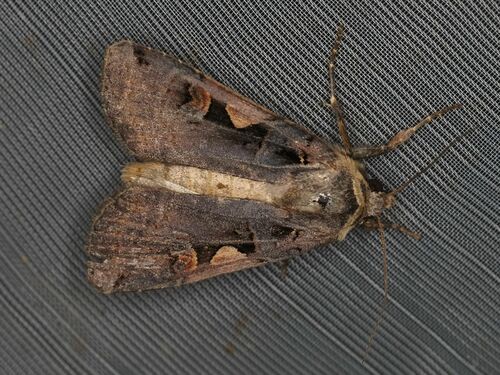
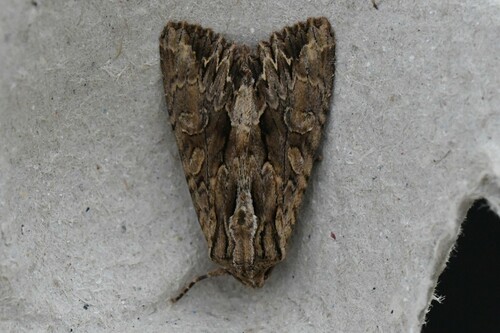
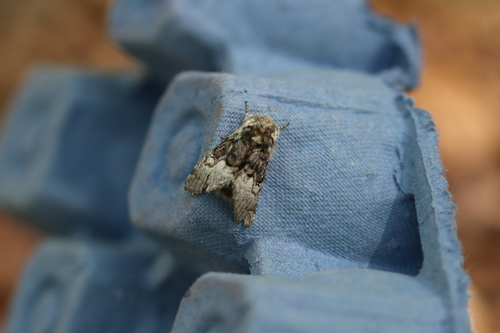
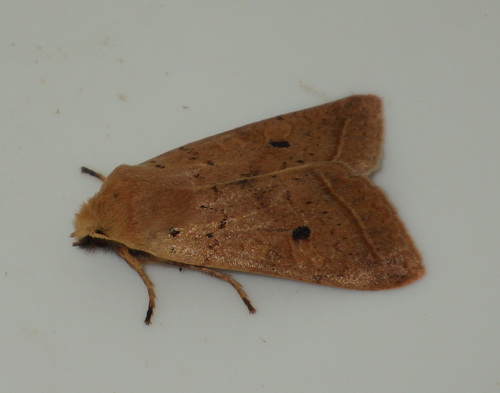
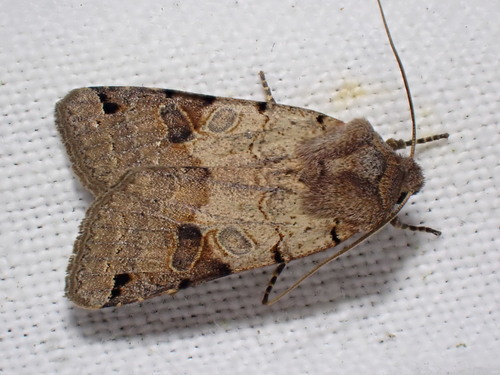
Agrochola macilenta, the yellow-line Quaker, is a moth of the family Noctuidae. The species was first described by Jacob Hübner in 1809. It is found in Europe (except Russia) and in Asia Minor. The wingspan is 32–36 mm. Forewing ochreous washed with pale fulvous; the inner and outer lines very faint, marked chiefly by the dark teeth on the veins; a dark spot at the base of the wing; median shade variable; stigmata of the ground colour, with slight pale outlines, the lower end of the reniform nearly always black; submarginal line ochreous edged inwardly with rufous, nearly straight except for the angulation on vein 7; hindwing grey, the fringe rufous; — in the ab. nigrodentata Fuchs the basal, inner, and outer lines are all strongly marked, blackish and dentate.

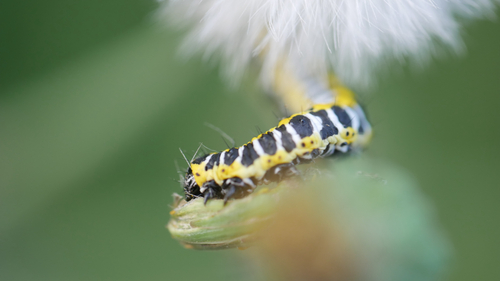
The caterpillar is reddish brown with white dots, and three white lines on the back; the line along the spiracles is whitish with a dusky edge above. The head is ochreous brown and the plate on the first ring blackish lined with white.

The moth flies from September to December depending on the location. The larvae feed on various shrubs and deciduous trees, including Carpinus, Crataegus, Fagus, Populus, Prunus, Ulmus, Salix, Quercus, Calluna, Hieracium and Plantago. Wikipedia →
Global Distribution

Parks Where Found

# Park Country Daily sighting probability
1 Bavarian Forest National Park 🇩🇪 Germany
<5%

More parks will be added in future updates.

Cities Where Found

# City Country Daily sighting probability
1 Helsinki 🇫🇮 Finland
<5%
2 London 🇬🇧 United Kingdom
<5%
3 Prague 🇨🇿 Czechia
<5%

Before you go

What are the chances of seeing a Yellow-Line Quaker in Bavarian Forest National Park?

Rare

Under 5% of wildlife watchers report a Yellow-Line Quaker sighting in Bavarian Forest National Park on a given day, based on 6 verified sightings from GBIF citizen-science data from 2019 to 2026. It is the 822nd most-seen of the 1115 insects we can rate there. Over three days the chance rises to about 10%, and over a week to about 30%, if each day is a fresh chance.

When is the best time to see a Yellow-Line Quaker in Bavarian Forest National Park?

October

In that month about 20% of wildlife watchers report a Yellow-Line Quaker in Bavarian Forest National Park on a given day, against under 5% in November to August, the lowest months.

What time of day is best to see a Yellow-Line Quaker?

Between 8 and 11 pm

Across all the parks we cover, that three-hour window holds the most Yellow-Line Quaker sightings with a recorded time, and about 8 in 10 of them come between 6 pm and 6 am: it is mostly seen at night.

Where else can you see a Yellow-Line Quaker?

Only Bavarian Forest National Park, in our data

Bavarian Forest National Park is the only park on Wallace's Line with enough records to rate Yellow-Line Quaker sightings: under 5% of wildlife watchers there report one on a given day.

Where does the Yellow-Line Quaker sighting chance come from?

GBIF citizen-science records

It is estimated from how often the Yellow-Line Quaker is recorded against all the insects logged in Bavarian Forest National Park (6 verified sightings from 2019 to 2026), calibrated against known sighting rates. Figures are rounded to the nearest 10% because citizen-science data supports honest approximations, not decimals, and months with records from fewer than five people show "—". How it works.

← Back to Bavarian Forest National Park