Scarce Fritillary

Scarce Fritillary

Euphydryas maturna

Daily sighting probability ~20% · Possible
at Biebrza National Park

In 3 days ~40% in a week ~70%

9 Verified sightings at Biebrza National Park From 2019 to 2026
9 In 1 park
June Best month
☀️ Diurnal When it's spotted

About the Scarce Fritillary

The scarce fritillary (Euphydryas maturna) is a species of butterfly in the family Nymphalidae. It is found in Austria, Bulgaria, Czech Republic, Finland, France, Germany, Greece, Hungary, Kazakhstan, Lithuania, Luxembourg, Poland, Romania, Russia, Serbia and Montenegro, and Sweden. and East across the Palearctic to Mongolia.

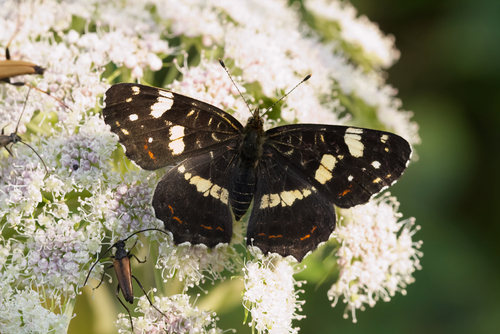
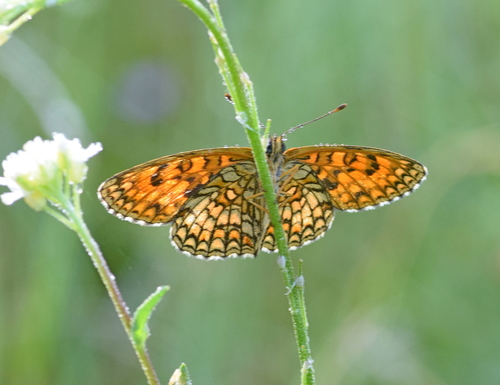
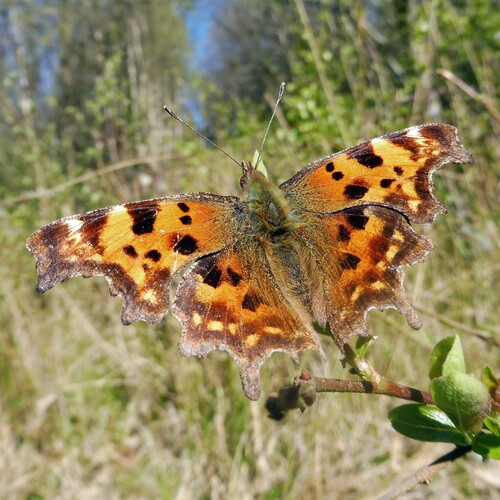
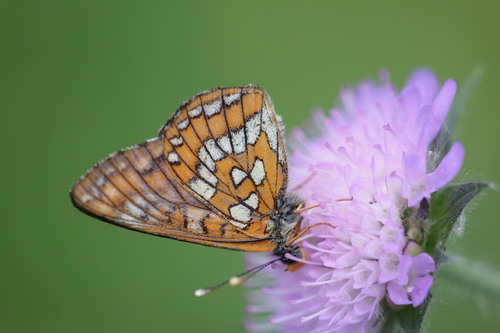
The scarce fritillary's wingspan ranges from 35 to 42 mm. The upper sides of the wings have a black-brown ground colour with a pattern of orange bands and a distinguished pattern of white spots. The veins and margins are black and brown.

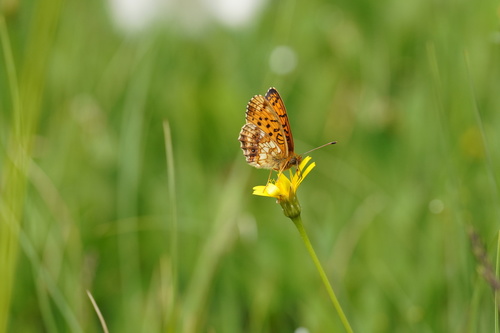
The pigmentation on the wing underside is orange and the details are blurred. The underside forewings exhibit a wide range of different shades of light and dark orange, the underside hindwings are orange with black-bordered white spots. Especially the pattern of the front wing undersides is washed out.

The caterpillar larvae reach up to 30 mm in length when fully grown. They are dark colored with strikingly bright, yellow spots. They have a large amount of dark tubercules and hairs across its length. The pupae tend to be white with dark spots and yellow warts on the abdomen.

M. maturna... Wikipedia →
Global Distribution

Parks Where Found

# Park Country Daily sighting probability
1 Biebrza National Park 🇵🇱 Poland
~20%

More parks will be added in future updates.

Before you go

What are the chances of seeing a Scarce Fritillary in Biebrza National Park?

Possible

About 20% of wildlife watchers report a Scarce Fritillary sighting in Biebrza National Park on a given day, based on 9 verified sightings from GBIF citizen-science data from 2019 to 2026. It is the 79th most-seen of the 97 insects we can rate there. Over three days the chance rises to about 40%, and over a week to about 70%, if each day is a fresh chance.

When is the best time to see a Scarce Fritillary in Biebrza National Park?

June

In that month about 40% of wildlife watchers report a Scarce Fritillary in Biebrza National Park on a given day, against under 5% in March–May and July–October, the lowest months. December has too few records to rate.

What time of day is best to see a Scarce Fritillary?

Between 1 and 4 pm

Across all the parks we cover, that three-hour window holds the most Scarce Fritillary sightings with a recorded time, and about 8 in 10 of them come between 6 am and 6 pm: it is a daytime animal.

Where else can you see a Scarce Fritillary?

Only Biebrza National Park, in our data

Biebrza National Park is the only park on Wallace's Line with enough records to rate Scarce Fritillary sightings: about 20% of wildlife watchers there report one on a given day.

Which relatives of the Scarce Fritillary live in Biebrza National Park?

Same family: Nymphalidae

The closest relatives of the Scarce Fritillary that you can see in Biebrza National Park (family Nymphalidae, Brush-footed Butterflies) are Map (about 40%), European Peacock Butterfly (about 40%) and Small Heath (about 30%), with each one's daily chance of a sighting.

Where does the Scarce Fritillary sighting chance come from?

GBIF citizen-science records

It is estimated from how often the Scarce Fritillary is recorded against all the insects logged in Biebrza National Park (9 verified sightings from 2019 to 2026), calibrated against known sighting rates. Figures are rounded to the nearest 10% because citizen-science data supports honest approximations, not decimals, and months with records from fewer than five people show "—". How it works.

← Back to Biebrza National Park