Cape Spinytail Iguana

Cape Spinytail Iguana

Ctenosaura hemilopha

Silhouette: SeismicShrimp · PhyloPic

LCLeast ConcernNTVUENCR Endemic
Daily sighting probability ~50% · Likely
at Cabo Pulmo National Park

In 3 days ~90% in a week >90%

33 Verified sightings at Cabo Pulmo National Park From 2019 to 2026
33 In 1 park
October Best month
☀️ Diurnal When it's spotted

About the Cape Spinytail Iguana

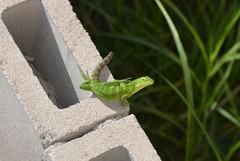
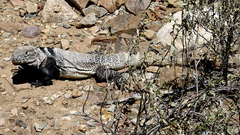
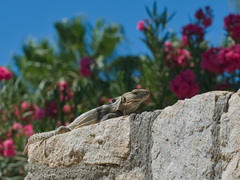
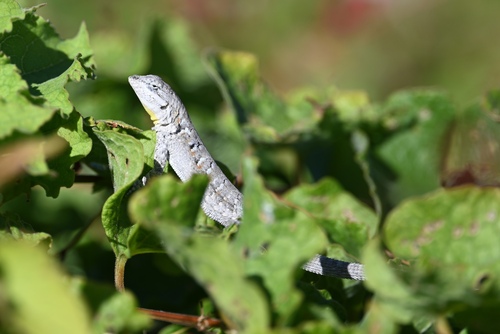
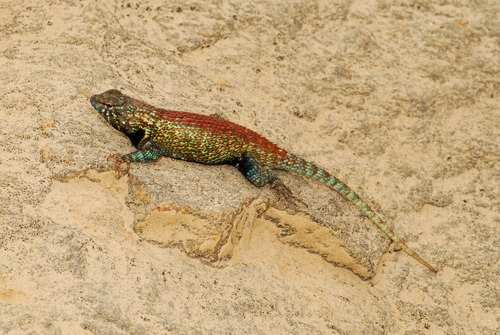
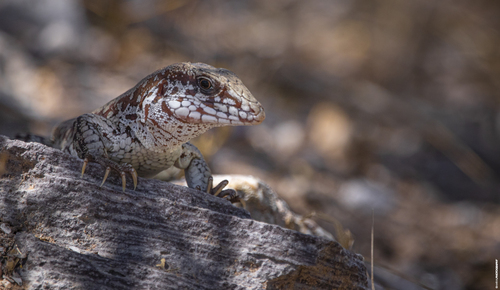
Ctenosaura hemilopha, also known as the Cape spiny-tailed iguana or Baja California spiny-tailed iguana, is a species of spinytail iguana endemic to Baja California. It is arboreal and primarily herbivorous, although it can be an opportunistic carnivore. Males may grow up to 100 centimeters (39 in) in length, while females are smaller, with a length of up to 70 centimeters (28 in). Five subspecies are currently recognized.

The existence of mainland and insular populations of this species has been valuable in providing biologists with study and control groups comparing the evolution of island populations and their mainland counterparts. The San Esteban Island subspecies (C.h. conspicuosa) coexists with the giant San Esteban chuckwalla, contrary to predictions of ecological niche theory.

Ctenosaura hemilopha was first described by zoologist Edward Drinker Cope in 1863. The generic name, Ctenosaura, is derived from two Greek words: ctenos (Κτενός), meaning "comb" (referring to the comblike spines on the lizard's back and tail), and saura (σαύρα), meaning "lizard". Its specific name is a combination of the Greek word hemisus (ήμισυς) meaning "half" and lophos... Wikipedia →

Global Distribution

Parks Where Found

# Park Country Daily sighting probability
1 Cabo Pulmo National Park 🇲🇽 Mexico
~50%

More parks will be added in future updates.

Zoos & Centres Where Found

# Zoo / Centre Country
1 Arizona-Sonora Desert Museum 🇺🇸 United States In captivity

Before you go

What are the chances of seeing a Cape Spinytail Iguana in Cabo Pulmo National Park?

Likely

About 50% of wildlife watchers report a Cape Spinytail Iguana sighting in Cabo Pulmo National Park on a given day, based on 33 verified sightings from GBIF citizen-science data from 2019 to 2026. It is the most-seen of the 13 reptiles we can rate there. Over three days the chance rises to about 90%, and over a week to over 90%, if each day is a fresh chance.

When is the best time to see a Cape Spinytail Iguana in Cabo Pulmo National Park?

June–July and September–October

In those months about 70% of wildlife watchers report a Cape Spinytail Iguana in Cabo Pulmo National Park on a given day, against about 30% in March, the lowest month. Those are among Cabo Pulmo National Park's wettest months, with about 50 mm of rain a month against almost none in April.

What time of day is best to see a Cape Spinytail Iguana?

Between 10 am and 1 pm

Across all the parks we cover, that three-hour window holds the most Cape Spinytail Iguana sightings with a recorded time, and about 9 in 10 of them come between 6 am and 6 pm: it is a daytime animal.

Where else can you see a Cape Spinytail Iguana?

Only Cabo Pulmo National Park, in our data

Cabo Pulmo National Park is the only park on Wallace's Line with enough records to rate Cape Spinytail Iguana sightings: about 50% of wildlife watchers there report one on a given day.

Where does the Cape Spinytail Iguana sighting chance come from?

GBIF citizen-science records

It is estimated from how often the Cape Spinytail Iguana is recorded against all the reptiles logged in Cabo Pulmo National Park (33 verified sightings from 2019 to 2026), calibrated against known sighting rates. Figures are rounded to the nearest 10% because citizen-science data supports honest approximations, not decimals, and months with records from fewer than five people show "—". How it works.

← Back to Cabo Pulmo National Park