



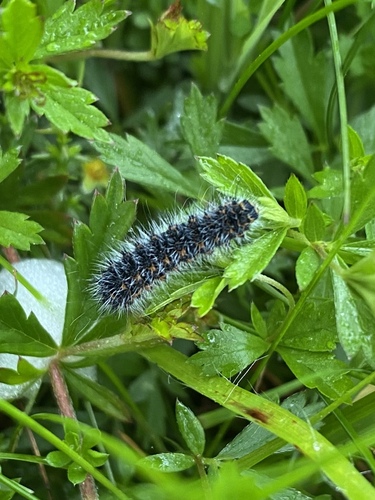
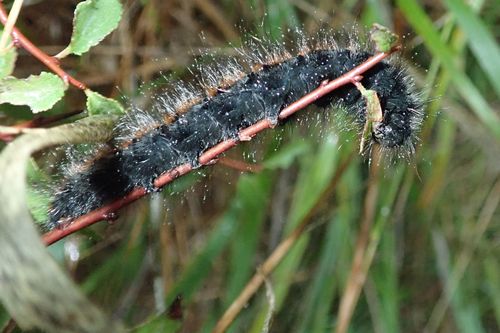
Gold Swift

Gold Swift

Phymatopus hecta

Daily sighting probability ~10% · With luck
at Cairngorms National Park

In 3 days ~30% in a week ~60%

18 Verified sightings at Cairngorms National Park From 2019 to 2026
24 In all 2 parks
June Best month
🌅 Crepuscular When it's spotted

About the Gold Swift

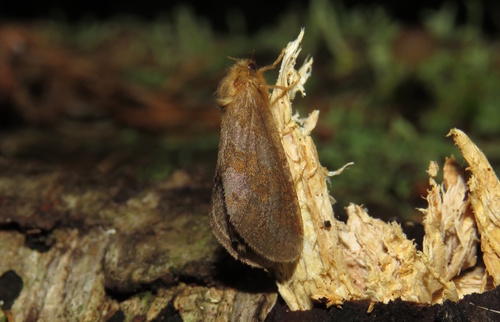
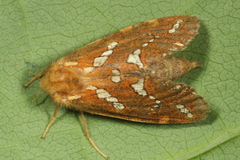
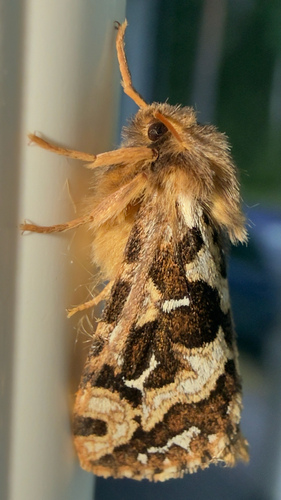
The gold swift (Phymatopus hecta) is a moth belonging to the family Hepialidae. Until recently it was placed in the genus Hepialus. The species was first described by Carl Linnaeus in his 1758 10th edition of Systema Naturae. Moths of the Hepialidae are considered to be primitive moths; they do not have a proboscis and are unable to feed. The gold swift is a widespread species found in Europe and Asia, including Japan.

This is a rather small moth for the family, with a wingspan of 26–32 mm. The male is distinctive, the brown forewings marked with two parallel bands of white markings. The larger female is less striking with muted grey-and-brown markings. The adult is on the wing in June and July (this refers to the British Isles; other parts of the range may differ) and both sexes are moderately attracted to light. To attract females, the male emits a scent rather similar to pineapple.

The adult moths spend most of the 24 hours resting, in a wide variety of places from the tree canopy to the base of the ground vegetation. They are active only for two brief periods: for an hour or two around sunset, when they mate and previously mated females lay eggs; and then very... Wikipedia →

Global Distribution

Parks Where Found

# Park Country Daily sighting probability
1 Cairngorms National Park 🇬🇧 United Kingdom
~10%
2 Bavarian Forest National Park 🇩🇪 Germany
<5%

Before you go

What are the chances of seeing a Gold Swift in Cairngorms National Park?

With luck

About 10% of wildlife watchers report a Gold Swift sighting in Cairngorms National Park on a given day, based on 18 verified sightings from GBIF citizen-science data from 2019 to 2026. It is the 89th most-seen of the 300 insects we can rate there. Over three days the chance rises to about 30%, and over a week to about 60%, if each day is a fresh chance.

When is the best time to see a Gold Swift in Cairngorms National Park?

June and July

In those months about 20% of wildlife watchers report a Gold Swift in Cairngorms National Park on a given day, against under 5% in August to May, the lowest months.

What time of day is best to see a Gold Swift?

Between 6 and 9 pm

Across all the parks we cover, that three-hour window holds the most Gold Swift sightings with a recorded time, and about half of them come between 6 am and 6 pm: it is most active around dawn and dusk.

Is Cairngorms National Park the best place to see a Gold Swift?

Yes

Of the 2 parks where we can rate Gold Swift sightings, Cairngorms National Park has the highest daily chance: about 10%. Next come Bavarian Forest National Park (Germany, under 5%).

Where does the Gold Swift sighting chance come from?

GBIF citizen-science records

It is estimated from how often the Gold Swift is recorded against all the insects logged in Cairngorms National Park (18 verified sightings from 2019 to 2026), calibrated against known sighting rates. Figures are rounded to the nearest 10% because citizen-science data supports honest approximations, not decimals, and months with records from fewer than five people show "—". How it works.

← Back to Cairngorms National Park