
Flammulated Flycatcher

Flammulated Flycatcher

Deltarhynchus flammulatus

Silhouette: Emily Willoughby · PhyloPic

LCLeast ConcernNTVUENCR
Daily sighting probability ~10% · With luck
at Cañón del Sumidero National Park

In 3 days ~40% in a week ~60%

106 Verified sightings at Cañón del Sumidero National Park From 2019 to 2026
106 In 1 park
April Best month
☀️ Diurnal When it's spotted

About the Flammulated Flycatcher

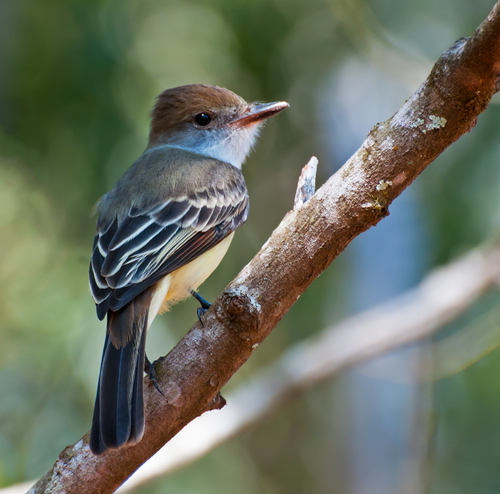
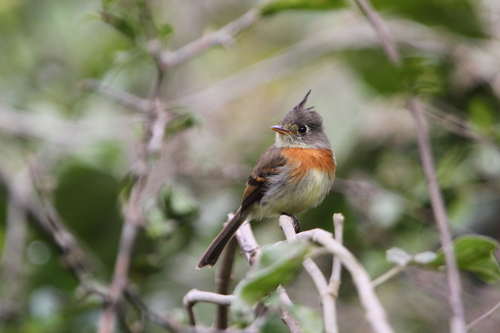
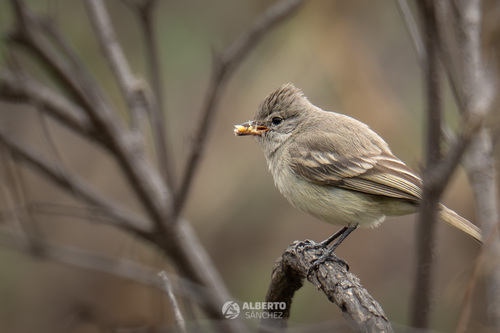
The flammulated flycatcher (Ramphotrigon flammulatum) is a species of bird in the family Tyrannidae. It was formerly placed in the monotypic genus Deltarhynchus but was moved to the genus Ramphotrigon based on genetic analysis. It is endemic to the dry deciduous forest, arid thorn forest, and scrubby woodland of Mexico’s Pacific coast. The flycatcher is an olive to gray-brown bird with a streaked, pale gray chest, white throat, black bill, dark gray feet, and dark brown wings. It is a skulking bird that typically remains hidden in the underbrush. It feeds by gleaning insects off of leaves and twigs that it spots from an exposed perch. The female lays approximately three eggs in a nest made in a shallow tree cavity.

The species was first described in 1875 by ornithologist George Newbold Lawrence, who placed this species in the genus Myiarchus. However, in 1893 it was split from Myiarchus into the new, monotypic genus Deltarhynchus by Robert Ridgway because of its shorter and broader bill, more rounded wings, and partially streaked underparts. This change was upheld in 1901 by Richard Bowdler Sharpe and by subsequent authors. However, in 1977 ornithologist Melvin Alvah... Wikipedia →

Sounds

Recording0:14

Mexico · 2022

© Carlos Domínguez-Rodríguez · iNaturalist · CC BY-NC 4.0

Recording0:06

Mexico · 2020

© Efraín Octavio Aguilar Pérez · iNaturalist · CC BY-NC 4.0

Recording0:17

Mexico · 2022

© filimonios · iNaturalist · CC BY-NC 4.0

Global Distribution

Parks Where Found

# Park Country Daily sighting probability
1 Cañón del Sumidero National Park 🇲🇽 Mexico
~10%

More parks will be added in future updates.

Before you go

What are the chances of seeing a Flammulated Flycatcher in Cañón del Sumidero National Park?

With luck

About 10% of wildlife watchers report a Flammulated Flycatcher sighting in Cañón del Sumidero National Park on a given day, based on 106 verified sightings from GBIF citizen-science data from 2019 to 2026. It is the 89th most-seen of the 243 birds we can rate there. Over three days the chance rises to about 40%, and over a week to about 60%, if each day is a fresh chance.

When is the best time to see a Flammulated Flycatcher in Cañón del Sumidero National Park?

April and July

In those months about 30% of wildlife watchers report a Flammulated Flycatcher in Cañón del Sumidero National Park on a given day, against under 5% in October to December, the lowest months.

What time of day is best to see a Flammulated Flycatcher?

Between 8 and 11 am

Across all the parks we cover, that three-hour window holds the most Flammulated Flycatcher sightings with a recorded time, and about 9 in 10 of them come between 6 am and 6 pm: it is a daytime animal.

Where else can you see a Flammulated Flycatcher?

Only Cañón del Sumidero National Park, in our data

Cañón del Sumidero National Park is the only park on Wallace's Line with enough records to rate Flammulated Flycatcher sightings: about 10% of wildlife watchers there report one on a given day.

Which relatives of the Flammulated Flycatcher live in Cañón del Sumidero National Park?

Same family: Tyrannidae

The closest relatives of the Flammulated Flycatcher that you can see in Cañón del Sumidero National Park (family Tyrannidae, Tyrant Flycatchers) are Social Flycatcher (about 70%), Boat-billed Flycatcher (about 60%) and Dusky-capped Flycatcher (about 40%), with each one's daily chance of a sighting.

Where does the Flammulated Flycatcher sighting chance come from?

GBIF citizen-science records

It is estimated from how often the Flammulated Flycatcher is recorded against all the birds logged in Cañón del Sumidero National Park (106 verified sightings from 2019 to 2026), calibrated against known sighting rates. Figures are rounded to the nearest 10% because citizen-science data supports honest approximations, not decimals, and months with records from fewer than five people show "—". How it works.

← Back to Cañón del Sumidero National Park