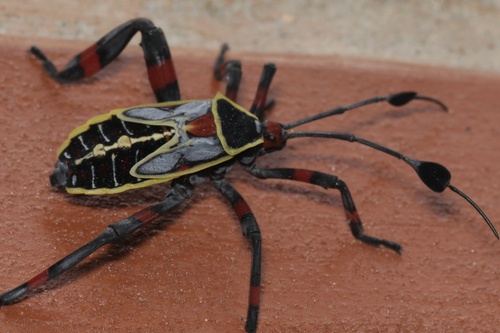
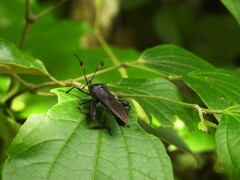
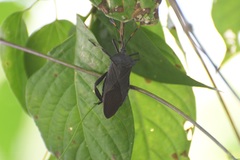
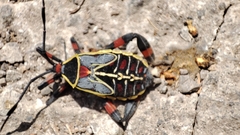
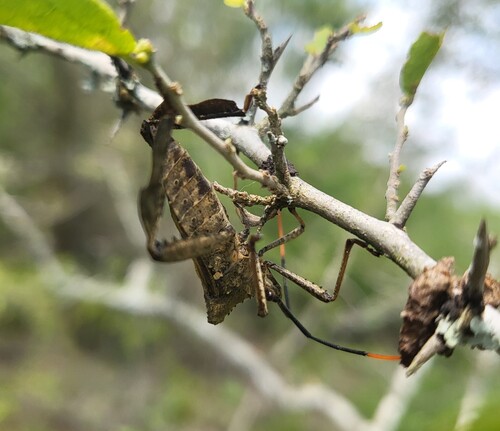
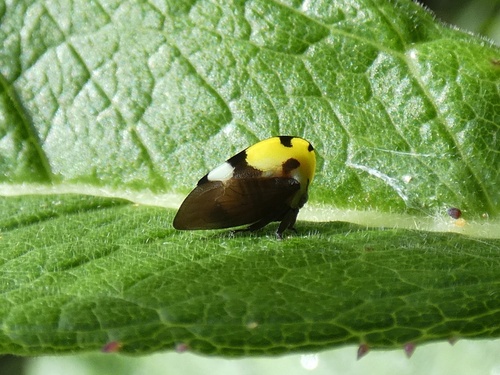
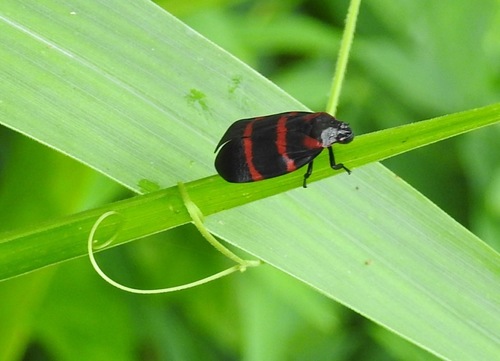
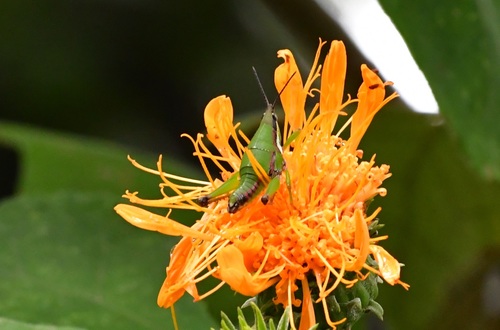
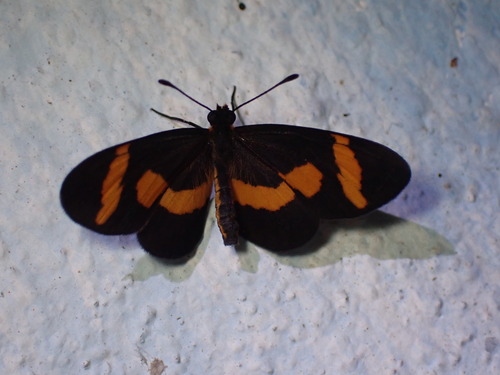
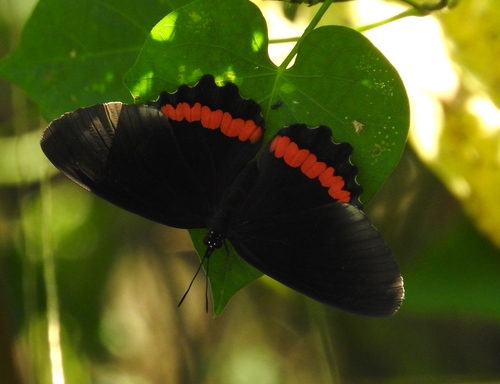
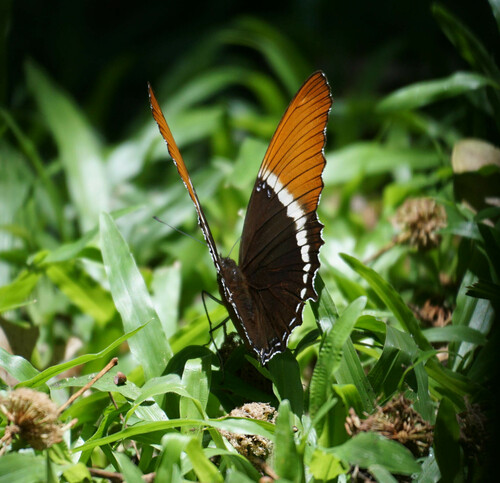
Thasus acutangulus

Thasus acutangulus

Thasus acutangulus

Daily sighting probability ~10% · With luck
at Cañón del Sumidero National Park

In 3 days ~30% in a week ~50%

8 Verified sightings at Cañón del Sumidero National Park From 2019 to 2026
8 In 1 park
October Best month
☀️ Diurnal When it's spotted

About the Thasus acutangulus

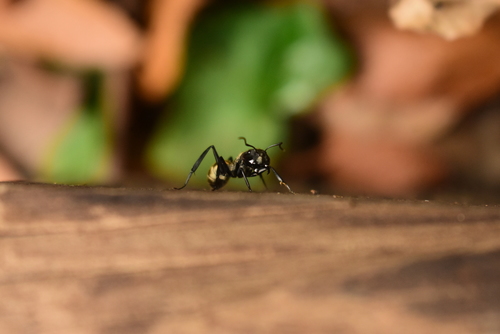
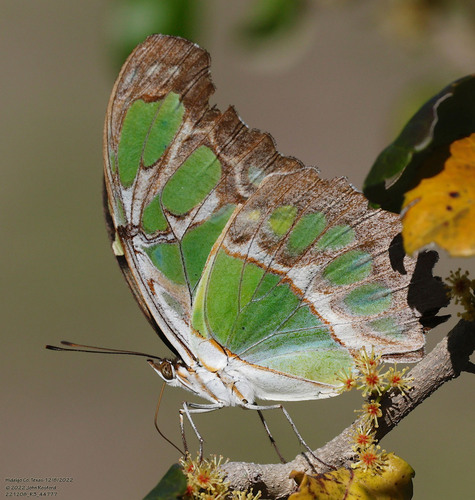
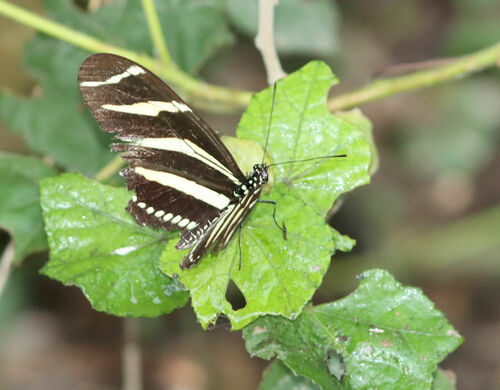
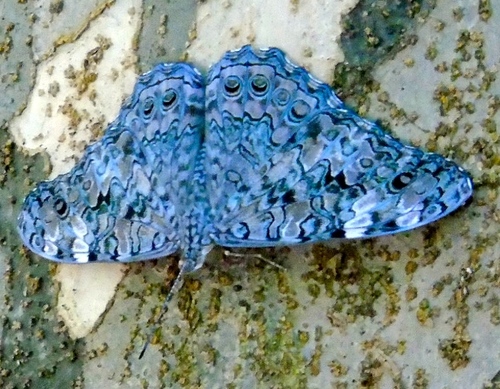
Thasus acutangulus, the mesquite bug, also referred to as Pachylis acutangula, is a leaf-footed bug. Swedish entomologist Carl Stål described it in 1859. The head is black laterally with a reddish-brown disk, while the ocelli are ringed with black and feature a lateral yellow semicircle. The first antennal segment is deep reddish-brown with black coloration at the base and apex. The second and third antennal segments have a basal half that is orange and an apical half that is black, while the fourth segment is missing in the holotype but appears brown-black in other specimens. The pronotum is reddish-brown, with a paler callar region, a black collar, and a thin lateral black line that transitions to yellow posteriorly. The posterior edge is yellow. The scutellum is reddish-brown, with yellow lateral edges and an apex. The corium is dark brown with yellow veins, and the membrane is black. Connexival segments 3–7 exhibit a dark reddish-brown color posteriorly and an orange hue anteriorly. The abdominal dorsum is black. The thoracic pleura are broadly reddish-brown, progressively darkening to black near the coxa and posterior edge.

Anterior lobe of metathoracic... Wikipedia →

Global Distribution

Parks Where Found

# Park Country Daily sighting probability
1 Cañón del Sumidero National Park 🇲🇽 Mexico
~10%

More parks will be added in future updates.

Before you go

What are the chances of seeing a Thasus acutangulus in Cañón del Sumidero National Park?

With luck

About 10% of wildlife watchers report a Thasus acutangulus sighting in Cañón del Sumidero National Park on a given day, based on 8 verified sightings from GBIF citizen-science data from 2019 to 2026. It is the 23rd most-seen of the 46 insects we can rate there. Over three days the chance rises to about 30%, and over a week to about 50%, if each day is a fresh chance.

When is the best time to see a Thasus acutangulus in Cañón del Sumidero National Park?

May and September–October

In those months about 20% of wildlife watchers report a Thasus acutangulus in Cañón del Sumidero National Park on a given day, against under 5% in June and November–April, the lowest months. Those are among Cañón del Sumidero National Park's wettest months, with about 170 mm of rain a month against 5 mm in February.

What time of day is best to see a Thasus acutangulus?

Between 9 am and noon

Across all the parks we cover, that three-hour window holds the most Thasus acutangulus sightings with a recorded time, and about 9 in 10 of them come between 6 am and 6 pm: it is a daytime animal.

Where else can you see a Thasus acutangulus?

Only Cañón del Sumidero National Park, in our data

Cañón del Sumidero National Park is the only park on Wallace's Line with enough records to rate Thasus acutangulus sightings: about 10% of wildlife watchers there report one on a given day.

Where does the Thasus acutangulus sighting chance come from?

GBIF citizen-science records

It is estimated from how often the Thasus acutangulus is recorded against all the insects logged in Cañón del Sumidero National Park (8 verified sightings from 2019 to 2026), calibrated against known sighting rates. Figures are rounded to the nearest 10% because citizen-science data supports honest approximations, not decimals, and months with records from fewer than five people show "—". How it works.

← Back to Cañón del Sumidero National Park