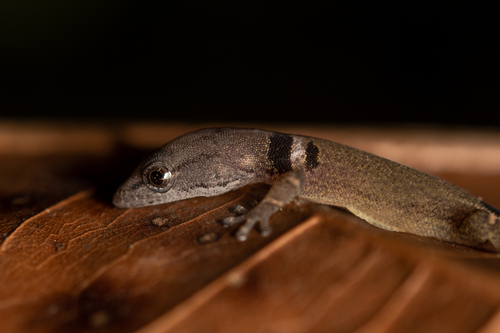
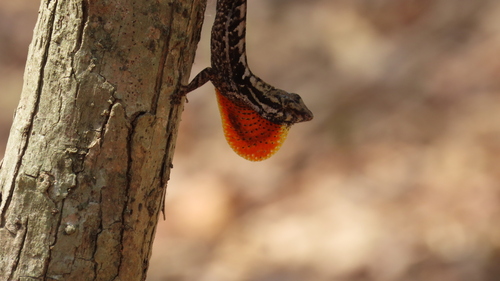
Yellow-spotted Night Lizard

Yellow-spotted Night Lizard

Lepidophyma flavimaculatum

Silhouette: Jose Carlos Arenas-Monroy · PhyloPic

LCLeast ConcernNTVUENCR
Daily sighting probability ~30% · Possible
at Cerro Azul Meámbar National Park

In 3 days ~60% in a week ~90%

21 Verified sightings at Cerro Azul Meámbar National Park From 2019 to 2026
222 In all 5 parks
June Best month
☀️🌙 Day & Night When it's spotted

About the Yellow-spotted Night Lizard

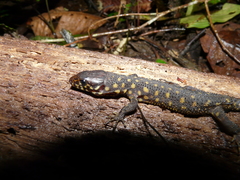
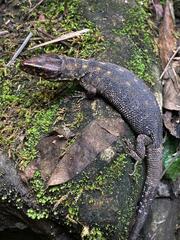
The yellow-spotted tropical night lizard or yellow-spotted night lizard (Lepidophyma flavimaculatum) is a species of night lizard (family Xantusiidae). The species is distributed from central Mexico, through Central America, south to Panama. It includes two subspecies.

Two subspecies are recognized as being valid, including the nominotypical subspecies. Lepidophyma flavimaculatum flavimaculatum A.H.A.Duméril, 1851 Lepidophyma flavimaculatum ophiophthalmum Taylor, 1955 L. flavimaculatum reproduces parthenogenetically. The female gives birth to live, fully developed young lizards. Before birth the egg cells are not fertilized.

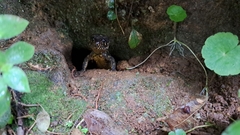
L. flavimaculatum is a secretive, terrestrial and nocturnal lizard of tropical wet and moist forests, at altitudes from sea level to 1,500 m (4,900 ft). Mostly found on the ground, it is occasionally found on tree trunks or beneath bark on standing trees. It feeds on small invertebrates.

The yellow-spotted night lizard is sometimes suggested to be the inspiration for the "yellow-spotted lizards" in the children's novel Holes by Louis Sachar. However, in the making of the movie adaptation... Wikipedia →
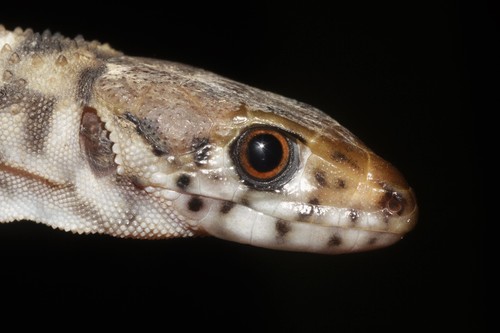
Global Distribution

Parks Where Found

# Park Country Daily sighting probability
1 Braulio Carrillo National Park 🇨🇷 Costa Rica
~40%
2 Pico Bonito National Park 🇭🇳 Honduras
~30%
3 Cerro Azul Meámbar National Park 🇭🇳 Honduras
~30%
4 Tenorio Volcano National Park 🇨🇷 Costa Rica
~20%
5 Arenal Volcano National Park 🇨🇷 Costa Rica
~20%

Closest Relatives at Cerro Azul Meámbar National Park

No species of the same family or order lives in Cerro Azul Meámbar National Park, so these are its closest relatives here: other reptiles.

Before you go

What are the chances of seeing a Yellow-spotted Night Lizard in Cerro Azul Meámbar National Park?

Possible

About 30% of wildlife watchers report a Yellow-spotted Night Lizard sighting in Cerro Azul Meámbar National Park on a given day, based on 21 verified sightings from GBIF citizen-science data from 2019 to 2026. It is the 5th most-seen of the 16 reptiles we can rate there. Over three days the chance rises to about 60%, and over a week to about 90%, if each day is a fresh chance.

When is the best time to see a Yellow-spotted Night Lizard in Cerro Azul Meámbar National Park?

June

In that month about 50% of wildlife watchers report a Yellow-spotted Night Lizard in Cerro Azul Meámbar National Park on a given day, against under 5% in February, April–May, September and November–December, the lowest months. That is one of Cerro Azul Meámbar National Park's wettest months, with about 310 mm of rain against 80 mm in February.

What time of day is best to see a Yellow-spotted Night Lizard?

Between 9 am and noon

Across all the parks we cover, that three-hour window holds the most Yellow-spotted Night Lizard sightings with a recorded time, and about 6 in 10 of them come between 6 am and 6 pm: it is seen both by day and at night.

Is Cerro Azul Meámbar National Park the best place to see a Yellow-spotted Night Lizard?

3rd of 5

Of the 5 parks where we can rate Yellow-spotted Night Lizard sightings, Cerro Azul Meámbar National Park ranks 3rd at about 30%. The best odds are in Braulio Carrillo National Park (Costa Rica, about 40%) and Pico Bonito National Park (Honduras, about 30%).

Where does the Yellow-spotted Night Lizard sighting chance come from?

GBIF citizen-science records

It is estimated from how often the Yellow-spotted Night Lizard is recorded against all the reptiles logged in Cerro Azul Meámbar National Park (21 verified sightings from 2019 to 2026), calibrated against known sighting rates. Figures are rounded to the nearest 10% because citizen-science data supports honest approximations, not decimals, and months with records from fewer than five people show "—". How it works.

← Back to Cerro Azul Meámbar National Park