African Golden Cat

African Golden Cat

Profelis aurata

Silhouette: Roderic Page and Lois Page · PhyloPic

LCNTVUVulnerableENCR
Daily sighting probability ~40% · Likely
at Chinko Conservation Area

In 3 days ~80% in a week >90%

31 Verified sightings at Chinko Conservation Area From 2019 to 2026
31 In 1 park
January Best month
☀️🌙 Day & Night When it's spotted

About the African Golden Cat

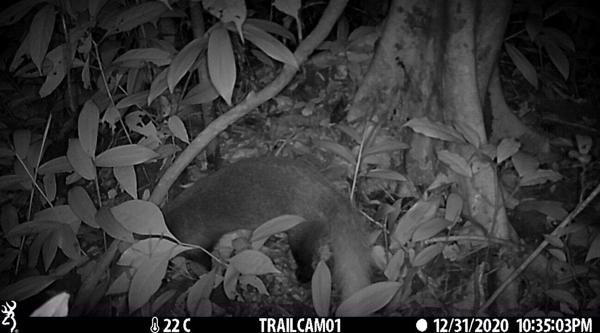
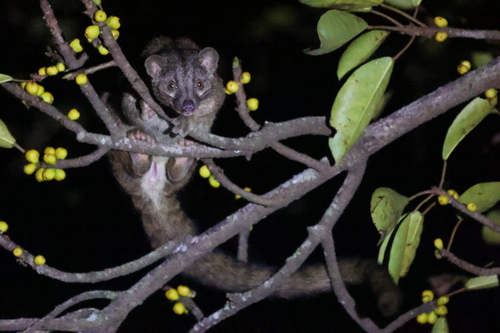
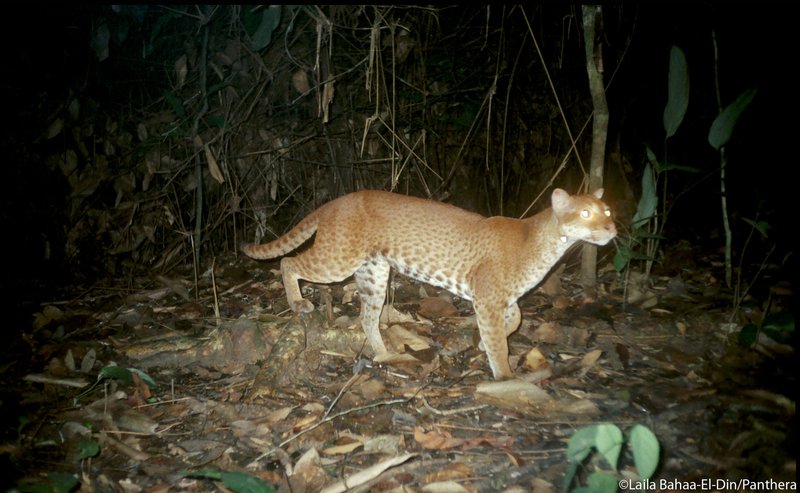
The African golden cat (Caracal aurata) is a wild cat endemic to the rainforests of West and Central Africa. It is threatened due to deforestation and bushmeat hunting and listed as Vulnerable on the IUCN Red List. It is a close relative of both the caracal and the serval. Previously, it was placed in the genus Profelis. Its body size ranges from 61 to 101 cm (24 to 40 in) with a 16 to 46 cm (6.3 to 18.1 in) long tail.

The African golden cat has a fur colour ranging from chestnut or reddish-brown, greyish brown to dark slate. Some are spotted, with the spots ranging from faded tan to black in colour. In others the spotting pattern is limited to the belly and inner legs. Its undersides and areas around the eyes, cheeks, chin, and throat are lighter in colour to almost white. Its tail is darker on the top and either heavily banded, lightly banded or plain, ending in a black tip. Cats in the western parts of its range tend to have heavier spotting than those in the eastern region. Two color morphs, a red and a grey phase, were once thought to indicate separate species, rather than colour variations of the same species. Grey skins have hairs that are not pigmented...
Wikipedia →

Global Distribution

Parks Where Found

# Park Country Daily sighting probability
1 Chinko Conservation Area 🇨🇫 Central African Republic
~40%

More parks will be added in future updates.

Before you go

What are the chances of seeing an African Golden Cat in Chinko Conservation Area?

Likely

About 40% of wildlife watchers report an African Golden Cat sighting in Chinko Conservation Area on a given day, based on 31 verified sightings from GBIF citizen-science data from 2019 to 2026. It is the 21st most-seen of the 53 mammals we can rate there. Over three days the chance rises to about 80%, and over a week to over 90%, if each day is a fresh chance.

When is the best time to see an African Golden Cat in Chinko Conservation Area?

January

In that month about 60% of wildlife watchers report an African Golden Cat in Chinko Conservation Area on a given day, against under 5% in July, the lowest month. That is one of Chinko Conservation Area's driest months, with almost no rain against 180 mm in August.

What time of day is best to see an African Golden Cat?

Between midnight and 3 am

Across all the parks we cover, that three-hour window holds the most African Golden Cat sightings with a recorded time, and about 6 in 10 of them come between 6 am and 6 pm: it is seen both by day and at night.

Where else can you see an African Golden Cat?

Only Chinko Conservation Area, in our data

Chinko Conservation Area is the only park on Wallace's Line with enough records to rate African Golden Cat sightings: about 40% of wildlife watchers there report one on a given day.

Which relatives of the African Golden Cat live in Chinko Conservation Area?

Same family: Felidae

The closest relatives of the African Golden Cat that you can see in Chinko Conservation Area (family Felidae, Felids) are Leopard (about 60%), Lion (about 40%) and Serval (about 20%), with each one's daily chance of a sighting.

Where does the African Golden Cat sighting chance come from?

GBIF citizen-science records

It is estimated from how often the African Golden Cat is recorded against all the mammals logged in Chinko Conservation Area (31 verified sightings from 2019 to 2026), calibrated against known sighting rates. Figures are rounded to the nearest 10% because citizen-science data supports honest approximations, not decimals, and months with records from fewer than five people show "—". How it works.

← Back to Chinko Conservation Area