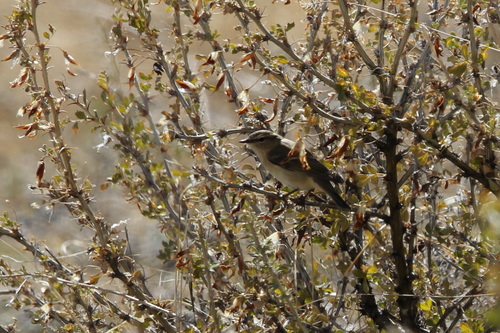
Rufous-backed Redstart

Rufous-backed Redstart

Phoenicurus erythronotus

Silhouette: Martin Bulla, based on François Desbordes' illustration · PhyloPic

LCLeast ConcernNTVUENCR
Daily sighting probability ~10% · With luck
at Almaty

In 3 days ~20% in a week ~50%

9 Verified sightings at Almaty
October Best month

About the Rufous-backed Redstart

Eversmann's redstart (Phoenicurus erythronotus), also known as the rufous-backed redstart, is a passerine bird belonging to the genus Phoenicurus. It was formerly classified in the thrush family Turdidae but is now placed in the Old World flycatcher family Muscicapidae. It was described by the German biologist Eduard Friedrich Eversmann who is commemorated in the bird's English name.

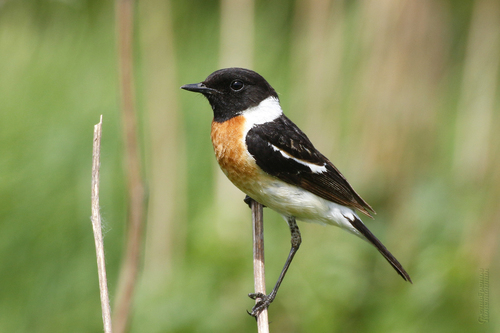
It is one of the larger redstarts, 15 to 16 cm (5.9 to 6.3 in) long with a wingspan of 25.5 to 27 cm (10.0 to 10.6 in) and weigh 15 to 22 g (0.53 to 0.78 oz). The bill and legs are black. The male in breeding plumage has a black mask and grey crown and nape. The back and rump are rufous and the tail is also rufous apart from the darker central feathers. The wings are dark with white patches on the scapulars and primary-coverts. The underparts are mainly rufous with white on the belly and undertail-coverts.

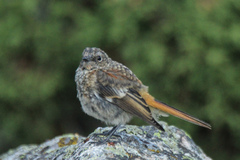
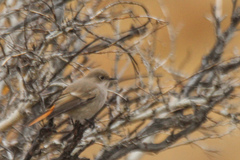
Non-breeding and first-winter males are similar but much duller and browner. Females are mostly grey-brown. They have a rufous tail with a dark centre, a pale eye-ring, two buff wingbars and buff edges to the tertials. The song is loud and lively. The birds also have a soft, croaking... Wikipedia →

Sounds

Call0:21

Kazakhstan · 2025

© Frank Lambert · XC1029879 · CC BY-NC-ND 4.0

Song0:21

Kazakhstan · 2017

© Oscar Campbell · XC378880 · CC BY-NC-SA 4.0

Call0:36

Mongolia · 2013

© Patrick Franke · XC162659 · CC BY-NC-SA 3.0

Global Distribution

Parks Where Found

# Park Country Daily sighting probability

More parks will be added in future updates.

Cities Where Found

# City Country Daily sighting probability
1 Almaty 🇰🇿 Kazakhstan
~10%
2 Bishkek 🇰🇬 Kyrgyzstan
<5%
3 Dushanbe 🇹🇯 Tajikistan
<5%
4 Srinagar 🇮🇳 India
<5%

Before you go

What are the chances of seeing a Rufous-backed Redstart in Almaty?

With luck

About 10% of wildlife watchers report a Rufous-backed Redstart sighting in Almaty on a given day, based on 9 verified sightings from GBIF citizen-science data. It is the 41st most-seen of the 73 birds we can rate there. Over three days the chance rises to about 20%, and over a week to about 50%, if each day is a fresh chance.

When is the best time to see a Rufous-backed Redstart in Almaty?

March and October

In those months about 20% of wildlife watchers report a Rufous-backed Redstart in Almaty on a given day, against under 5% in February, May and July–August, the lowest months.

Is Almaty the best place to see a Rufous-backed Redstart?

Yes

Of the 4 cities where we can rate Rufous-backed Redstart sightings, Almaty has the highest daily chance: about 10%. Next come Bishkek (Kyrgyzstan, under 5%) and Dushanbe (Tajikistan, under 5%).

Which relatives of the Rufous-backed Redstart live in Almaty?

Same family: Muscicapidae

The closest relatives of the Rufous-backed Redstart that you can see in Almaty (family Muscicapidae, Old World Flycatchers, Robins, and Chats) are Blue Whistling-Thrush (about 20%), Siberian Stonechat (about 10%) and Bluethroat (about 10%), with each one's daily chance of a sighting.

Where does the Rufous-backed Redstart sighting chance come from?

GBIF citizen-science records

It is estimated from how often the Rufous-backed Redstart is recorded against all the birds logged in Almaty (9 verified sightings), calibrated against known sighting rates. Figures are rounded to the nearest 10% because citizen-science data supports honest approximations, not decimals, and months with records from fewer than five people show "—". How it works.

← Back to Almaty