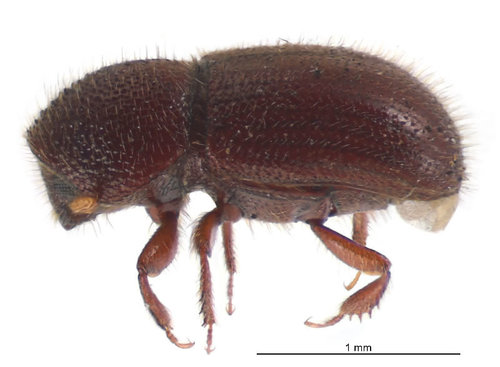
About the Granulate Ambrosia Beetle
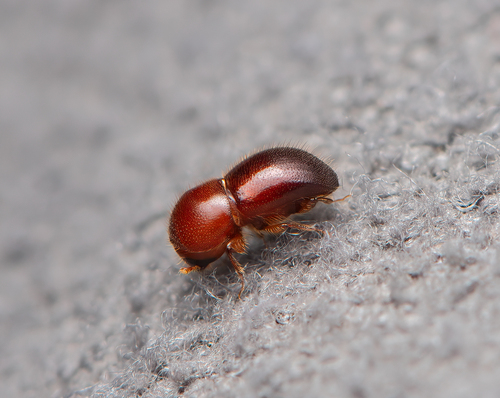
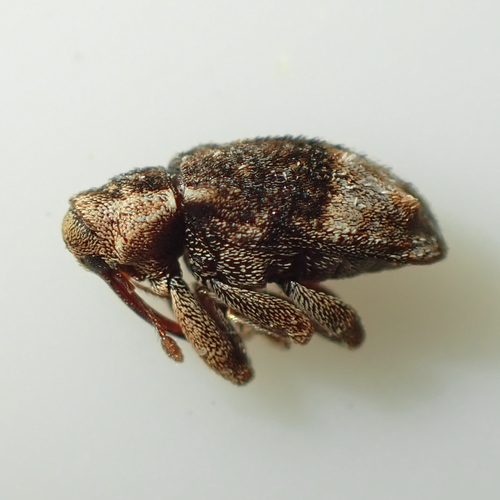
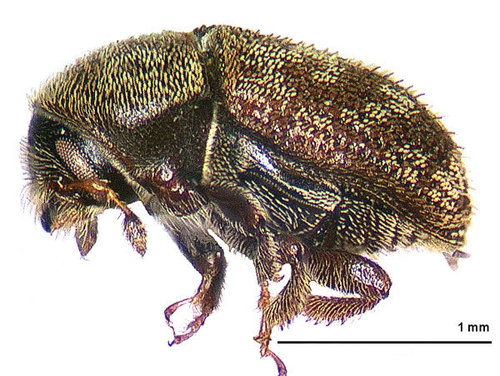
Xylosandrus crassiusculus, known generally as the Asian ambrosia beetle or granulate ambrosia beetle, is a species of tropical bark beetle in the family Curculionidae. It is native to Asia and has spread to Africa, Europe, Australasia and the Americas. The adult beetle is reddish-brown and some 2 to 3 mm (0.08 to 0.12 in) long.
This beetle is native to Asia, and has spread to other parts of the world as an invasive species in Africa, the Americas, Europe and Oceania. It was first reported in the southeastern United States in 1974, had reached Costa Rica by 1996, Panama by 2003, and Guatemala and northern Brazil by 2008. It appeared in Argentina in 2001, nearly a decade before it was detected in southern Brazil and Uruguay; as the latter two countries were vigilant, with long-term trapping programmes, the Argentine collection may represent a direct introduction from a non-American source, with the insects later spreading northwards up the coast.
Females mate with their siblings before leaving the galleries. Although males are flightless, females can fly and disperse to other potential host trees. Here they excavate tunnels and lay eggs... Wikipedia →