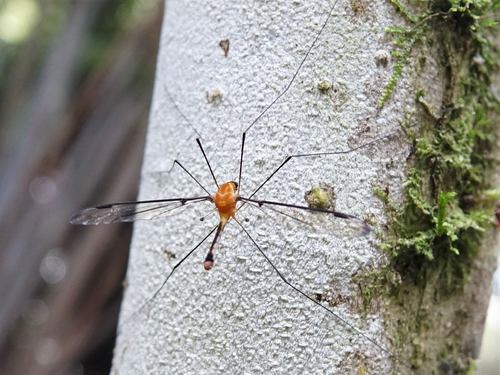
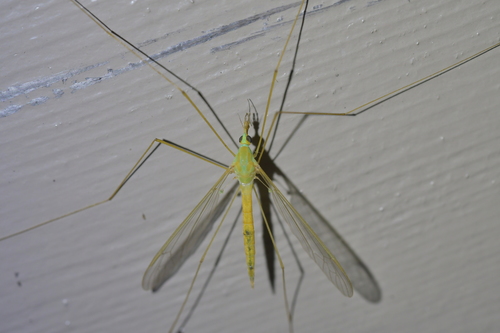
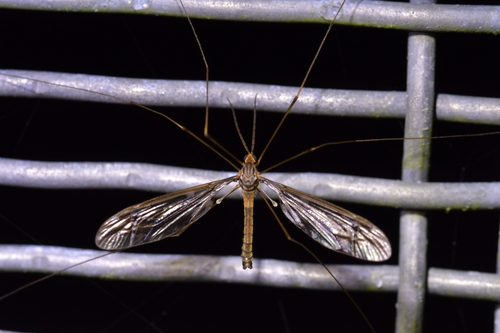
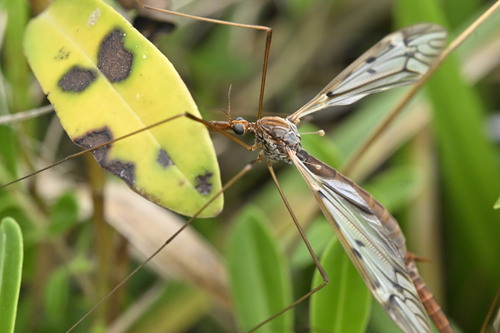
Leptotarsus huttoni

Leptotarsus huttoni

Leptotarsus huttoni

Daily sighting probability ~10% · With luck
at Auckland

In 3 days ~20% in a week ~40%

32 Verified sightings at Auckland
November Best month

About the Leptotarsus huttoni

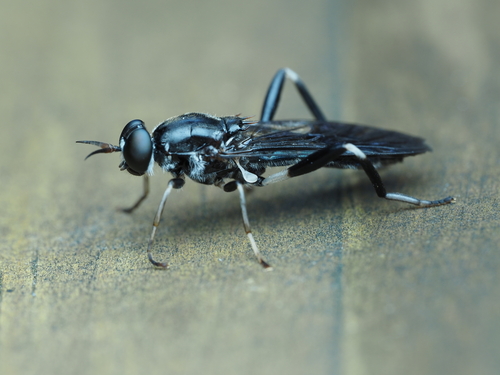
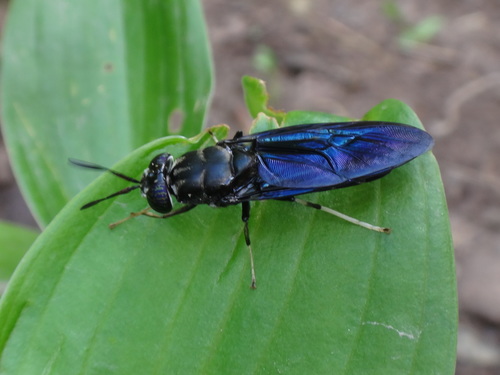
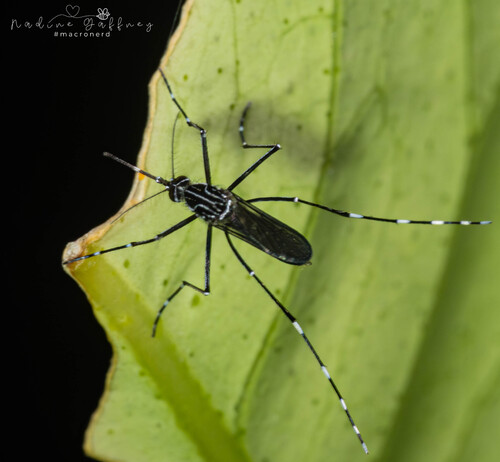
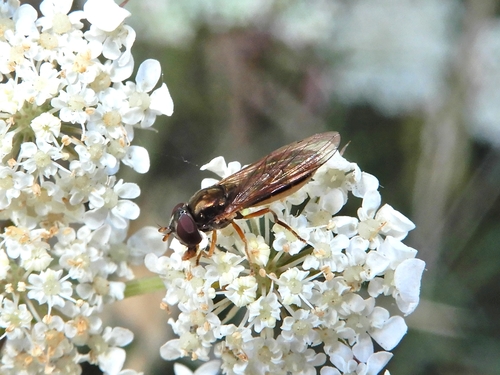
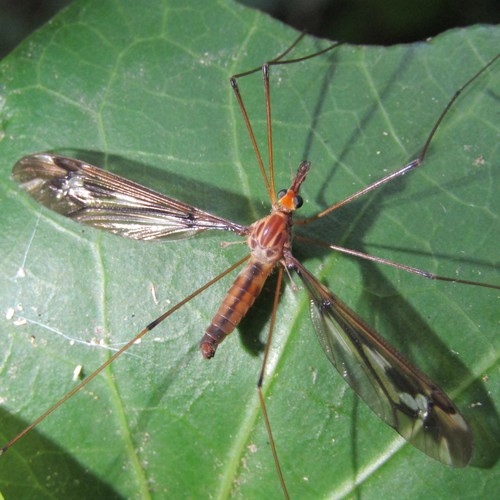
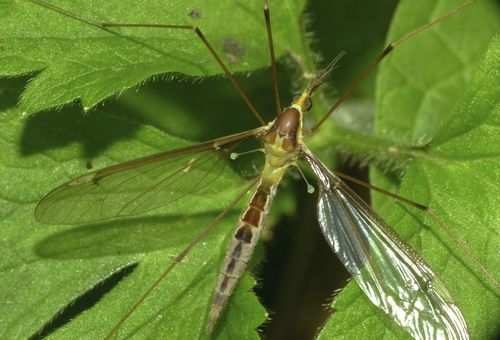
Leptotarsus huttoni is a species of crane fly in the family Tipulidae. First described as Macromastix huttoni by Frederick Wallace Edwards in 1923, the species is endemic to New Zealand, living near rotting wood on both the North Island and the South Island.

The species was first described by Frederick Wallace Edwards in 1923 as Macromastix huttoni. In 1968, Nikolas Vladimir Dobrotworsky revised Macromastix, making it a subgenus of Leptotarsus. This led to the current accepted name of the species, Leptotarsus huttoni, or its alternative representation, Leptotarsus (Macromastix) huttoni.

Edwards described the species as follows: Head dull dark ochreous, scarcely any darker in middle, with some ochreous-grey dusting round eyes. Front about one-quarter as broad as head, tubercle moderate. Rostrum slightly longer than head, rather darker than vertex; nasus with long hairs at tip, which is not bifid. Palpi blackish. Antennae rather dark brown, alike in both sexes; shorter than thorax, first scapal joint slender. First flagellar joint slightly shorter than second, third, or fourth; fifth and sixth shorter; last five thinner and indistinctly separated. Thorax... Wikipedia →
Global Distribution

Parks Where Found

# Park Country Daily sighting probability

More parks will be added in future updates.

Cities Where Found

# City Country Daily sighting probability
1 Auckland 🇳🇿 New Zealand
~10%

Before you go

What are the chances of seeing a Leptotarsus huttoni in Auckland?

With luck

About 10% of wildlife watchers report a Leptotarsus huttoni sighting in Auckland on a given day, based on 32 verified sightings from GBIF citizen-science data. It is the 207th most-seen of the 689 insects we can rate there. Over three days the chance rises to about 20%, and over a week to about 40%, if each day is a fresh chance.

When is the best time to see a Leptotarsus huttoni in Auckland?

November

In that month about 20% of wildlife watchers report a Leptotarsus huttoni in Auckland on a given day, against under 5% in January to October, the lowest months.

Where else can you see a Leptotarsus huttoni?

Only Auckland, in our data

Auckland is the only city on Wallace's Line with enough records to rate Leptotarsus huttoni sightings: about 10% of wildlife watchers there report one on a given day.

Where does the Leptotarsus huttoni sighting chance come from?

GBIF citizen-science records

It is estimated from how often the Leptotarsus huttoni is recorded against all the insects logged in Auckland (32 verified sightings), calibrated against known sighting rates. Figures are rounded to the nearest 10% because citizen-science data supports honest approximations, not decimals, and months with records from fewer than five people show "—". How it works.

← Back to Auckland