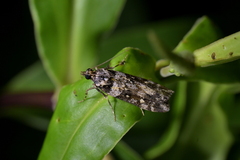
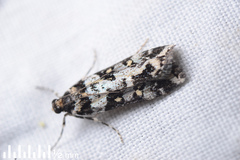
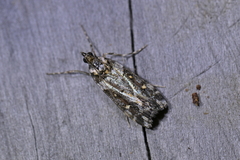
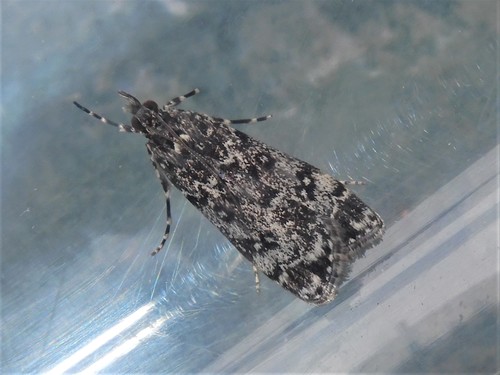
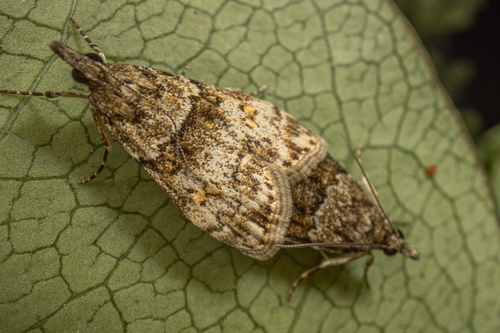
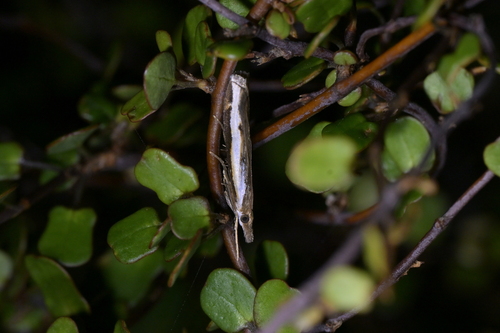
Shining Scoparia

Shining Scoparia

Eudonia diphtheralis

Endemic
Daily sighting probability ~10% · With luck
at Auckland

In 3 days ~20% in a week ~40%

27 Verified sightings at Auckland
22 In all 2 parks From 2019 to 2026
February Best month
🌙 Nocturnal When it's spotted

About the Shining Scoparia

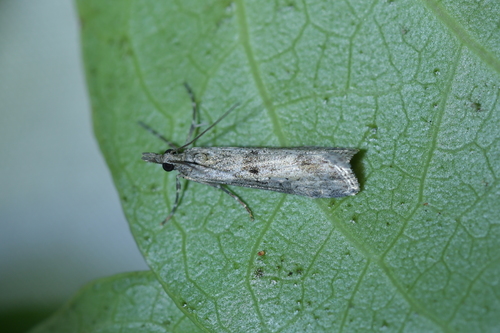
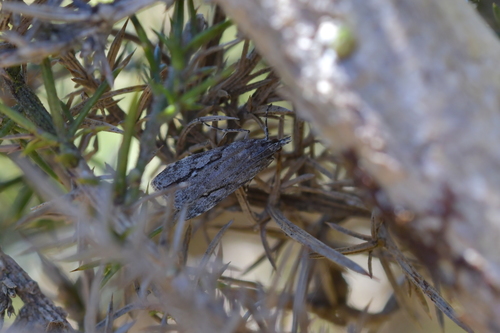
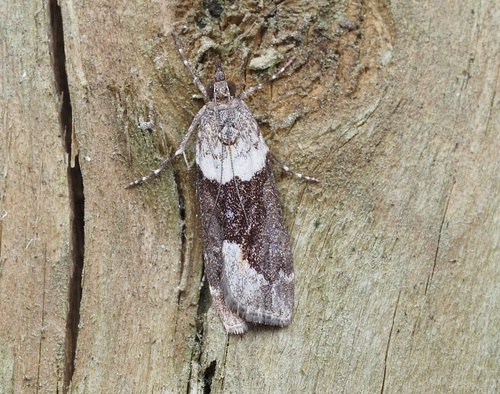
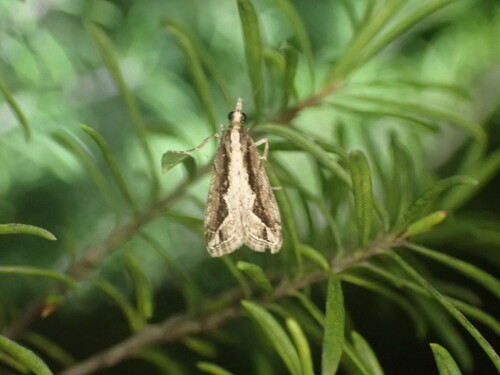
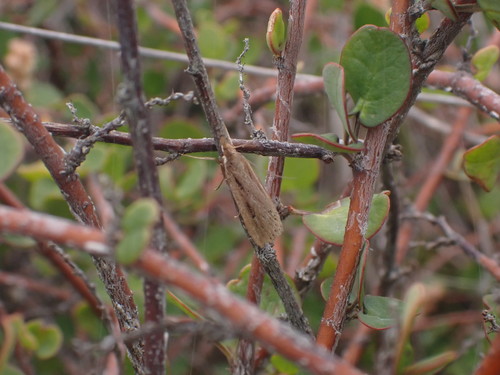
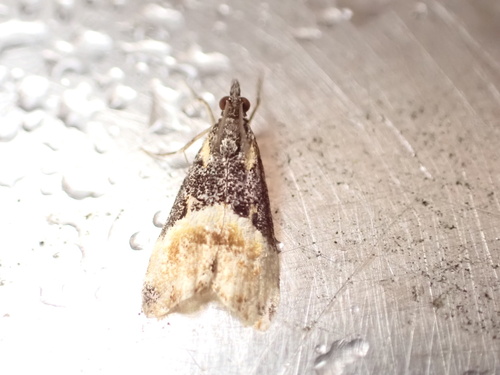
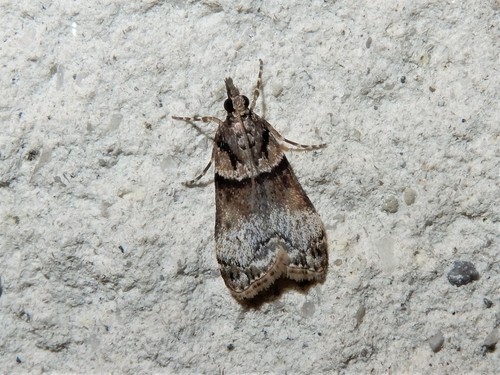
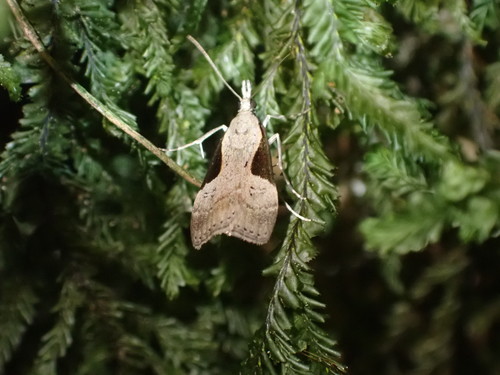
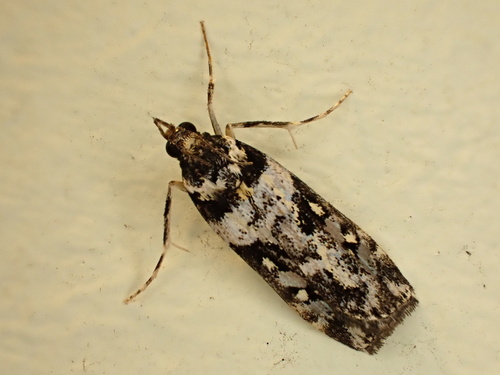
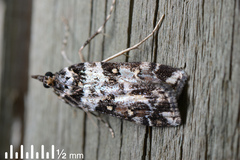
Eudonia diphtheralis is a species of moth in the family Crambidae. It is endemic to New Zealand. The larvae feed on grasses, herbs and bryophytes. In 1884 Edward Meyrick wrote: Wingspan for males and females is 23–26 mm. Head pale ochreous, face black. Palpi 2+1⁄4, black, mixed with white, basal joint white. Antennae black, beneath ochreous-whitish. Thorax white, anterior half, a square central spot, and posterior extremity suffused with black. Abdomen whitish-ochreous, slightly irrorated with grey, segmental margins more ochreous towards base. Legs white, thinly sprinkled with black, tibiae and tarsi banded with black. Forewings elongate, triangular, costa hardly arched, apex rounded, hindmargin sinuate, slightly oblique; white, irregularly irrorated with black scales which are ochreous at their base; a triangular blackish spot on costa at base, apex extended to form a smaller spot, but not quite reaching inner margin; inner margin beneath this whitish-ochreous; a broad cloudy white line near first line, more or less confluent with it above; first line broad, cloudy, white, oblique, hardly curved, rather irregular, posteriorly blackish-margined, forming... Wikipedia →
Global Distribution

Parks Where Found

# Park Country Daily sighting probability
1 Arthur's Pass National Park 🇳🇿 New Zealand
~10%
2 Egmont National Park 🇳🇿 New Zealand
~10%

Cities Where Found

# City Country Daily sighting probability
1 Auckland 🇳🇿 New Zealand
~10%

Before you go

What are the chances of seeing a Shining Scoparia in Auckland?

With luck

About 10% of wildlife watchers report a Shining Scoparia sighting in Auckland on a given day, based on 27 verified sightings from GBIF citizen-science data. It is the 221st most-seen of the 689 insects we can rate there. Over three days the chance rises to about 20%, and over a week to about 40%, if each day is a fresh chance.

When is the best time to see a Shining Scoparia in Auckland?

December to March

In those months about 10% of wildlife watchers report a Shining Scoparia in Auckland on a given day, against under 5% in April to November, the lowest months.

What time of day is best to see a Shining Scoparia?

Between 9 pm and midnight

Across all the parks we cover, that three-hour window holds the most Shining Scoparia sightings with a recorded time, and about 7 in 10 of them come between 6 pm and 6 am: it is mostly seen at night.

Where else can you see a Shining Scoparia?

Only Auckland, in our data

Auckland is the only city on Wallace's Line with enough records to rate Shining Scoparia sightings: about 10% of wildlife watchers there report one on a given day.

Which relatives of the Shining Scoparia live in Auckland?

Same genus: Eudonia

The closest relatives of the Shining Scoparia that you can see in Auckland (genus Eudonia) are Eudonia philerga (about 20%), Eudonia leptalea (about 10%) and Eudonia bisinualis (about 10%), with each one's daily chance of a sighting.

Where does the Shining Scoparia sighting chance come from?

GBIF citizen-science records

It is estimated from how often the Shining Scoparia is recorded against all the insects logged in Auckland (27 verified sightings), calibrated against known sighting rates. Figures are rounded to the nearest 10% because citizen-science data supports honest approximations, not decimals, and months with records from fewer than five people show "—". How it works.

← Back to Auckland