About the Frieseomelitta varia
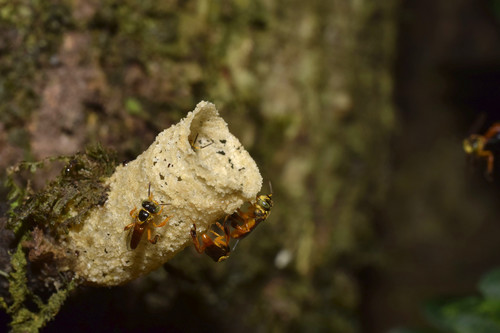
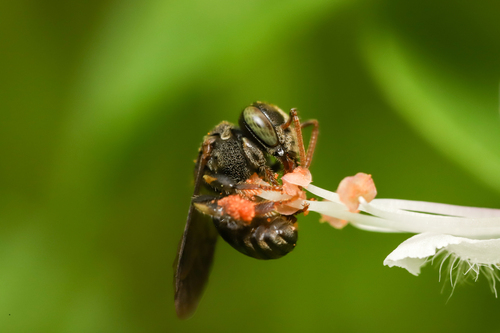
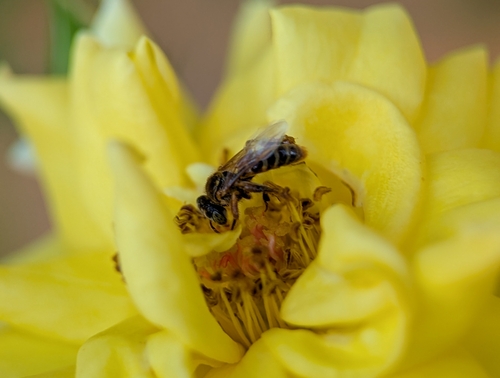
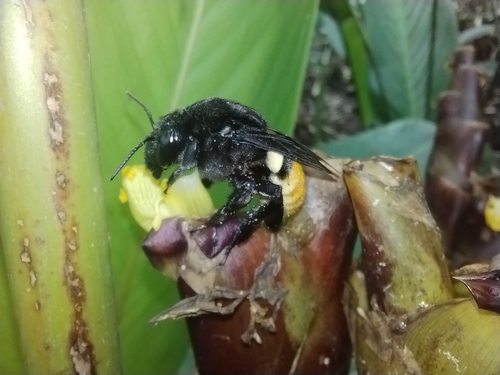
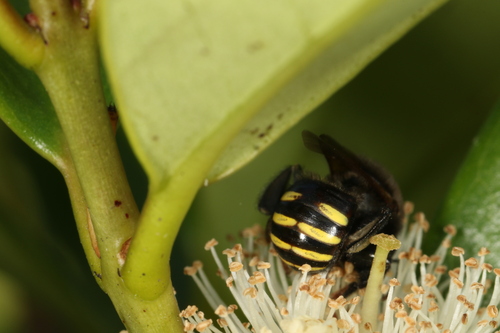
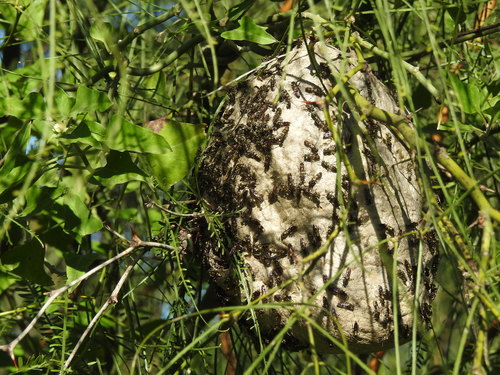
Frieseomelitta varia, commonly known as the abelha marmelada-amarela (Brazilian Portuguese: "yellow marmalade bee"), is a species of eusocial stingless bee in the family Apidae and tribe Meliponini. F. varia is native to Brazil.
In social insects, chemical communication is the most evolved form of communication. The chemicals produced for this type of communication are called hydrocarbons, that come from cuticular lipids. These chemicals produce can communicate certain things such as age, sex, reproductive status, caste, and which colony the individual is from. F. varia have 15 glands on their legs, some of which are thought to be used to produce pheromones.
Worker bees, called guards, protect their nest and colony from any individual that does not belong to said colony, called non-nestmates. Through olfactory senses and cuticular lipids produced by F. varia, guard nests are able to differentiate and either accept or reject individuals. However, this was shown to work best on older non-nestmate individuals. Newly emerged worker bees do produce a specific hydrocarbon based on which colony they emerged from. Since these worker bees... Wikipedia →