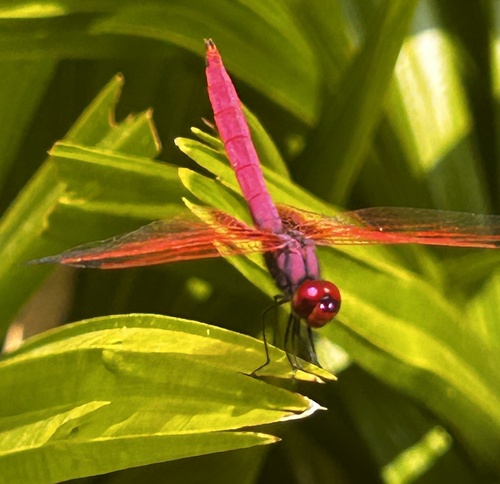
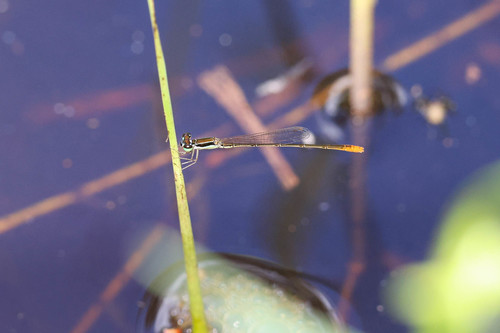
Rusty Darner

Rusty Darner

Anaciaeschna jaspidea

Daily sighting probability ~10% · With luck
at Bengaluru

In 3 days ~20% in a week ~40%

36 Verified sightings at Bengaluru
April Best month

About the Rusty Darner

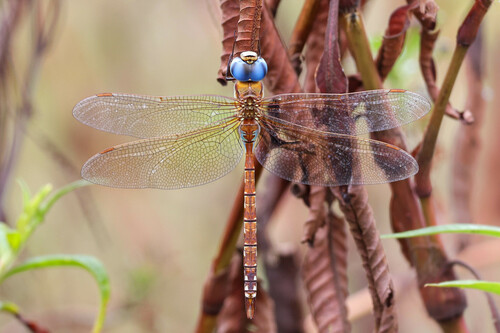
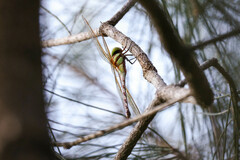
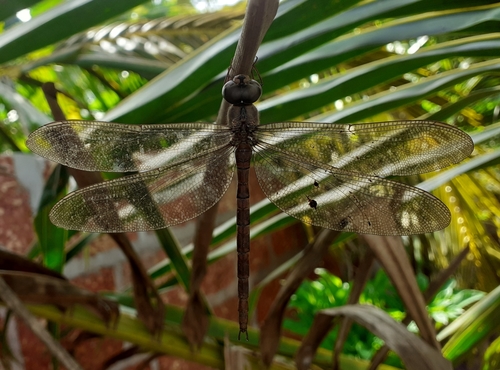
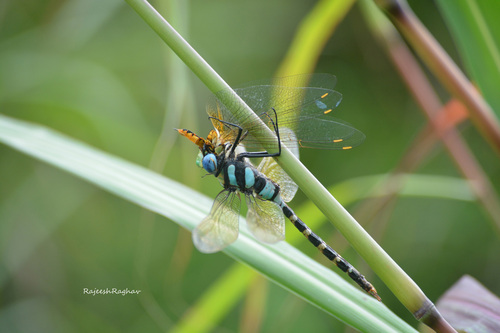
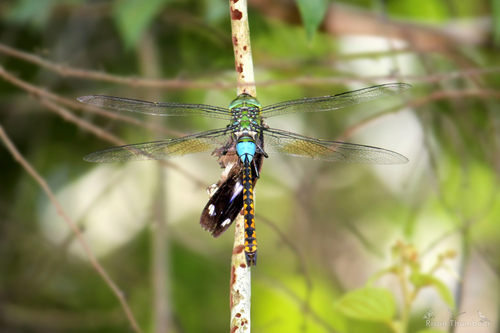
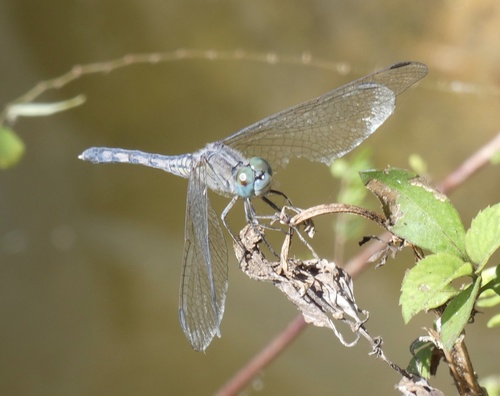
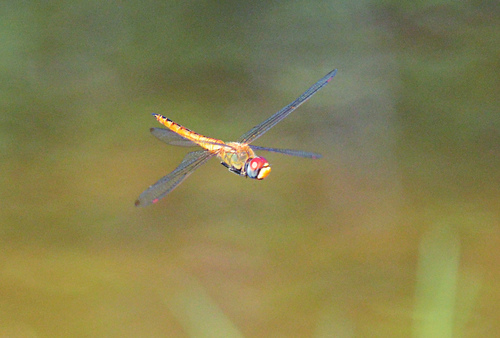
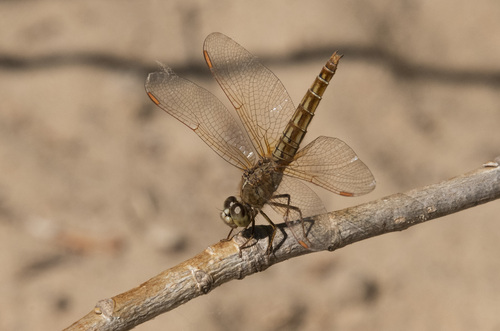
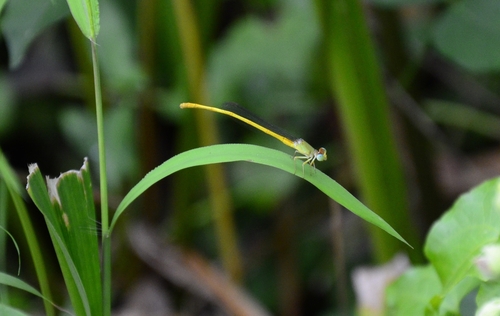
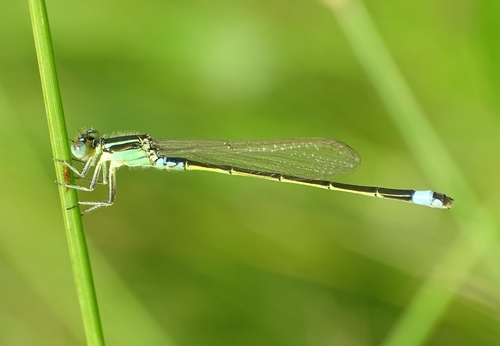
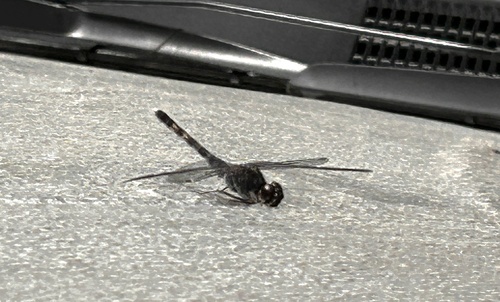
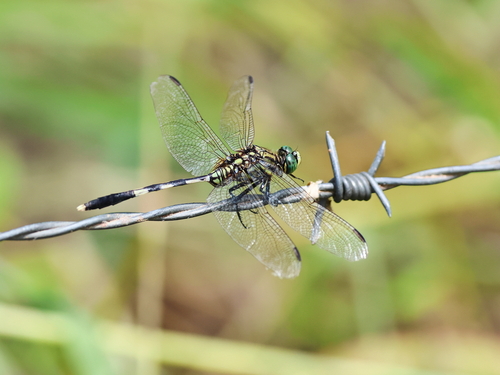
Anaciaeschna jaspidea is a species of dragonfly in the family Aeshnidae, commonly known as the Australasian duskhawker and Rusty darner. It is widely distributed from India through Australia to the Pacific. Anaciaeschna jaspidea is a large brown dragonfly with blue eyes. Its thorax is reddish-brown, with two broad greenish-yellow stripes on each side. Wings are transparent with pterostigma, reddish-brown. Abdomen is reddish-brown, marked with azure-blue, white, and yellow. Abdomen segment 1 has a large pale yellow spot on each side. Abdomen segment 2 has white marks on the sides and azure-blue on the dorsum with a broad spot of reddish-brown on mid-dorsum. Abdomen segments 3 to 7 are brown on dorsum with black apical annules. Abdomen segments 8 to 10 are darker on dorsum with a pair of dorsal apical spots. Anal appendages are dark reddish-brown. Female appears similar to the male.

Anaciaeschna jaspidea is a crepuscular species, flies during dawn and dusk. It is common in marshes surrounded by woods where it breeds. The genus name Anaciaeschna combines Anax, derived from the Greek ἄναξ (anax, "king" or "sovereign"), with Aeshna. The name... Wikipedia →

Global Distribution

Parks Where Found

# Park Country Daily sighting probability

More parks will be added in future updates.

Cities Where Found

# City Country Daily sighting probability
1 Xiamen City 🇨🇳 China
~10%
2 Bengaluru 🇮🇳 India
~10%
3 Taipei 🇹🇼 Taiwan
<5%

Before you go

What are the chances of seeing a Rusty Darner in Bengaluru?

With luck

About 10% of wildlife watchers report a Rusty Darner sighting in Bengaluru on a given day, based on 36 verified sightings from GBIF citizen-science data. It is the 153rd most-seen of the 477 insects we can rate there. Over three days the chance rises to about 20%, and over a week to about 40%, if each day is a fresh chance.

When is the best time to see a Rusty Darner in Bengaluru?

March–April and August–January

In those months about 10% of wildlife watchers report a Rusty Darner in Bengaluru on a given day, against under 5% in February and May–July, the lowest months.

Is Bengaluru the best place to see a Rusty Darner?

Among the best

Of the 3 cities where we can rate Rusty Darner sightings, Bengaluru ranks 2nd at about 10%, level with the leaders once rounded. The best odds are in Xiamen City (China, about 10%).

Which relatives of the Rusty Darner live in Bengaluru?

Same family: Aeshnidae

The closest relatives of the Rusty Darner that you can see in Bengaluru (family Aeshnidae, Darners) are Indian Duskhawker (about 10%) and Fiery Emperor (about 10%), with each one's daily chance of a sighting.

Where does the Rusty Darner sighting chance come from?

GBIF citizen-science records

It is estimated from how often the Rusty Darner is recorded against all the insects logged in Bengaluru (36 verified sightings), calibrated against known sighting rates. Figures are rounded to the nearest 10% because citizen-science data supports honest approximations, not decimals, and months with records from fewer than five people show "—". How it works.

← Back to Bengaluru