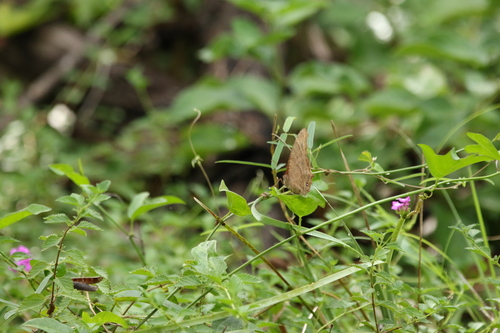
Tea Looper

Tea Looper

Biston suppressaria

Daily sighting probability <5% · Rare
at Bengaluru

In 3 days ~10% in a week ~30%

9 Verified sightings at Bengaluru
July Best month

About the Tea Looper

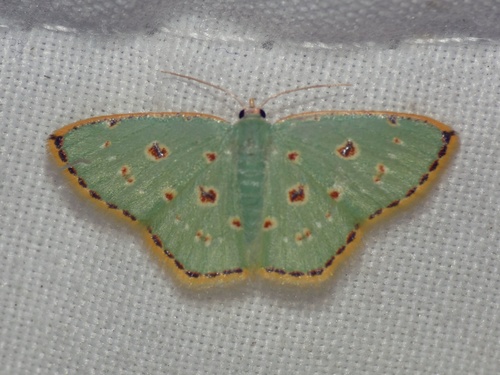
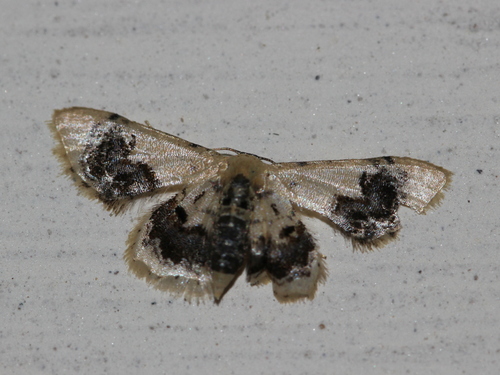
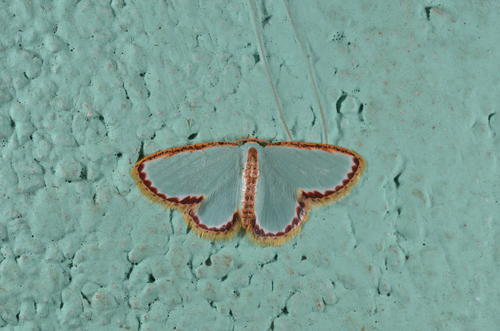
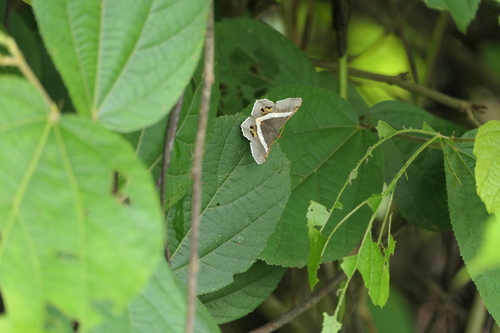
Biston suppressaria, the tea looper, is a moth of the family Geometridae. It is found in China (Henan, Shaanxi, Jiangsu, Anhui, Zhejiang, Hubei, Jiangxi, Hunan, Fujian, Guangdong, Hainan, Hong Kong, Guangxi, Sichuan, Chongqing, Guizhou, Yunnan, Tibet), India, Myanmar, Nepal, and Sri Lanka.

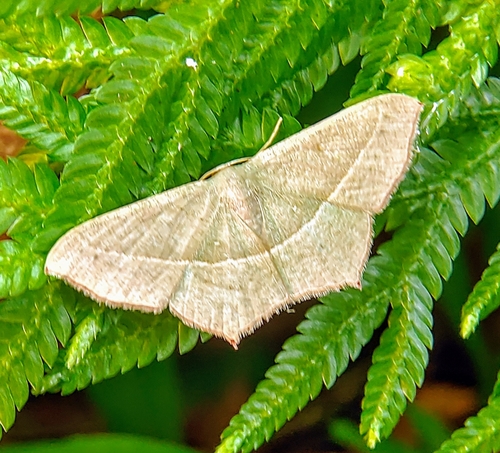
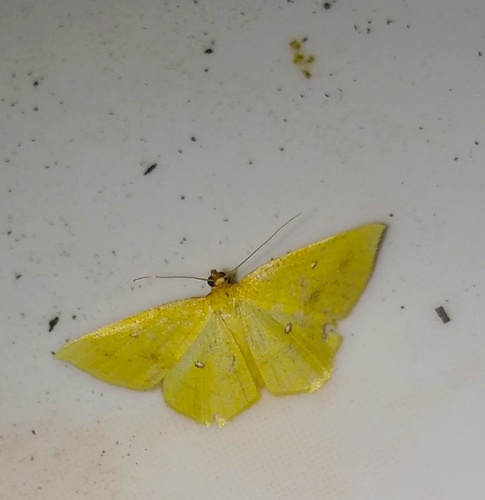
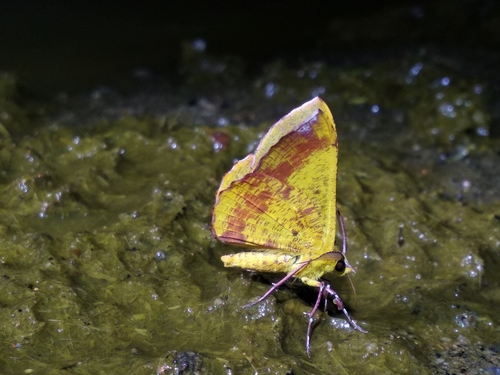
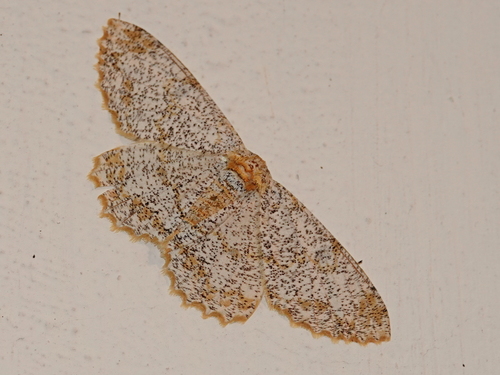
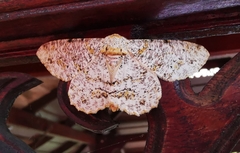
The wingspan of the male is 60–70 mm and the female is 74–80 mm. The proboscis is more developed. Frons less hairy. Hind tibia with the first pair of spurs medial. Wings with the outer margins non-crenulate. Antennae of male bipectinate (comb like on both sides) with short stiff branches. Body grey with black irrorations (sprinklings). Head ochreous. Thorax and abdomen with yellow bars. Forewings with waved yellow antemedial band. Both wings with irregularly sinuous indistinct yellow medial line curved outward beyond the cell of forewings. There is an ill-defined postmedial maculate band angled at vein 5 of both wings, with some outer margin of forewing. A marginal yellow spots series present.

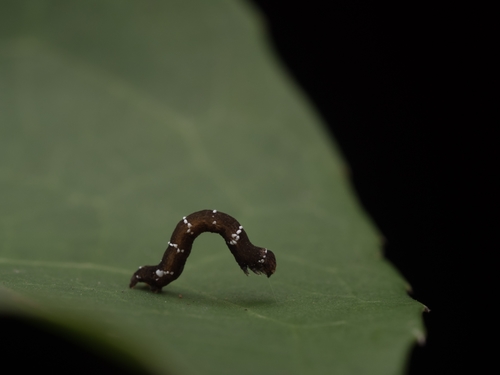
Larva dark green with dark somital bands and slight sub-lateral line. Spiracles white ringed with red and red centers. Tubercle on first somite and legs purple. Female larva much pale green... Wikipedia →
Global Distribution

Parks Where Found

# Park Country Daily sighting probability

More parks will be added in future updates.

Cities Where Found

# City Country Daily sighting probability
1 Kochi 🇮🇳 India
~10%
2 Bengaluru 🇮🇳 India
<5%
3 Hong Kong 🇨🇳 China
<5%

Before you go

What are the chances of seeing a Tea Looper in Bengaluru?

Rare

Under 5% of wildlife watchers report a Tea Looper sighting in Bengaluru on a given day, based on 9 verified sightings from GBIF citizen-science data. It is the 308th most-seen of the 477 insects we can rate there. Over three days the chance rises to about 10%, and over a week to about 30%, if each day is a fresh chance.

When is the best time to see a Tea Looper in Bengaluru?

April, July and October

In those months about 10% of wildlife watchers report a Tea Looper in Bengaluru on a given day, against under 5% in May–June, August–September and November–March, the lowest months. Those are among Bengaluru's wettest months, with about 100 mm of rain a month against almost none in January.

Is Bengaluru the best place to see a Tea Looper?

2nd of 3

Of the 3 cities where we can rate Tea Looper sightings, Bengaluru ranks 2nd at under 5%. The best odds are in Kochi (India, about 10%).

Which relatives of the Tea Looper live in Bengaluru?

Same family: Geometridae

The closest relatives of the Tea Looper that you can see in Bengaluru (family Geometridae, Geometer Moths) are Chiasmia emersaria (about 10%), Acacia Blood Vein Moth (about 10%) and Black Looper (about 10%), with each one's daily chance of a sighting.

Where does the Tea Looper sighting chance come from?

GBIF citizen-science records

It is estimated from how often the Tea Looper is recorded against all the insects logged in Bengaluru (9 verified sightings), calibrated against known sighting rates. Figures are rounded to the nearest 10% because citizen-science data supports honest approximations, not decimals, and months with records from fewer than five people show "—". How it works.

← Back to Bengaluru