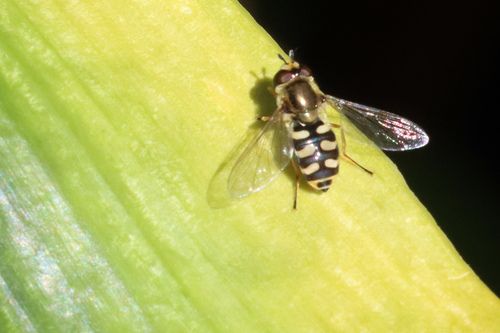
Broad-Barred Brusheye

Broad-Barred Brusheye

Dasysyrphus venustus

Daily sighting probability <5% · Rare
at Birmingham

In 3 days ~10% in a week ~30%

9 Verified sightings at Birmingham
May Best month

About the Broad-Barred Brusheye

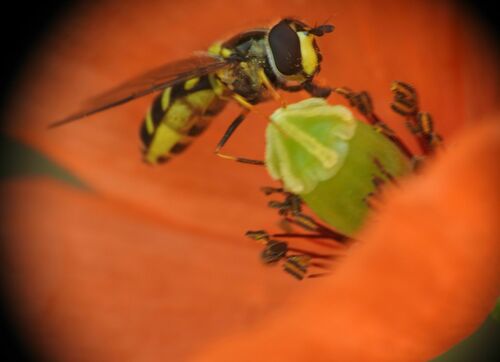
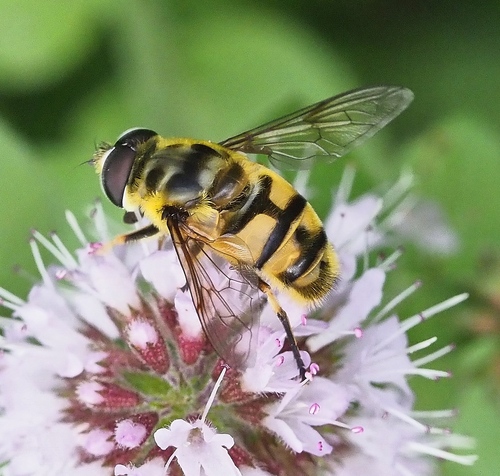
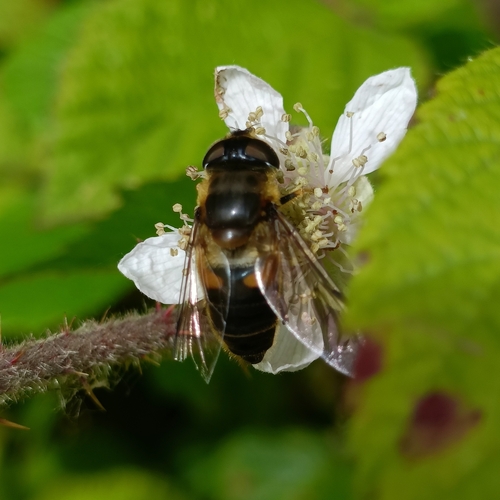
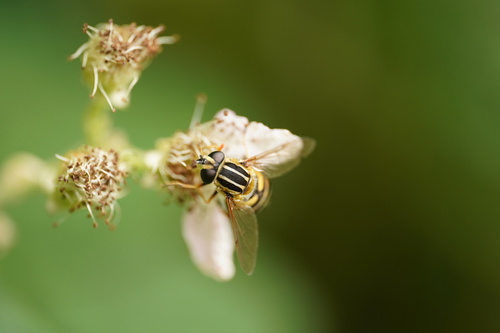
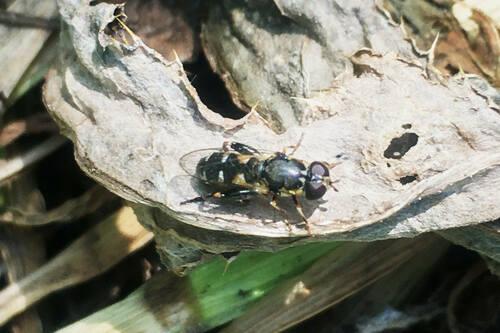
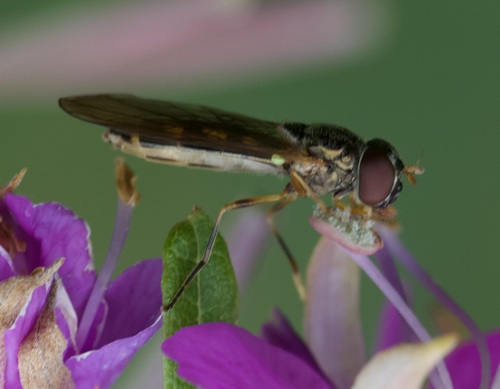
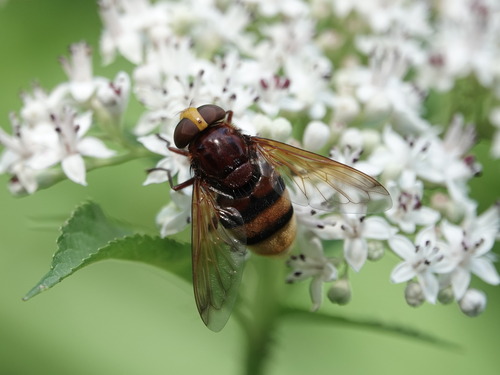
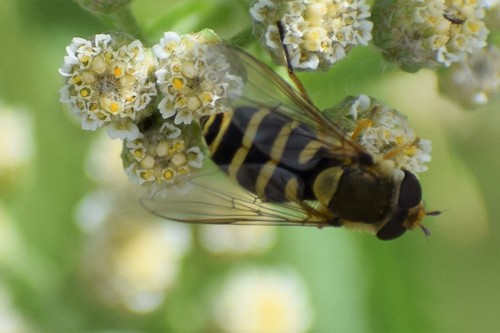
Dasysyrphus venustus is a Holarctic species of hoverfly. External images For terms see Morphology of Diptera Wing length 6·25–10 mm. Eyes hairy. Tergites 3 and 4 with equal-sized yellow patterns. Tergite 2 pale pattern always present, as broad as or broader than pattern on tergites 3 and 4.Face with black longitudinal stripe. Female sternite 2 black at hind margin and dust spots on frons faint.

Male genitalia are figured by Hippa (1968). The larva is figured by (Dusek and Laska (1962) Palaearctic. Fennoscandia South to Northern Spain. Ireland eastwards through North and Central Europe. Mountains of Italy, Yugoslavia). East into European and Russian Far East and Siberia to the Pacific coast (Kuril Islands)

Habitat: Fagus, Quercus and Betula woodland, alluvial deciduous forest, Pinus, Picea and Abies forest. Clearings, tracksides and arboreal, descending to visit flowers of white Umbelliferae Acer platanoides, Acer pseudoplatanus, Allium ursinum, Berberis, Caltha, Crataegus, Endymion, Euphorbia, Frangula alnus, Ilex, Lonicera xylosteum, Potentilla erecta, Prunus cerasus, Prunus spinosa, Ranunculus, Rubus idaeus, Salix, Sambucus... Wikipedia →

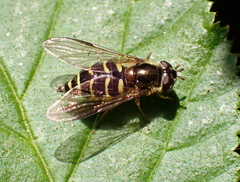
Global Distribution

Parks Where Found

# Park Country Daily sighting probability

More parks will be added in future updates.

Cities Where Found

# City Country Daily sighting probability
1 Birmingham 🇬🇧 United Kingdom
<5%

Before you go

What are the chances of seeing a Broad-Barred Brusheye in Birmingham?

Rare

Under 5% of wildlife watchers report a Broad-Barred Brusheye sighting in Birmingham on a given day, based on 9 verified sightings from GBIF citizen-science data. It is the 528th most-seen of the 811 insects we can rate there. Over three days the chance rises to about 10%, and over a week to about 30%, if each day is a fresh chance.

When is the best time to see a Broad-Barred Brusheye in Birmingham?

April and May

In those months about 10% of wildlife watchers report a Broad-Barred Brusheye in Birmingham on a given day, against under 5% in June to March, the lowest months.

Where else can you see a Broad-Barred Brusheye?

Only Birmingham, in our data

Birmingham is the only city on Wallace's Line with enough records to rate Broad-Barred Brusheye sightings: under 5% of wildlife watchers there report one on a given day.

Where does the Broad-Barred Brusheye sighting chance come from?

GBIF citizen-science records

It is estimated from how often the Broad-Barred Brusheye is recorded against all the insects logged in Birmingham (9 verified sightings), calibrated against known sighting rates. Figures are rounded to the nearest 10% because citizen-science data supports honest approximations, not decimals, and months with records from fewer than five people show "—". How it works.

← Back to Birmingham