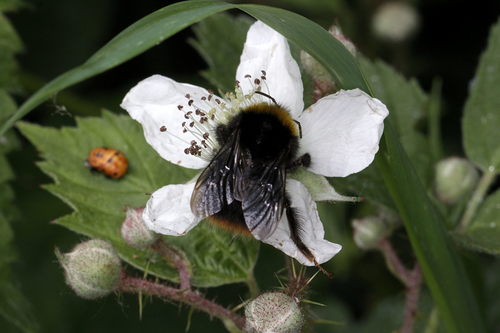
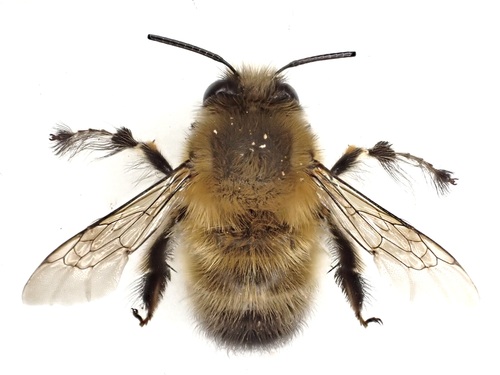
Clark's Mining Bee
Daily sighting probability ~10% · With luck
at Birmingham

In 3 days ~10% in a week ~30%

16 Verified sightings at Birmingham
16 In 1 park From 2019 to 2026
March Best month
☀️ Diurnal When it's spotted

About the Clark's Mining Bee

The Clark's miner bee (Andrena clarkella) is a species of miner bee in the family Andrenidae. Other common names include Clark's andrena and Clarke's mining bee. It is found in Europe and Northern Asia (excluding China) and North America.

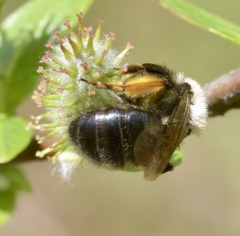
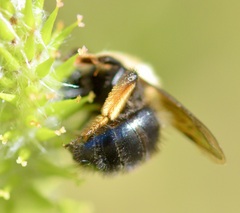
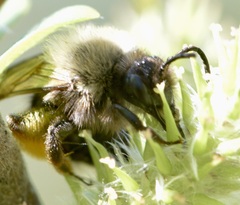
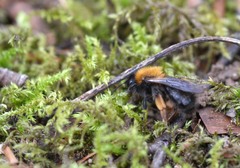
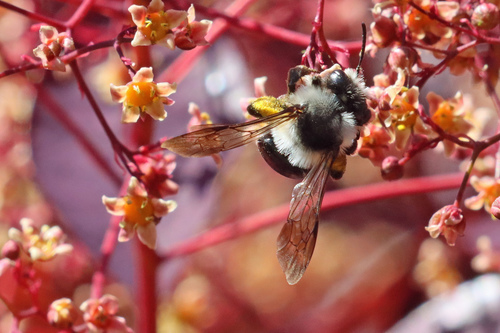
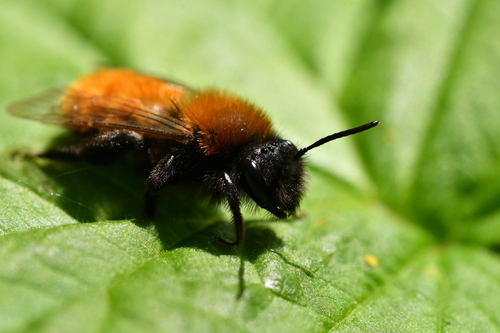
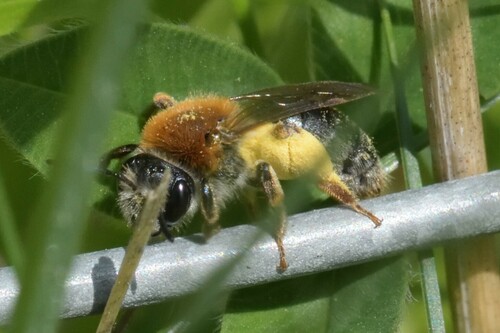
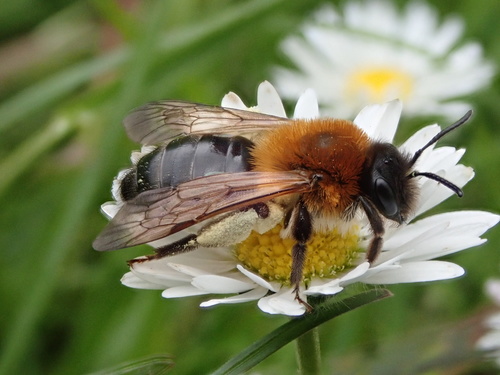
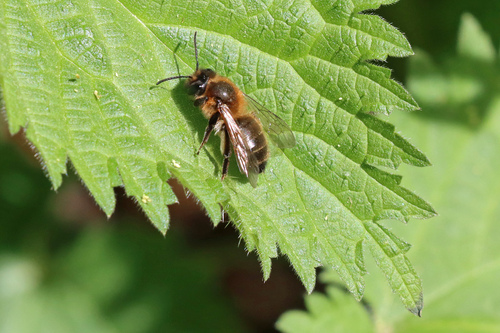
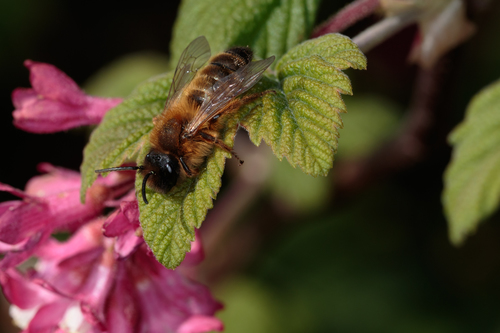
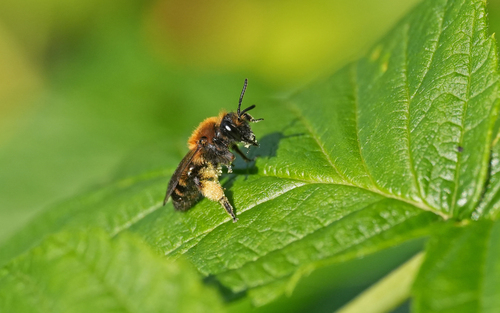
Etymology: William Kirby named the species in honor of Bracy Clark, an English entomologist. Identification: 10-13 mm. Male with brown hair with loose tergite bands. Rarely on flowers, more on tree bark basking. Female easy to determine in the field: very densely hairy, with black hairs on the abdomen and reddish brown hair on the mesonotum. Hind legs fox red with equally colored rail brush. Small specimens resemble Andrena bicolor. Terminal fringe dark brown.

Pollen sources: Oligolectic on willows (Salix, Salicaceae). Nest building: Bare to sparsely overgrown areas in sparse forests Forest fringes or clearings, preferably in sandy soil, but also nests in humus soils, mostly in smaller aggregations with low nest density. The nest entrance is locked before each food supply flight. One to four brood cells are created per nest, often only 5 cm, a maximum of 30 cm below the surface.

Habitat: Affinity to forests; forest fringes, forest clearings, clear cuts, preferred on sandy soil. From the lowlands to the subalpine altitude. Parasites: cuckoo bee is Nomada leucophthalma. As another nest parasite Bombylius major was observed. Adults are sometimes infested with Stylops melittae.

Flight period: In one generation from early March to mid-May. Wikipedia →
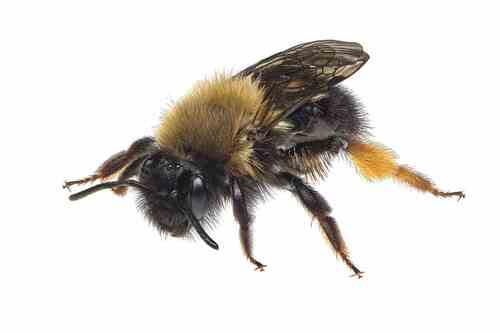
Global Distribution

Parks Where Found

# Park Country Daily sighting probability
1 Bavarian Forest National Park 🇩🇪 Germany
<5%

More parks will be added in future updates.

Cities Where Found

# City Country Daily sighting probability
1 Helsinki 🇫🇮 Finland
~10%
2 Manchester 🇬🇧 United Kingdom
~10%
3 Novosibirsk 🇷🇺 Russia
~10%
4 Birmingham 🇬🇧 United Kingdom
~10%
5 Liverpool 🇬🇧 United Kingdom
~10%
6 Nizhny Novgorod 🇷🇺 Russia
<5%
7 Yekaterinburg 🇷🇺 Russia
<5%
8 Moscow 🇷🇺 Russia
<5%
9 Saint Petersburg 🇷🇺 Russia
<5%
10 London 🇬🇧 United Kingdom
<5%

Before you go

What are the chances of seeing a Clark's Mining Bee in Birmingham?

With luck

About 10% of wildlife watchers report a Clark's Mining Bee sighting in Birmingham on a given day, based on 16 verified sightings from GBIF citizen-science data. It is the 417th most-seen of the 811 insects we can rate there. Over three days the chance rises to about 10%, and over a week to about 30%, if each day is a fresh chance.

When is the best time to see a Clark's Mining Bee in Birmingham?

March

In that month about 20% of wildlife watchers report a Clark's Mining Bee in Birmingham on a given day, against under 5% in May to February, the lowest months.

What time of day is best to see a Clark's Mining Bee?

Between 9 am and noon

Across all the parks we cover, that three-hour window holds the most Clark's Mining Bee sightings with a recorded time, and nearly all of them come between 6 am and 6 pm: it is a daytime animal.

Is Birmingham the best place to see a Clark's Mining Bee?

Among the best

Of the 10 cities where we can rate Clark's Mining Bee sightings, Birmingham ranks 4th at about 10%, level with the leaders once rounded. The best odds are in Helsinki (Finland, about 10%), Manchester (United Kingdom, about 10%) and Novosibirsk (Russia, about 10%).

Which relatives of the Clark's Mining Bee live in Birmingham?

Same genus: Andrena

The closest relatives of the Clark's Mining Bee that you can see in Birmingham (genus Andrena, Mining Bees) are Ashy Mining Bee (about 20%), Tawny Mining Bee (about 20%) and Early Mining Bee (about 10%), with each one's daily chance of a sighting.

Where does the Clark's Mining Bee sighting chance come from?

GBIF citizen-science records

It is estimated from how often the Clark's Mining Bee is recorded against all the insects logged in Birmingham (16 verified sightings), calibrated against known sighting rates. Figures are rounded to the nearest 10% because citizen-science data supports honest approximations, not decimals, and months with records from fewer than five people show "—". How it works.

← Back to Birmingham