

Gorse Seed Weevil

Gorse Seed Weevil

Exapion ulicis

Daily sighting probability ~10% · With luck
at Birmingham

In 3 days ~20% in a week ~30%

17 Verified sightings at Birmingham
April Best month

About the Gorse Seed Weevil

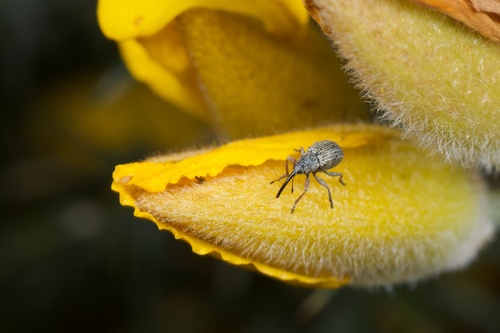
Exapion ulicis (formerly Apion ulicis) is a species of straight-snouted weevil known by the general common name Gorse Seed Weevil. It is used as an agent of biological pest control against Common Gorse (Ulex europaeus), which is classified as a noxious weed in some countries.

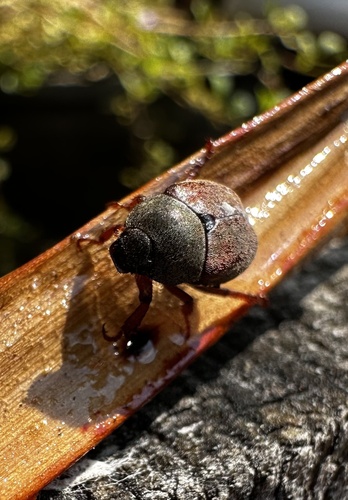
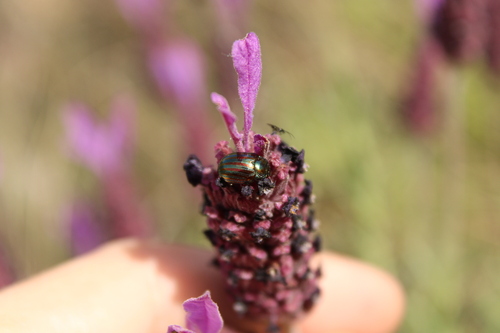
The adult weevil is light gray in color with a long snout half as long as its body. It is 2 to 3 millimeters long in total. The adult feeds on gorse by digging into the soft tissue of the stem and spines with its snout, creating characteristic round holes as evidence. The larva does more damage, however. It emerges from its egg inside the gorse seed pod and feeds on the seeds for six to eight weeks. The larva then pupates for about two months.

This weevil is native to western Europe. It was first introduced to New Zealand in 1931 and to California as an agent of gorse control in the 1950s. It is currently established in gorse populations in the western United States and in Hawaii. Destruction of seeds may reduce the spread of gorse, which is the main method of biological control by this weevil. It does not eliminate existing stands of the plant, since the adults do not do enough damage to destroy or significantly weaken whole plants. Wikipedia →

Global Distribution

Parks Where Found

# Park Country Daily sighting probability

More parks will be added in future updates.

Cities Where Found

# City Country Daily sighting probability
1 Birmingham 🇬🇧 United Kingdom
~10%
2 London 🇬🇧 United Kingdom
<5%
3 Auckland 🇳🇿 New Zealand
<5%

Before you go

What are the chances of seeing a Gorse Seed Weevil in Birmingham?

With luck

About 10% of wildlife watchers report a Gorse Seed Weevil sighting in Birmingham on a given day, based on 17 verified sightings from GBIF citizen-science data. It is the 387th most-seen of the 811 insects we can rate there. Over three days the chance rises to about 20%, and over a week to about 30%, if each day is a fresh chance.

When is the best time to see a Gorse Seed Weevil in Birmingham?

March and April

In those months about 10% of wildlife watchers report a Gorse Seed Weevil in Birmingham on a given day, against under 5% in May to February, the lowest months.

Is Birmingham the best place to see a Gorse Seed Weevil?

Yes

Of the 3 cities where we can rate Gorse Seed Weevil sightings, Birmingham has the highest daily chance: about 10%. Next come London (United Kingdom, under 5%) and Auckland (New Zealand, under 5%).

Where does the Gorse Seed Weevil sighting chance come from?

GBIF citizen-science records

It is estimated from how often the Gorse Seed Weevil is recorded against all the insects logged in Birmingham (17 verified sightings), calibrated against known sighting rates. Figures are rounded to the nearest 10% because citizen-science data supports honest approximations, not decimals, and months with records from fewer than five people show "—". How it works.

← Back to Birmingham