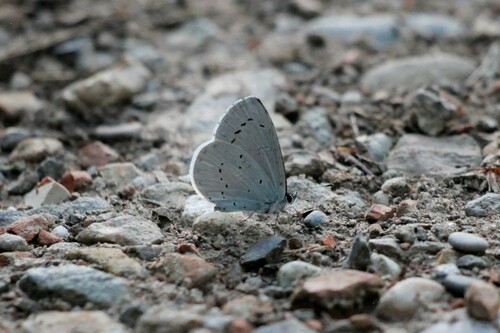
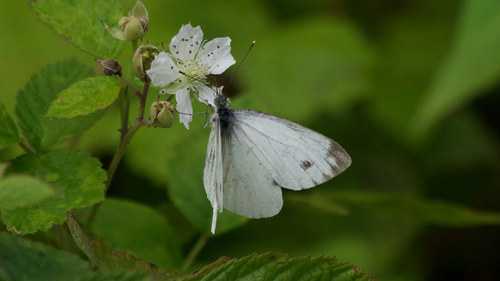
Large Longhorn

Large Longhorn

Nematopogon swammerdamella

Daily sighting probability <5% · Rare
at Birmingham

In 3 days ~10% in a week ~20%

6 Verified sightings at Birmingham
May Best month

About the Large Longhorn

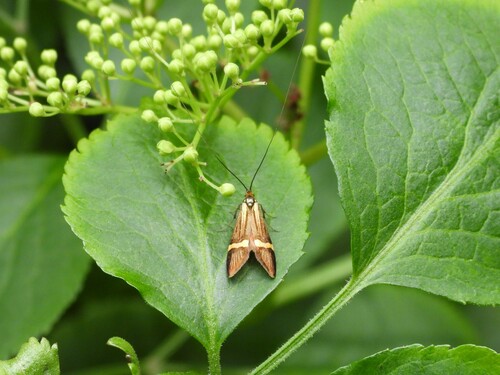
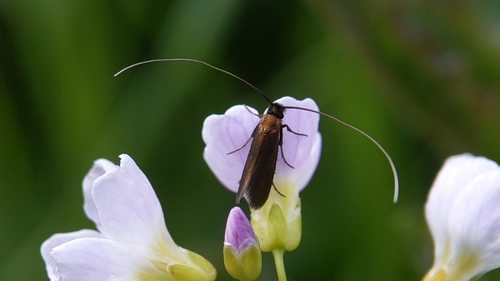
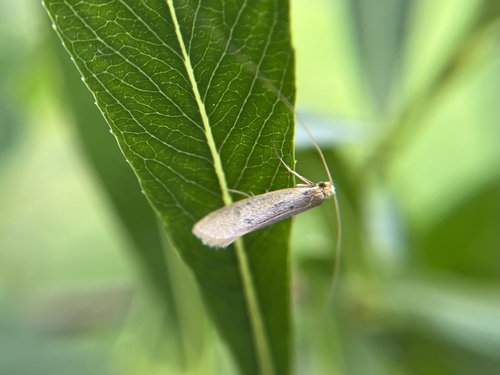
Nematopogon swammerdamella is a moth of the family Adelidae. A medium-sized, brownish-yellow moth with long antennae. It is the largest of the Nematopogon species found in North Europe, and can otherwise be recognized by the fact that the forewing is rather pronounced triangular (more rounded in the other species). In addition, it begins to fly earlier in the spring than the other species in the genus. However, one often has to examine the genitalia to determine the species with certainty. The antennae are filamentous, yellowish, about two and a half times as long as the forewing in the male and about 1.8 times as long in the female. The head, forebody and forewing are ochre-yellow. The forewing is relatively wide and has a pronounced tip and hind corner, so that it becomes distinctly triangular. The wing fringes are yellowish, paler than the wing. The hind wing is grey with pale grey wing fringes. The tip may be slightly brownish.Meyrick - The moth has long, pale shining ochreous, faintly darker strigulated forewings and long antennae. The hindwings are pale grey; cilia whitish-ochreous. Head orange, face whitish. The wingspan is 17–21 mm.

To certainly determine... Wikipedia →
Global Distribution

Parks Where Found

# Park Country Daily sighting probability

More parks will be added in future updates.

Cities Where Found

# City Country Daily sighting probability
1 Prague 🇨🇿 Czechia
<5%
2 Birmingham 🇬🇧 United Kingdom
<5%
3 London 🇬🇧 United Kingdom
<5%

Before you go

What are the chances of seeing a Large Longhorn in Birmingham?

Rare

Under 5% of wildlife watchers report a Large Longhorn sighting in Birmingham on a given day, based on 6 verified sightings from GBIF citizen-science data. It is the 668th most-seen of the 811 insects we can rate there. Over three days the chance rises to about 10%, and over a week to about 20%, if each day is a fresh chance.

When is the best time to see a Large Longhorn in Birmingham?

May

In that month about 10% of wildlife watchers report a Large Longhorn in Birmingham on a given day, against under 5% in June to April, the lowest months.

Is Birmingham the best place to see a Large Longhorn?

Among the best

Of the 3 cities where we can rate Large Longhorn sightings, Birmingham ranks 2nd at under 5%, level with the leaders once rounded. The best odds are in Prague (Czechia, under 5%).

Which relatives of the Large Longhorn live in Birmingham?

Same family: Adelidae

The closest relatives of the Large Longhorn that you can see in Birmingham (family Adelidae, Fairy Moths) are Adela viridella (about 10%) and Yellow-Barred Longhorn (about 10%), with each one's daily chance of a sighting.

Where does the Large Longhorn sighting chance come from?

GBIF citizen-science records

It is estimated from how often the Large Longhorn is recorded against all the insects logged in Birmingham (6 verified sightings), calibrated against known sighting rates. Figures are rounded to the nearest 10% because citizen-science data supports honest approximations, not decimals, and months with records from fewer than five people show "—". How it works.

← Back to Birmingham