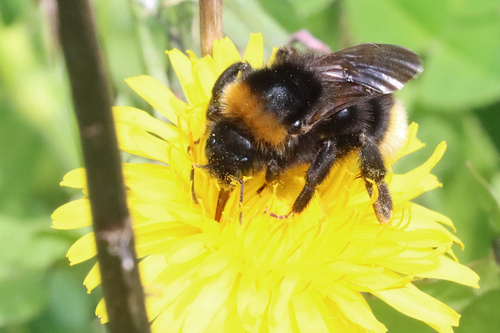
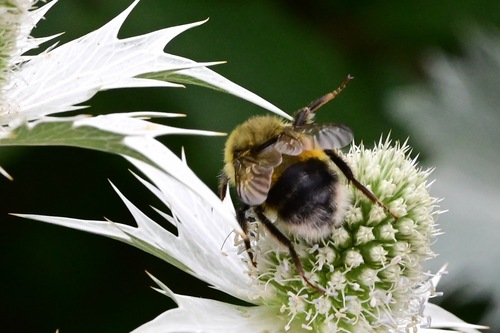
Marsham's Nomad Bee

Marsham's Nomad Bee

Nomada marshamella

Daily sighting probability <5% · Rare
at Birmingham

In 3 days ~10% in a week ~30%

9 Verified sightings at Birmingham
April Best month

About the Marsham's Nomad Bee

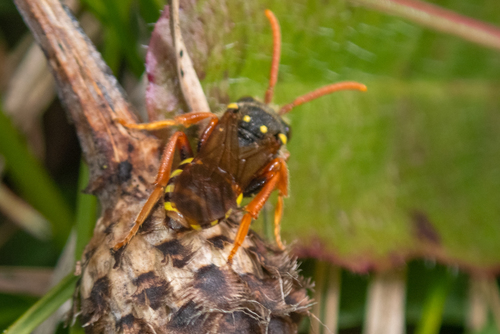
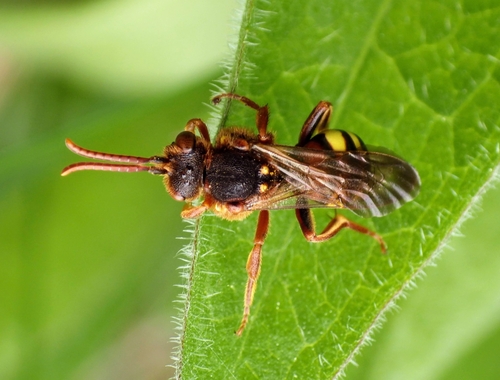
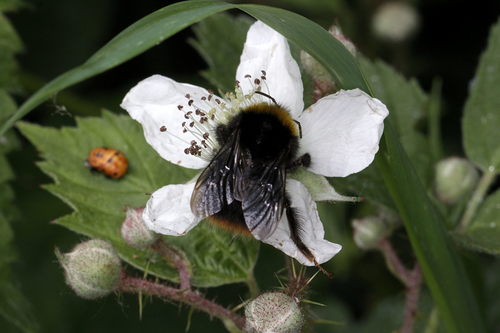
Nomada marshamella, Marsham's nomad bee, is a species of Palearctic cuckoo bee which appears to be a wasp mimic and which is cleptoparasite on the mining bees of the genus Andrena, especially A. scotica and A. trimmerana.

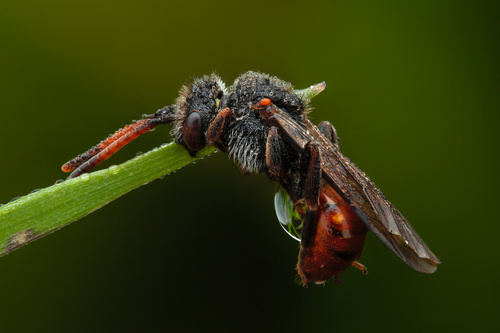
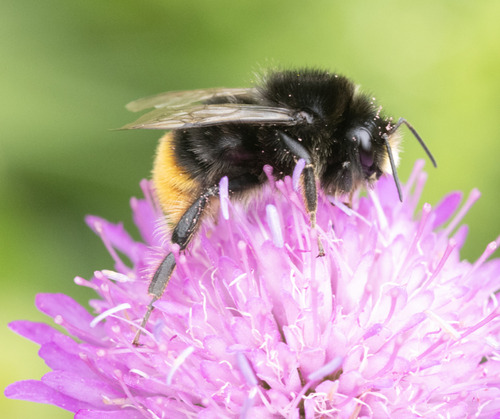
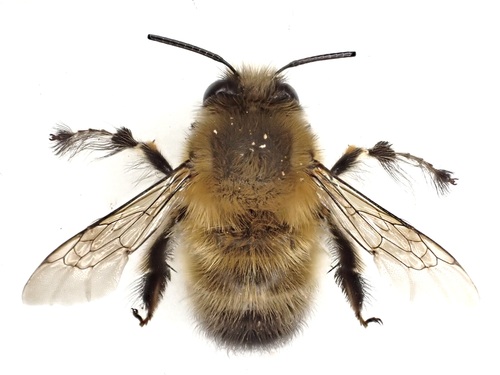
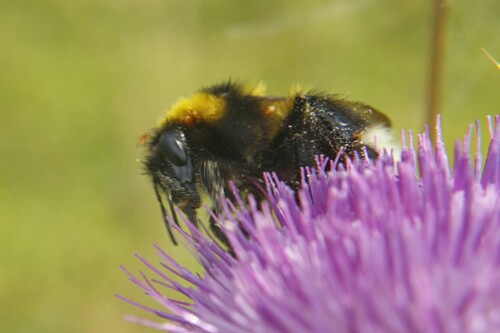
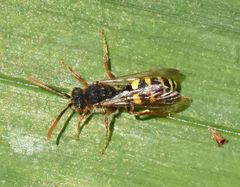
Nomada marshamella is a large (10-13mm) black and yellow nomad bee with a rather wasp like shape. It has well separated yellow spots on the second tergite with no reddish fringes on the tergites which are seen in similar species. The sternites are mostly black and yellow in colour with little or no red, the tegulae are orange. Male N. marshamella are difficult to identify when compared to N. fulvicornis but the yellow markings on the eye and tergite 1 are less extensive, there is some brown on the tegulae and it has longer antennae. It has a black head which is marked with yellow in males, which are smaller than the females.

Nomada marshamella is endemic to the western Palearctic ecozone from Britain and Ireland in the west east to Turkey, north to southern Finland and on the islands of Corsica and Malta. Nomada marshamella is found in a wide variety of habitats, occurring both in coastal and inland areas, wherever... Wikipedia →

Global Distribution

Parks Where Found

# Park Country Daily sighting probability

More parks will be added in future updates.

Cities Where Found

# City Country Daily sighting probability
1 Birmingham 🇬🇧 United Kingdom
<5%
2 London 🇬🇧 United Kingdom
<5%

Before you go

What are the chances of seeing a Marsham's Nomad Bee in Birmingham?

Rare

Under 5% of wildlife watchers report a Marsham's Nomad Bee sighting in Birmingham on a given day, based on 9 verified sightings from GBIF citizen-science data. It is the 528th most-seen of the 811 insects we can rate there. Over three days the chance rises to about 10%, and over a week to about 30%, if each day is a fresh chance.

When is the best time to see a Marsham's Nomad Bee in Birmingham?

April and May

In those months about 10% of wildlife watchers report a Marsham's Nomad Bee in Birmingham on a given day, against under 5% in June to March, the lowest months.

Is Birmingham the best place to see a Marsham's Nomad Bee?

Yes

Of the 2 cities where we can rate Marsham's Nomad Bee sightings, Birmingham has the highest daily chance: under 5%. Next come London (United Kingdom, under 5%).

Which relatives of the Marsham's Nomad Bee live in Birmingham?

Same genus: Nomada

The closest relatives of the Marsham's Nomad Bee that you can see in Birmingham (genus Nomada, Nomad Bees) are Gooden's Nomad Bee (about 10%) and Lathbury's Nomad Bee (about 10%), with each one's daily chance of a sighting.

Where does the Marsham's Nomad Bee sighting chance come from?

GBIF citizen-science records

It is estimated from how often the Marsham's Nomad Bee is recorded against all the insects logged in Birmingham (9 verified sightings), calibrated against known sighting rates. Figures are rounded to the nearest 10% because citizen-science data supports honest approximations, not decimals, and months with records from fewer than five people show "—". How it works.

← Back to Birmingham