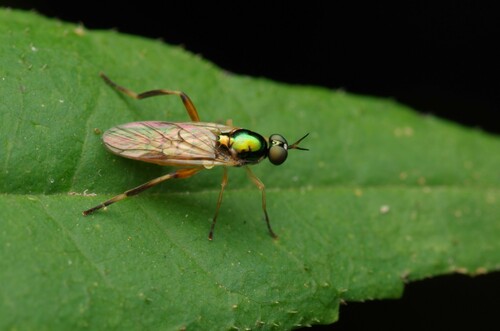
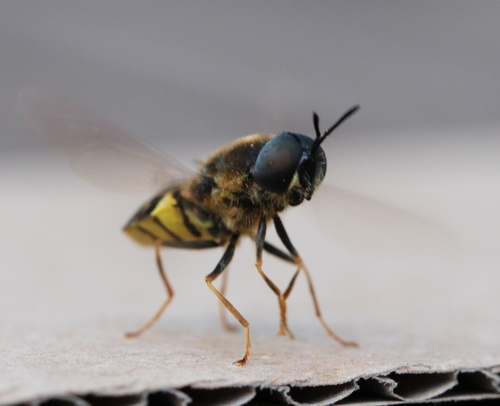
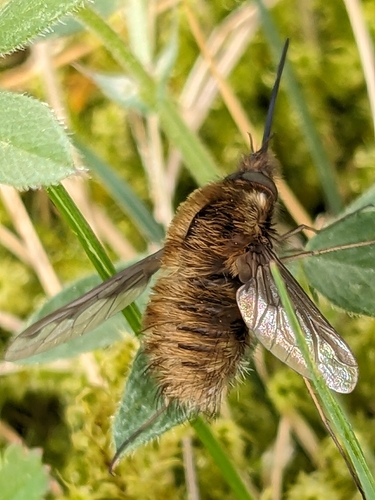
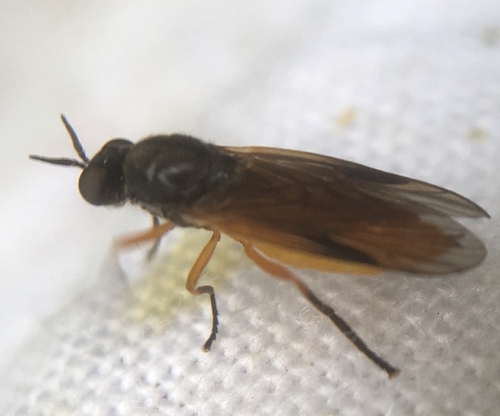
Orange Legionnaire

Orange Legionnaire

Beris vallata

Daily sighting probability <5% · Rare
at Birmingham

In 3 days ~10% in a week ~20%

5 Verified sightings at Birmingham
June Best month

About the Orange Legionnaire

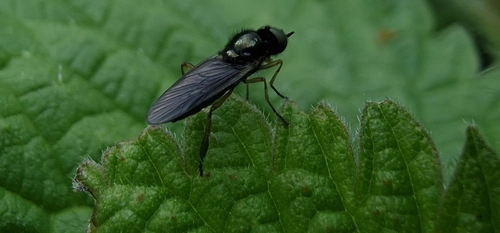
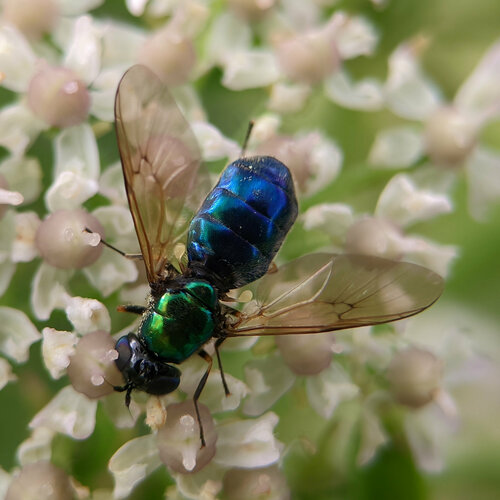
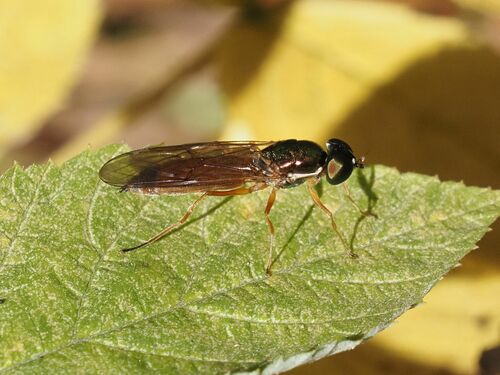
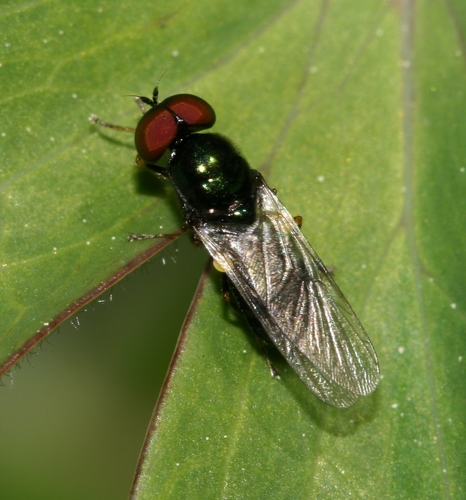
Beris vallata, the orange legionnaire or common orange legionnaire, is a European species of soldier fly. Beris vallata is a soldier fly, which is black and yellow in colour. The abdomen is entirely yellow, lacking black bands. All tibiae are yellow and then black in the apical half. Wings of the female are yellowish with brown pterostigma, while wings of the male are blackish in colour. Pubescence of the abdomen is black for males and yellow in females. Body length ranges from 5 to 6 mm. The species also possesses six spines which protrude from the back of the scutellum.

The flight period is from may to September. Larvae inhabit moist Bryophyta, where they feed on decaying vegetation. Pupation will take place among fallen decomposing leaves. Adults feed on pollen and nectar including that of Tanacetum vulgare.

Beris vallata is associated with marsh and wet woodland habitats in areas that provide moist conditions for mosses. Larvae can often be found living within mosses in close proximity to bodies of water. Adults are found on vegetation, also in close proximity to moist habitat.

North Europe, Central Europe, Southwest... Wikipedia →
Global Distribution

Parks Where Found

# Park Country Daily sighting probability

More parks will be added in future updates.

Cities Where Found

# City Country Daily sighting probability
1 Manchester 🇬🇧 United Kingdom
<5%
2 Birmingham 🇬🇧 United Kingdom
<5%
3 London 🇬🇧 United Kingdom
<5%

Before you go

What are the chances of seeing an Orange Legionnaire in Birmingham?

Rare

Under 5% of wildlife watchers report an Orange Legionnaire sighting in Birmingham on a given day, based on 5 verified sightings from GBIF citizen-science data. It is the 745th most-seen of the 811 insects we can rate there. Over three days the chance rises to about 10%, and over a week to about 20%, if each day is a fresh chance.

When is the best time to see an Orange Legionnaire in Birmingham?

June

In that month about 10% of wildlife watchers report an Orange Legionnaire in Birmingham on a given day, against under 5% in July to May, the lowest months.

Is Birmingham the best place to see an Orange Legionnaire?

Among the best

Of the 3 cities where we can rate Orange Legionnaire sightings, Birmingham ranks 2nd at under 5%, level with the leaders once rounded. The best odds are in Manchester (United Kingdom, under 5%).

Where does the Orange Legionnaire sighting chance come from?

GBIF citizen-science records

It is estimated from how often the Orange Legionnaire is recorded against all the insects logged in Birmingham (5 verified sightings), calibrated against known sighting rates. Figures are rounded to the nearest 10% because citizen-science data supports honest approximations, not decimals, and months with records from fewer than five people show "—". How it works.

← Back to Birmingham