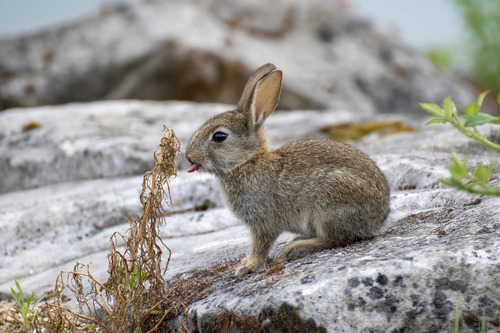
Burunduk

Burunduk

Tamias sibiricus

Silhouette: Chloé Schmidt · PhyloPic

Daily sighting probability ~20% · Possible
at Brussels

In 3 days ~50% in a week ~80%

72 Verified sightings at Brussels
July Best month

About the Burunduk

The Siberian chipmunk (Eutamias sibiricus), also called common chipmunk, is a species of chipmunk native to northern Asia from central Russia to China, Korea, and Hokkaidō in northern Japan. It was imported from South Korea and introduced in Europe as a pet in the 1960s.

Typically the Siberian chipmunk has four white stripes and five dark stripes along the back. It is 18–25 cm (7.1–9.8 in) long, a third of which is the tail. The weight of adults depends on the time of year and food availability. It exhibits slight variations in coloration in different geographic regions. Even though the Siberian chipmunk normally grows to 50–150 g (1.8–5.3 oz). The Siberian chipmunk does not exhibit sexual dimorphism, and size and body proportions are the only way to distinguish younger chipmunks from older ones. Its small size may contribute to its relatively short life from two to five years in the wild. However, in captivity it lives up to ten years.

The only species of chipmunk found outside North America, the Siberian chipmunk is native to Russia in northern European, Siberia to Sakhalin and Kunashir, extreme eastern Kazakhstan, northern Mongolia, northern... Wikipedia →


Sounds

Recording0:29

South Korea · 2021

© Leslie Hurteau · iNaturalist · CC BY-NC 4.0

Recording1:15

China · 2025

© Dave Guo · iNaturalist · CC BY-NC 4.0

Recording0:31

Russia · 2024

© Евгения Петровна Астафьева · iNaturalist · CC BY-NC 4.0

Global Distribution

Parks Where Found

# Park Country Daily sighting probability

More parks will be added in future updates.

Cities Where Found

# City Country Daily sighting probability
1 Ürümqi 🇨🇳 China
~70%
2 Harbin 🇨🇳 China
~50%
3 Novosibirsk 🇷🇺 Russia
~30%
4 Brussels 🇧🇪 Belgium
~20%
5 Paris 🇫🇷 France
~10%
6 Beijing 🇨🇳 China
~10%
7 Seoul 🇰🇷 South Korea
~10%

Before you go

What are the chances of seeing a Burunduk in Brussels?

Possible

About 20% of wildlife watchers report a Burunduk sighting in Brussels on a given day, based on 72 verified sightings from GBIF citizen-science data. It is the 2nd most-seen of the 10 mammals we can rate there. Over three days the chance rises to about 50%, and over a week to about 80%, if each day is a fresh chance.

When is the best time to see a Burunduk in Brussels?

July

In that month about 40% of wildlife watchers report a Burunduk in Brussels on a given day, against under 5% in December and January, the lowest months.

Is Brussels the best place to see a Burunduk?

4th of 7

Of the 7 cities where we can rate Burunduk sightings, Brussels ranks 4th at about 20%. The best odds are in Ürümqi (China, about 70%), Harbin (China, about 50%) and Novosibirsk (Russia, about 30%).

Where does the Burunduk sighting chance come from?

GBIF citizen-science records

It is estimated from how often the Burunduk is recorded against all the mammals logged in Brussels (72 verified sightings), calibrated against known sighting rates. Figures are rounded to the nearest 10% because citizen-science data supports honest approximations, not decimals, and months with records from fewer than five people show "—". How it works.

← Back to Brussels