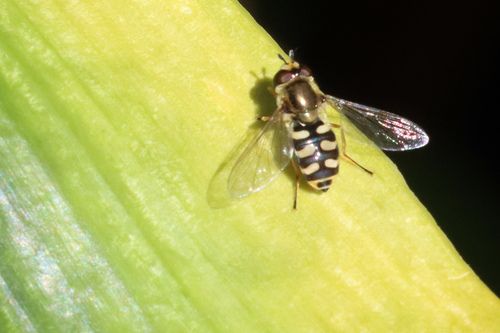
Common Dainty

Common Dainty

Baccha elongata

Daily sighting probability <5% · Rare
at Brussels

In 3 days ~10% in a week ~30%

6 Verified sightings at Brussels
5 In 1 park From 2019 to 2026
April Best month
☀️ Diurnal When it's spotted

About the Common Dainty

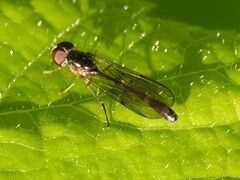
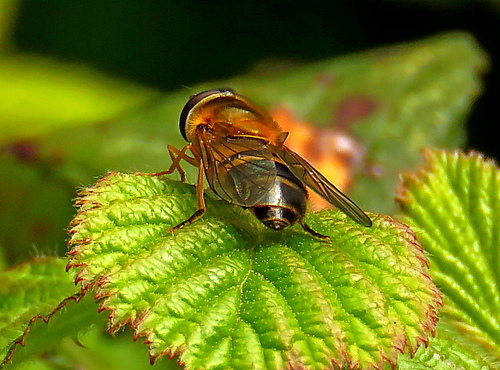
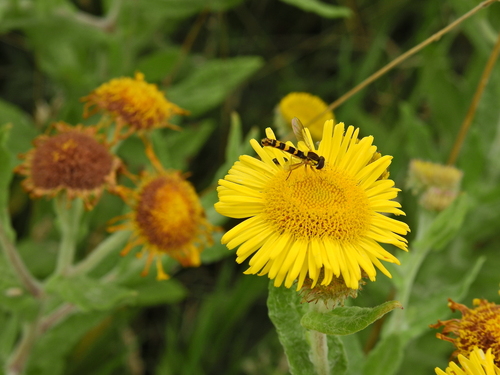
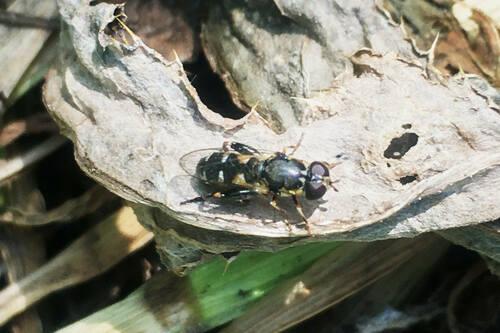
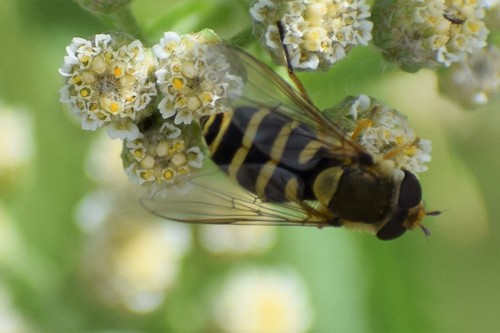
Baccha elongata is a species of hoverfly (or flower fly) in the genus Baccha. Baccha elongata is present in most of Europe and in North America. Common and widely distributed throughout Britain and Ireland wherever there is suitable habitat though easily overlooked due to its unobtrusive nature. These hoverflies inhabit coniferous and deciduous forests, woodland, hedgerows, scrub and gardens Generally they prefer shady places low to the ground.

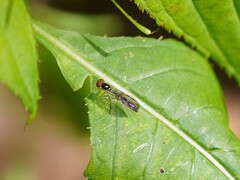
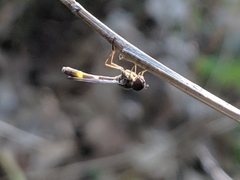
Baccha elongata can reach a length of 7–11 millimetres (0.28–0.43 in). It is one of the smaller hoverflies, the wing length is around 4.5 to 8 mm. The long, very slender body of these hoverflies is unmistakable. They also differ from other hoverflies by their elongated, thin abdomen ending in club. This club-shaped abdomen is black with a yellow spot on the 3rd and 4th segments. Legs are brownish yellow. Forehead is brightly hairy.

Members of the eristaline genus Sphegina are also very slender and can be found in similar habitat but those flies have a rather different enlarged hind femur, whereas in Baccha this feature is slender. As with most hoverfly species the sexes can be told apart by the... Wikipedia →

Global Distribution

Parks Where Found

# Park Country Daily sighting probability
1 Bavarian Forest National Park 🇩🇪 Germany
<5%

More parks will be added in future updates.

Cities Where Found

# City Country Daily sighting probability
1 Birmingham 🇬🇧 United Kingdom
~10%
2 Manchester 🇬🇧 United Kingdom
~10%
3 London 🇬🇧 United Kingdom
~10%
4 Leeds 🇬🇧 United Kingdom
~10%
5 Essen 🇩🇪 Germany
~10%
6 Rotterdam [The Hague] 🇳🇱 Netherlands
~10%
7 Copenhagen 🇩🇰 Denmark
~10%
8 Liverpool 🇬🇧 United Kingdom
<5%
9 Warsaw 🇵🇱 Poland
<5%
10 Brussels 🇧🇪 Belgium
<5%

Before you go

What are the chances of seeing a Common Dainty in Brussels?

Rare

Under 5% of wildlife watchers report a Common Dainty sighting in Brussels on a given day, based on 6 verified sightings from GBIF citizen-science data. It is the 260th most-seen of the 337 insects we can rate there. Over three days the chance rises to about 10%, and over a week to about 30%, if each day is a fresh chance.

When is the best time to see a Common Dainty in Brussels?

April–May and July

In those months about 10% of wildlife watchers report a Common Dainty in Brussels on a given day, against under 5% in June and August–March, the lowest months.

What time of day is best to see a Common Dainty?

Between 1 and 4 pm

Across all the parks we cover, that three-hour window holds the most Common Dainty sightings with a recorded time, and about 8 in 10 of them come between 6 am and 6 pm: it is a daytime animal.

Is Brussels the best place to see a Common Dainty?

10th of 15

Of the 15 cities where we can rate Common Dainty sightings, Brussels ranks 10th at under 5%. The best odds are in Birmingham (United Kingdom, about 10%), Manchester (United Kingdom, about 10%) and London (United Kingdom, about 10%).

Which relatives of the Common Dainty live in Brussels?

Same family: Syrphidae

The closest relatives of the Common Dainty that you can see in Brussels (family Syrphidae, Hover Flies) are Marmalade Hover Fly (about 20%), Common Drone Fly (about 20%) and Yellow-Haired Sun Fly (about 20%), with each one's daily chance of a sighting.

Where does the Common Dainty sighting chance come from?

GBIF citizen-science records

It is estimated from how often the Common Dainty is recorded against all the insects logged in Brussels (6 verified sightings), calibrated against known sighting rates. Figures are rounded to the nearest 10% because citizen-science data supports honest approximations, not decimals, and months with records from fewer than five people show "—". How it works.
← Back to Brussels