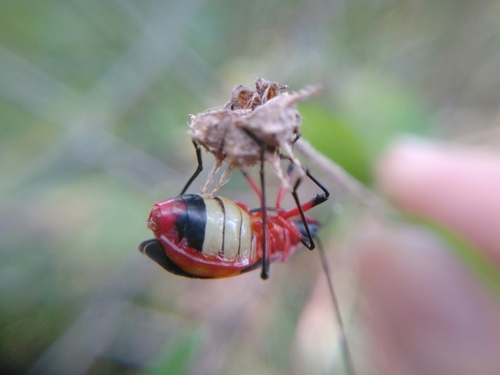
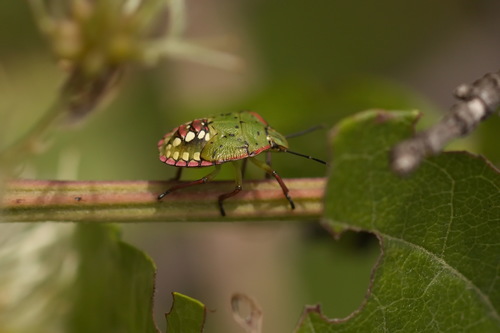
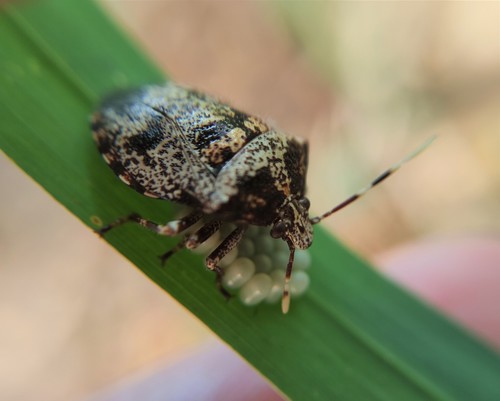
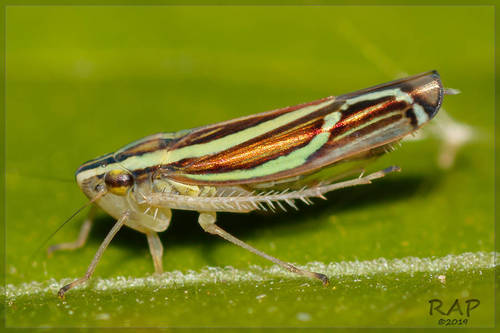
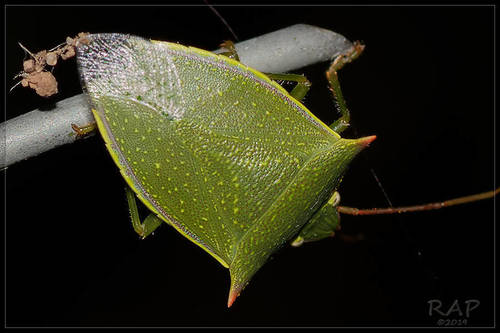
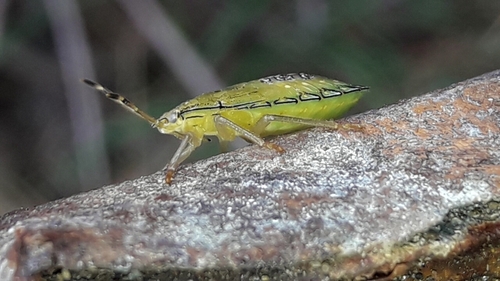
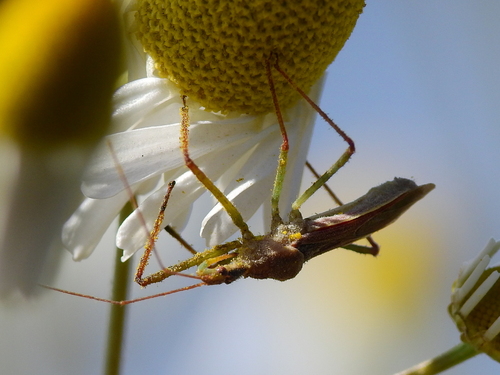
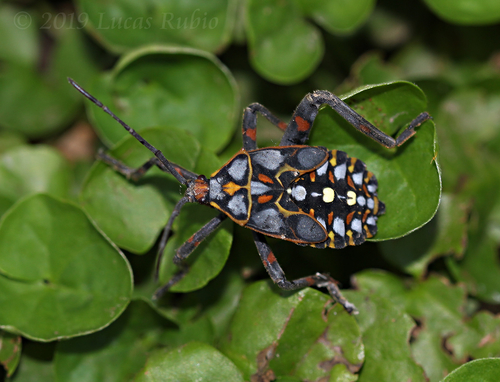
Black Olive Scale

Black Olive Scale

Saissetia oleae

Daily sighting probability <5% · Rare
at Buenos Aires

In 3 days ~10% in a week ~20%

5 Verified sightings at Buenos Aires
July Best month

About the Black Olive Scale

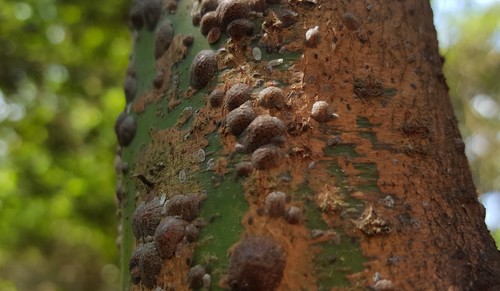
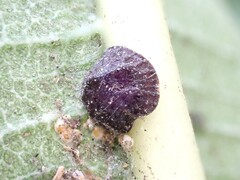
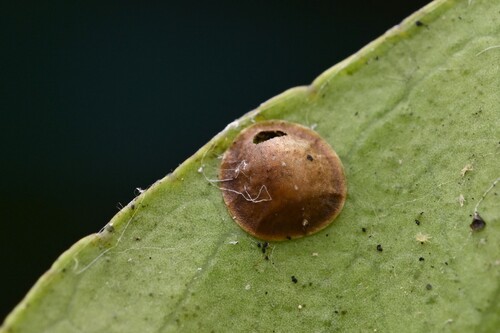
Saissetia oleae (syn. Coccus oleae) is a scale insect in the family Coccidae. It is considered one of the three main phytophagous parasites of the olive tree (Olea europaea), together with the olive fruit fly (Bactrocera oleae) and the olive moth (Prays oleae). Although it is a common parasite which occurs most often in olive trees, it is a polyphagous species, also attacking (but less frequently) citrus trees as well as various ornamental shrubs such as oleanders, pittosporums, sago palm, and euonymus.

One of the first scientists who studied the insect in a scientific and modern way was Italian naturalist Giuseppe Maria Giovene. He wrote a publication entitled Descrizione e storia della cocciniglia dell'ulivo (1807) in which he answered Giovanni Presta who had denied the existence of the insect in the Apulian provinces of Bari and Otranto. Giovene showed that the insect was common in the above regions as well, even though it occurred less often. Moreover, Giovene discovered the male of the insect, which at that time wasn't known in Europe. In the Dictionary of Natural History of Paris (1816) (French: Nouveau dictionnaire d'histoire naturelle, appliquée aux arts, à l'agriculture... Wikipedia →

Global Distribution

Parks Where Found

# Park Country Daily sighting probability

More parks will be added in future updates.

Cities Where Found

# City Country Daily sighting probability
1 Auckland 🇳🇿 New Zealand
<5%
2 Buenos Aires 🇦🇷 Argentina
<5%
3 San Francisco 🇺🇸 United States
<5%

Before you go

What are the chances of seeing a Black Olive Scale in Buenos Aires?

Rare

Under 5% of wildlife watchers report a Black Olive Scale sighting in Buenos Aires on a given day, based on 5 verified sightings from GBIF citizen-science data. It is the 515th most-seen of the 558 insects we can rate there. Over three days the chance rises to about 10%, and over a week to about 20%, if each day is a fresh chance.

When is the best time to see a Black Olive Scale in Buenos Aires?

Any time of year

In every month with enough records, under 5% of wildlife watchers report a Black Olive Scale in Buenos Aires on a given day, so our monthly data shows no clear season.

Is Buenos Aires the best place to see a Black Olive Scale?

Among the best

Of the 3 cities where we can rate Black Olive Scale sightings, Buenos Aires ranks 2nd at under 5%, level with the leaders once rounded. The best odds are in Auckland (New Zealand, under 5%).

Where does the Black Olive Scale sighting chance come from?

GBIF citizen-science records

It is estimated from how often the Black Olive Scale is recorded against all the insects logged in Buenos Aires (5 verified sightings), calibrated against known sighting rates. Figures are rounded to the nearest 10% because citizen-science data supports honest approximations, not decimals, and months with records from fewer than five people show "—". How it works.

← Back to Buenos Aires