

Yellow Pygmy Rice Rat

Yellow Pygmy Rice Rat

Oligoryzomys flavescens

Silhouette: Edwin Price · PhyloPic

LCLeast ConcernNTVUENCR
Daily sighting probability <5% · Rare
at Buenos Aires

In 3 days ~10% in a week ~20%

13 Verified sightings at Buenos Aires
May Best month
☀️🌙 Day & Night When it's spotted

About the Yellow Pygmy Rice Rat

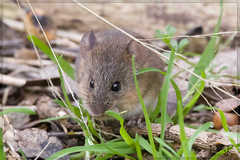
Oligoryzomys flavescens, also known as the flavescent colilargo or yellow pygmy rice rat is a species of rodent in the genus Oligoryzomys of family Cricetidae. It is found in southern South America, occurring in southern Brazil, Paraguay, Uruguay, and northeastern Argentina. Its karyotype has 2n = 64-66 and FNa = 66–70.

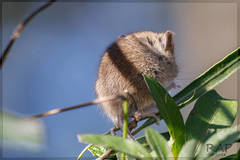
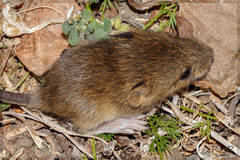
The dorsal fur of Oligoryzomys flavescens consists of bright orangish-brown hairs mixed with blackish hairs, the hairs on the flanks are all orange and the underparts are yellowish-grey. The boundary between the upper parts and the underparts is indistinct, grading from one colour to the other. The head-and-body length averages 87 mm (3.43 in) and the tails averages 110 mm (4.33 in). Skull features that distinguish this species include the long incisive foramina (openings in the hard palate) that usually reach the first molar, and the short mesopterygoid fossa (a depression behind the end of the palate) which does not extend as far as the third molar.

O. flavescens is native to South America. It occurs in eastern Brazil, Uruguay, eastern Paraguay and northern and central Argentina. It is found in a variety of habitats, often near... Wikipedia →

Global Distribution

Parks Where Found

# Park Country Daily sighting probability

More parks will be added in future updates.

Cities Where Found

# City Country Daily sighting probability
1 Buenos Aires 🇦🇷 Argentina
<5%

Before you go

What are the chances of seeing a Yellow Pygmy Rice Rat in Buenos Aires?

Rare

Under 5% of wildlife watchers report a Yellow Pygmy Rice Rat sighting in Buenos Aires on a given day, based on 13 verified sightings from GBIF citizen-science data. It is the 11th most-seen of the 15 mammals we can rate there. Over three days the chance rises to about 10%, and over a week to about 20%, if each day is a fresh chance.

When is the best time to see a Yellow Pygmy Rice Rat in Buenos Aires?

March, May and August

In those months about 10% of wildlife watchers report a Yellow Pygmy Rice Rat in Buenos Aires on a given day, against under 5% in April, June–July and September–February, the lowest months.

What time of day is best to see a Yellow Pygmy Rice Rat?

Between 11 am and 2 pm

Across all the parks we cover, that three-hour window holds the most Yellow Pygmy Rice Rat sightings with a recorded time, and about 6 in 10 of them come between 6 am and 6 pm: it is seen both by day and at night.

Where else can you see a Yellow Pygmy Rice Rat?

Only Buenos Aires, in our data

Buenos Aires is the only city on Wallace's Line with enough records to rate Yellow Pygmy Rice Rat sightings: under 5% of wildlife watchers there report one on a given day.

Which relatives of the Yellow Pygmy Rice Rat live in Buenos Aires?

Same order: Rodentia

The closest relatives of the Yellow Pygmy Rice Rat that you can see in Buenos Aires (order Rodentia, Rodents) are Coypu (about 40%), Brazilian Guinea Pig (about 20%) and Capybara (about 20%), with each one's daily chance of a sighting.

Where does the Yellow Pygmy Rice Rat sighting chance come from?

GBIF citizen-science records

It is estimated from how often the Yellow Pygmy Rice Rat is recorded against all the mammals logged in Buenos Aires (13 verified sightings), calibrated against known sighting rates. Figures are rounded to the nearest 10% because citizen-science data supports honest approximations, not decimals, and months with records from fewer than five people show "—". How it works.

← Back to Buenos Aires