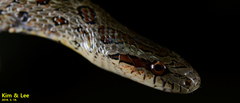
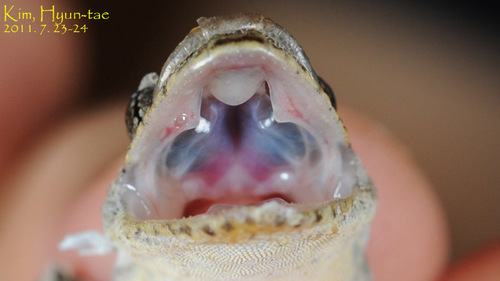
Steppe Rat Snake

Steppe Rat Snake

Elaphe dione

Silhouette: Alex Slavenko · PhyloPic

LCLeast ConcernNTVUENCR
Daily sighting probability ~20% · Possible
at Busan

In 3 days ~50% in a week ~80%

6 Verified sightings at Busan
May Best month
☀️ Diurnal When it's spotted

About the Steppe Rat Snake

Elaphe dione, commonly known as Dione's rat snake, the steppe rat snake, or the steppes rat snake, is a species of snake in the family Colubridae. The species is native to Asia and Eastern Europe. There are no subspecies that are recognized as being valid. A large specimen from Putyatin Island measured up to 90 cm (3.0 ft) in length.

The specific name, dione, refers to the Greek mythological figure Dione who was the mother of Aphrodite. E. dione is found in eastern Ukraine, southern and southeastern Russia, Central Asia, Iran, Afghanistan, Mongolia, parts of China, and Korea. It is found in a wide variety of habitats including forest, shrubland, grassland, rocky areas, desert, freshwater wetlands, and disturbed areas, at altitudes from sea level to 3,580 m (2.22 mi).

An adult female mates with two or more males, sometimes copulating with two males at the same time. E. dione is oviparous, and adult females lay a clutch of 3–15 eggs in July or August, though some can lay a clutch of up to 24 eggs.

Boulenger GA (1894). Catalogue of the Snakes in the British Museum (Natural History). Volume II., Containing... Wikipedia →

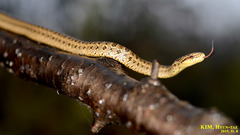
Global Distribution

Parks Where Found

# Park Country Daily sighting probability

More parks will be added in future updates.

Cities Where Found

# City Country Daily sighting probability
1 Busan 🇰🇷 South Korea
~20%
2 Seoul 🇰🇷 South Korea
~10%
3 Almaty 🇰🇿 Kazakhstan
~10%
4 Beijing 🇨🇳 China
~10%

Zoos & Centres Where Found

# Zoo / Centre Country
1 Zoo Pilsen 🇨🇿 Czechia In captivity
2 Aquarium du palais de la Porte Dorée 🇫🇷 France In captivity
3 Cherkasy Zoo 🇺🇦 Ukraine In captivity
4 Zoo Samara 🇷🇺 Russia In captivity
5 Zoológico Miguél Álvarez del Toro 🇲🇽 Mexico In captivity

Before you go

What are the chances of seeing a Steppe Rat Snake in Busan?

Possible

About 20% of wildlife watchers report a Steppe Rat Snake sighting in Busan on a given day, based on 6 verified sightings from GBIF citizen-science data. It is the 6th most-seen of the 6 reptiles we can rate there. Over three days the chance rises to about 50%, and over a week to about 80%, if each day is a fresh chance.

When is the best time to see a Steppe Rat Snake in Busan?

May

In that month about 40% of wildlife watchers report a Steppe Rat Snake in Busan on a given day, against under 5% in June and September–April, the lowest months.

What time of day is best to see a Steppe Rat Snake?

Between noon and 3 pm

Across all the parks we cover, that three-hour window holds the most Steppe Rat Snake sightings with a recorded time, and about 8 in 10 of them come between 6 am and 6 pm: it is a daytime animal.

Is Busan the best place to see a Steppe Rat Snake?

Yes

Of the 4 cities where we can rate Steppe Rat Snake sightings, Busan has the highest daily chance: about 20%. Next come Seoul (South Korea, about 10%) and Almaty (Kazakhstan, about 10%).

Which relatives of the Steppe Rat Snake live in Busan?

Same family: Colubridae

The closest relatives of the Steppe Rat Snake that you can see in Busan (family Colubridae, Colubrid Snakes) are Red-banded Snake (about 30%) and Japanese Keelback (about 20%), with each one's daily chance of a sighting.

Where does the Steppe Rat Snake sighting chance come from?

GBIF citizen-science records

It is estimated from how often the Steppe Rat Snake is recorded against all the reptiles logged in Busan (6 verified sightings), calibrated against known sighting rates. Figures are rounded to the nearest 10% because citizen-science data supports honest approximations, not decimals, and months with records from fewer than five people show "—". How it works.

← Back to Busan