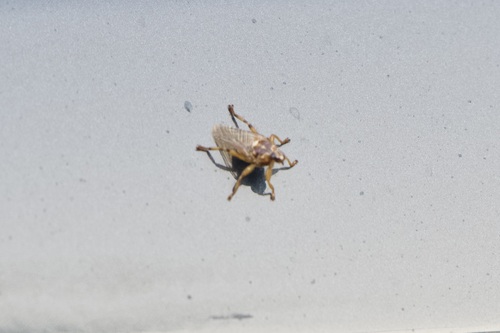
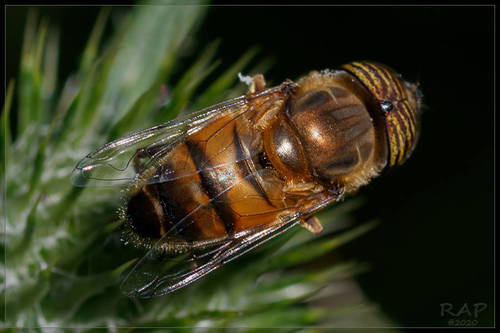
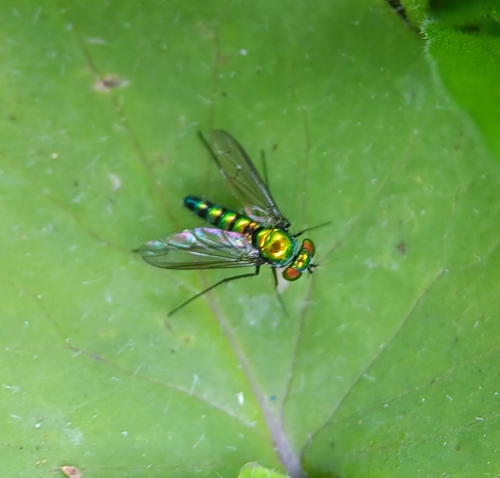
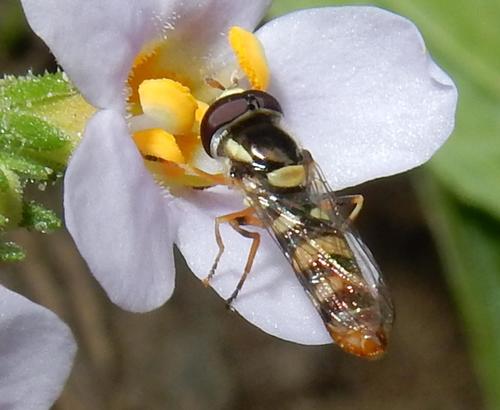

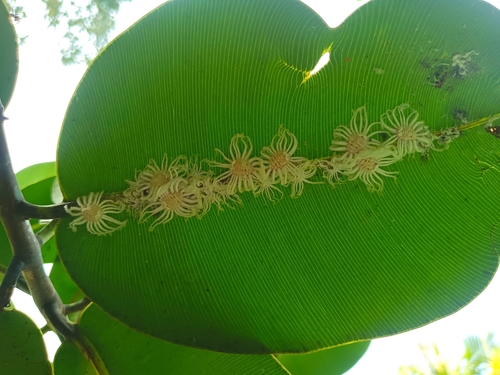
Hippobosca longipennis

Hippobosca longipennis

Hippobosca longipennis

Daily sighting probability ~10% · With luck
at Cairo

In 3 days ~30% in a week ~60%

5 Verified sightings at Cairo
December Best month

About the Hippobosca longipennis

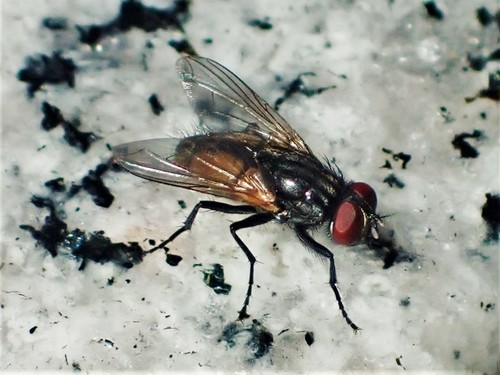
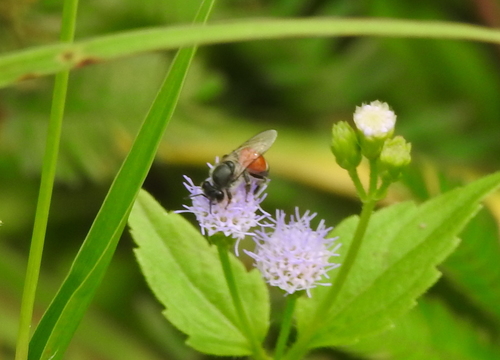
Hippobosca longipennis (Diptera: Hippoboscidae), the dog fly, louse fly, or blind fly, is a blood-feeding parasite mostly infesting carnivores. The species name "longipennis" means "long wings". Its bites can be painful and result in skin irritation, it is an intermediate host for the canine and hyaenid filarial parasite Dipetalonema dracunculoides, "and it may also be a biological or mechanical vector for other pathogens".

The species feeds on a variety of animals and have been known to bite people. During its lifetime, a female lays 10 to 15 larvae on a host. It has arrived in a few countries on zoo animals that were being transported from Africa. Studies have been completed on the flies. Some specimens have been found on ancient dog corpses in Greece and Egypt.

The fly has a flat head and body, mouthparts that pierce and suck, veins are in the top half of its wings, and legs with tarsal claws. The species is related to sheep keds. Females of the species birth larvae, each one of them following the other. The larvae remains in their puparia which may allow them to survive intense changes to their environment. Between 19 days and 142... Wikipedia →

Global Distribution

Parks Where Found

# Park Country Daily sighting probability

More parks will be added in future updates.

Cities Where Found

# City Country Daily sighting probability
1 Cairo 🇪🇬 Egypt
~10%

Before you go

What are the chances of seeing a Hippobosca longipennis in Cairo?

With luck

About 10% of wildlife watchers report a Hippobosca longipennis sighting in Cairo on a given day, based on 5 verified sightings from GBIF citizen-science data. It is the 34th most-seen of the 38 insects we can rate there. Over three days the chance rises to about 30%, and over a week to about 60%, if each day is a fresh chance.

When is the best time to see a Hippobosca longipennis in Cairo?

December

In that month about 40% of wildlife watchers report a Hippobosca longipennis in Cairo on a given day, against under 5% in January–March and May–November, the lowest months.

Where else can you see a Hippobosca longipennis?

Only Cairo, in our data

Cairo is the only city on Wallace's Line with enough records to rate Hippobosca longipennis sightings: about 10% of wildlife watchers there report one on a given day.

Where does the Hippobosca longipennis sighting chance come from?

GBIF citizen-science records

It is estimated from how often the Hippobosca longipennis is recorded against all the insects logged in Cairo (5 verified sightings), calibrated against known sighting rates. Figures are rounded to the nearest 10% because citizen-science data supports honest approximations, not decimals, and months with records from fewer than five people show "—". How it works.

← Back to Cairo