Veined Russet

Veined Russet

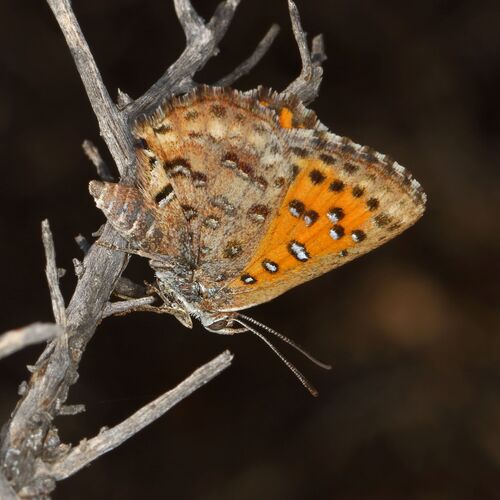
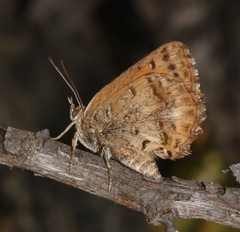
Aloeides pierus

Daily sighting probability <5% · Rare
at Cape Town

In 3 days ~10% in a week ~30%

28 Verified sightings at Cape Town
38 In all 2 parks From 2019 to 2026
October Best month
☀️ Diurnal When it's spotted

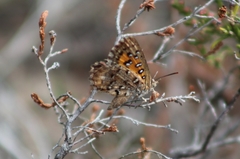
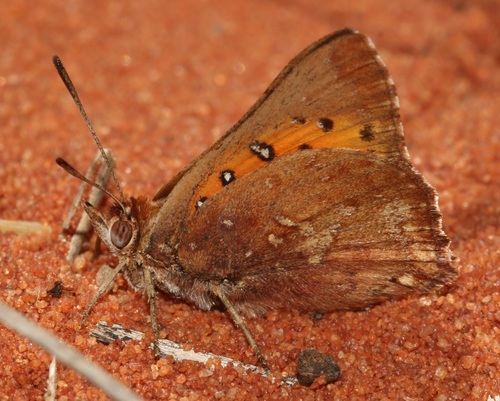
About the Veined Russet

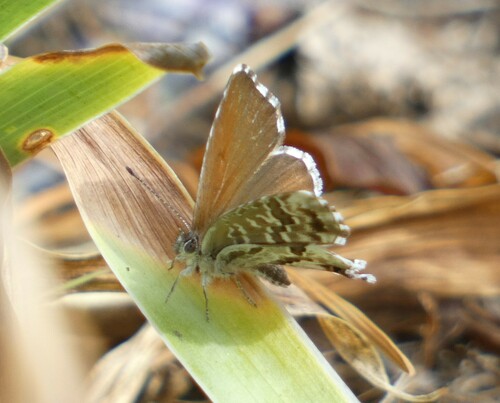
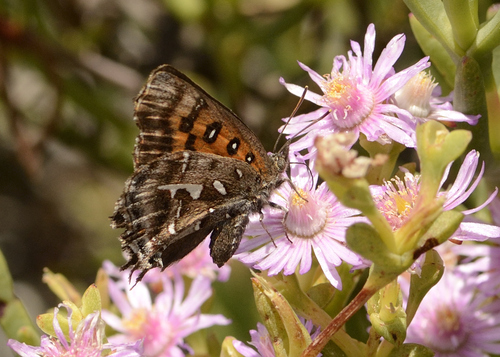
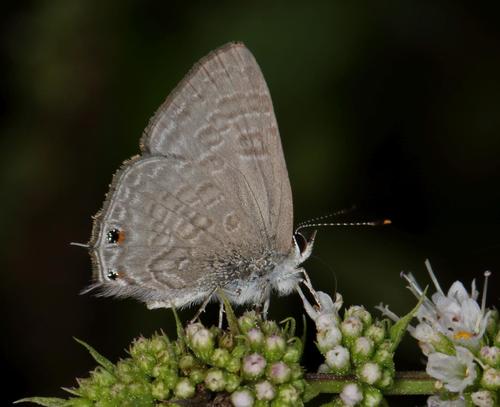
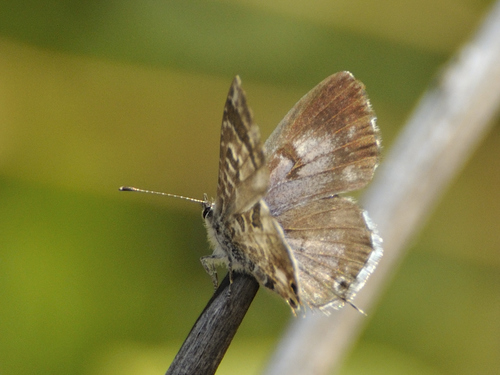
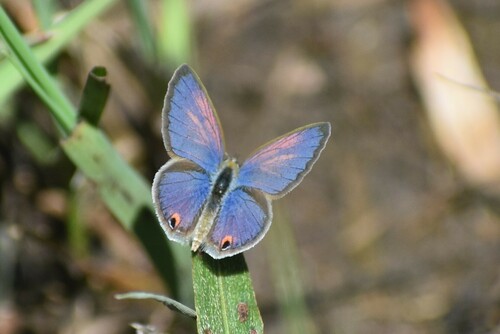
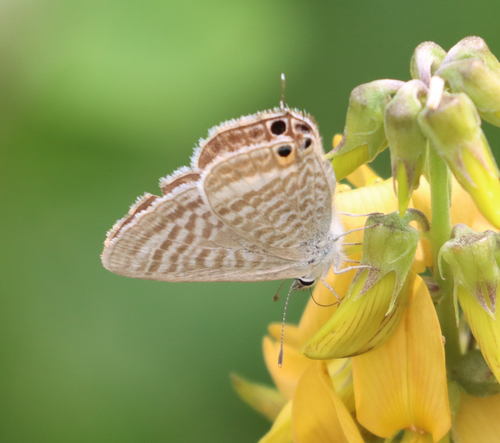
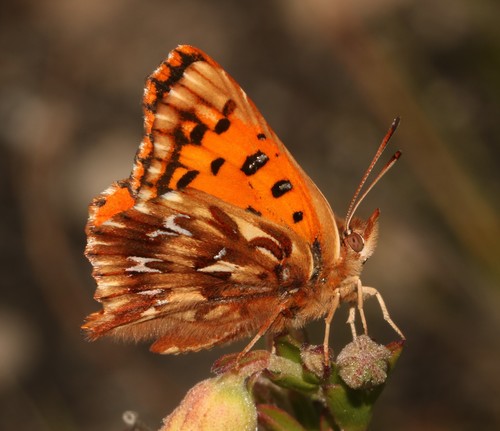
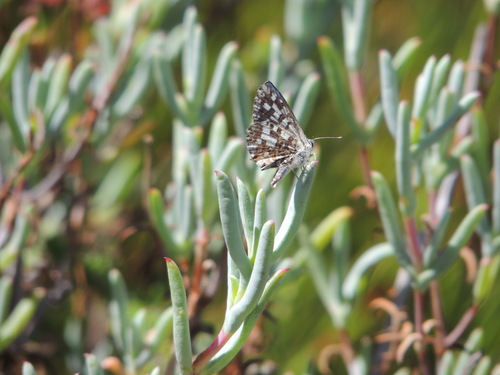
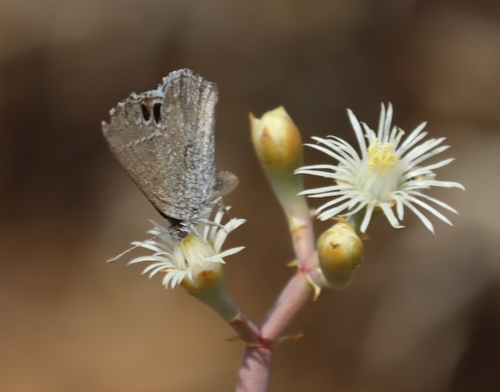
Aloeides pierus, the dull copper, is a butterfly of the family Lycaenidae. It is found in South Africa, where it is found in the Western, Northern and Eastern Cape, as well as the Free State. This butterfly species inhabits grassy areas with bare patches, such as grassy fynbos in the western and eastern cape, or highvield grasslands in other provinces.

The wingspan is 25–30 mm (0.98–1.18 in). Adults are on wing from September to April, with peaks in October and February. There are multiple generations per year. There are 12 veins on forewing, while hindwing lacks tail.

The males of Aloeidis exhibit territorial behavior, claiming specific areas on road verges and unsurfaced roads where they can counter females and mate. Chinitinous spicules are present at the distal end of tibia in a f-f-a configuration, with a well-developed spur at the lower extremities. Males have a sharp foretarsal claw. A. pierus feature long palpi, a robust thorax, and a mesofur almost twice the length of tibia. Females lack dense tuft of specialized scales on their abdomen.

The genitalia are very similar among species of this genus, and not very useful when distinguishing. The uncus is in the... Wikipedia →
Global Distribution

Parks Where Found

# Park Country Daily sighting probability
1 Addo Elephant National Park 🇿🇦 South Africa
~10%
2 Table Mountain National Park 🇿🇦 South Africa
<5%

Cities Where Found

# City Country Daily sighting probability
1 Cape Town 🇿🇦 South Africa
<5%

Before you go

What are the chances of seeing a Veined Russet in Cape Town?

Rare

Under 5% of wildlife watchers report a Veined Russet sighting in Cape Town on a given day, based on 28 verified sightings from GBIF citizen-science data. It is the 136th most-seen of the 311 insects we can rate there. Over three days the chance rises to about 10%, and over a week to about 30%, if each day is a fresh chance.

When is the best time to see a Veined Russet in Cape Town?

February–March and October–November

In those months about 10% of wildlife watchers report a Veined Russet in Cape Town on a given day, against under 5% in April–September and December–January, the lowest months. Those are among Cape Town's driest months, with about 35 mm of rain a month against 140 mm in June.

What time of day is best to see a Veined Russet?

Between 11 am and 2 pm

Across all the parks we cover, that three-hour window holds the most Veined Russet sightings with a recorded time, and nearly all of them come between 6 am and 6 pm: it is a daytime animal.

Where else can you see a Veined Russet?

Only Cape Town, in our data

Cape Town is the only city on Wallace's Line with enough records to rate Veined Russet sightings: under 5% of wildlife watchers there report one on a given day.

Where does the Veined Russet sighting chance come from?

GBIF citizen-science records

It is estimated from how often the Veined Russet is recorded against all the insects logged in Cape Town (28 verified sightings), calibrated against known sighting rates. Figures are rounded to the nearest 10% because citizen-science data supports honest approximations, not decimals, and months with records from fewer than five people show "—". How it works.

← Back to Cape Town