Dark Grass Blue

Dark Grass Blue

Zizeeria karsandra

Daily sighting probability ~20% · Possible
at Chandigarh

In 3 days ~50% in a week ~80%

6 Verified sightings at Chandigarh
August Best month

About the Dark Grass Blue

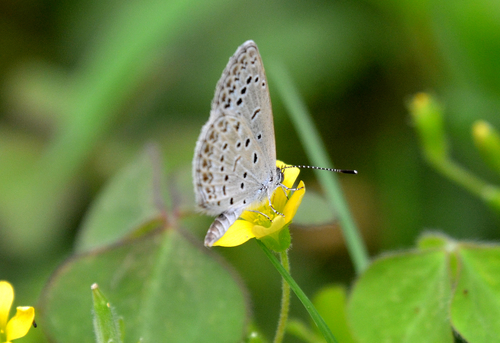
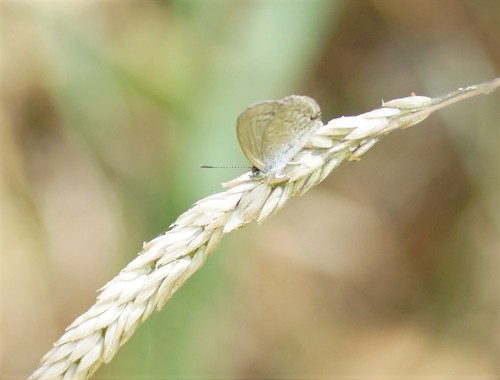
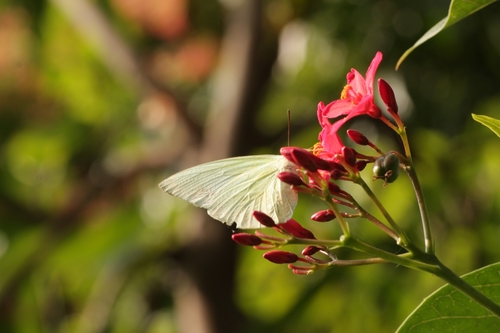
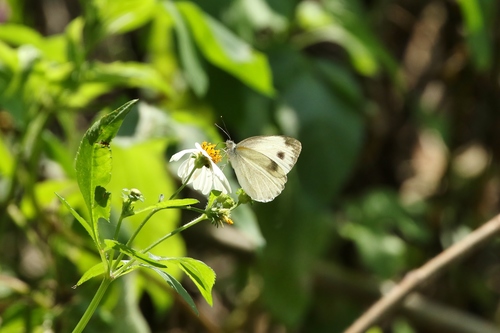
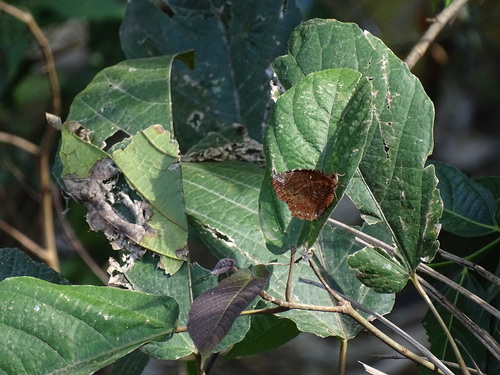
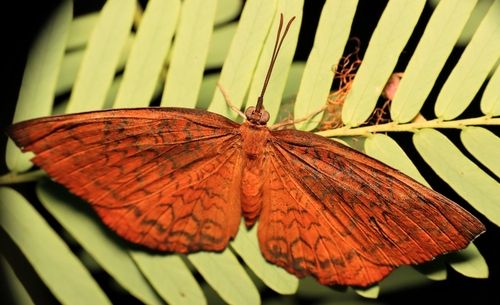
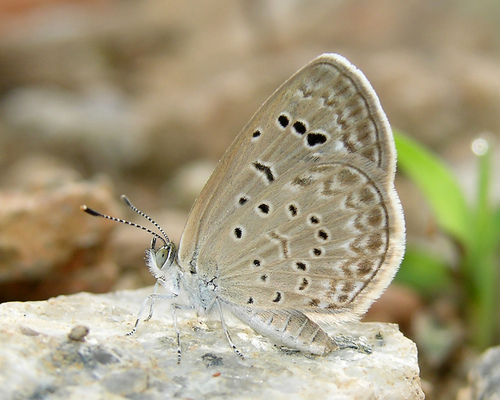
Zizeeria karsandra, the dark grass blue, is a small butterfly first described by Frederic Moore in 1865. It is found from the southern Mediterranean, in a broad band to India, Sri Lanka, the Andaman and Nicobar islands, Myanmar, Thailand, Malaysia, Yunnan, Indonesia, the Philippines, Arabia, United Arab Emirates, Saudi Arabia and Oman, New Guinea and northern and eastern Australia. It belongs to the lycaenids or blues family, and the tribe Polyommatini.

Frederic Moore described this species on 1865 as: "Upperside purple-brown. Underside greyish brown, exterior margins defined by a brown line: fore wing with a spot within discoidal cell, a discocellular streak, a spot above it, and a transverse discal series of six spots black, each encircled with white; a marginal and submarginal row of pale brown, white-bordered lunules: hind wing with a series of twelve black spots, and a pale discocellular streak, encircled with white; a marginal row of pale brown, whitish-encircled spots, and a submarginal row of whitish lunules: cilia greyish brown."

The recorded food plants include: Zornia diphylla Amaranthus viridis (in association with the ant Tapinoma melanocephalum... Wikipedia →
Global Distribution

Parks Where Found

# Park Country Daily sighting probability

More parks will be added in future updates.

Cities Where Found

# City Country Daily sighting probability
1 Kanpur 🇮🇳 India
~50%
2 Vadodara 🇮🇳 India
~30%
3 Raipur 🇮🇳 India
~30%
4 Prayagraj 🇮🇳 India
~30%
5 Karachi 🇵🇰 Pakistan
~30%
6 Davao City 🇵🇭 Philippines
~30%
7 Salem 🇮🇳 India
~30%
8 Chattogram 🇧🇩 Bangladesh
~30%
9 Chennai 🇮🇳 India
~30%
10 Antalya 🇹🇷 Turkey
~20%

Before you go

What are the chances of seeing a Dark Grass Blue in Chandigarh?

Possible

About 20% of wildlife watchers report a Dark Grass Blue sighting in Chandigarh on a given day, based on 6 verified sightings from GBIF citizen-science data. It is the 21st most-seen of the 26 insects we can rate there. Over three days the chance rises to about 50%, and over a week to about 80%, if each day is a fresh chance.

When is the best time to see a Dark Grass Blue in Chandigarh?

August

In that month about 60% of wildlife watchers report a Dark Grass Blue in Chandigarh on a given day, against under 5% in May–July, September–October and December–March, the lowest months. That is one of Chandigarh's wettest months, with about 280 mm of rain against 5 mm in November.

Is Chandigarh the best place to see a Dark Grass Blue?

11th of 32

Of the 32 cities where we can rate Dark Grass Blue sightings, Chandigarh ranks 11th at about 20%. The best odds are in Kanpur (India, about 50%), Vadodara (India, about 30%) and Raipur (India, about 30%).

Which relatives of the Dark Grass Blue live in Chandigarh?

Same family: Lycaenidae

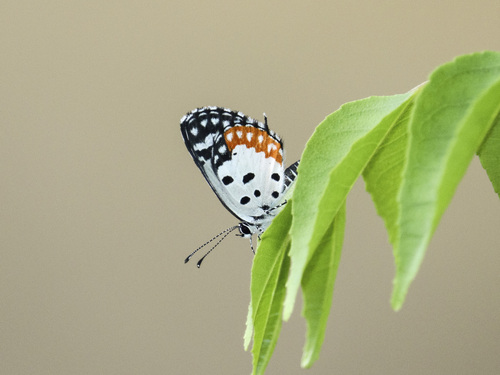
The closest relatives of the Dark Grass Blue that you can see in Chandigarh (family Lycaenidae, Gossamer-winged Butterflies) are Red Pierrot (about 30%), Pale Grass Blue (about 30%) and Lesser Grass Blue (about 20%), with each one's daily chance of a sighting.

Where does the Dark Grass Blue sighting chance come from?

GBIF citizen-science records

It is estimated from how often the Dark Grass Blue is recorded against all the insects logged in Chandigarh (6 verified sightings), calibrated against known sighting rates. Figures are rounded to the nearest 10% because citizen-science data supports honest approximations, not decimals, and months with records from fewer than five people show "—". How it works.

← Back to Chandigarh