Oleander Hawkmoth

Oleander Hawkmoth

Daphnis nerii

Daily sighting probability ~30% · Possible
at Chhatrapati Sambhajinagar

In 3 days ~70% in a week ~90%

7 Verified sightings at Chhatrapati Sambhajinagar
19 In all 3 parks From 2019 to 2026
October Best month
🌅 Crepuscular When it's spotted

About the Oleander Hawkmoth

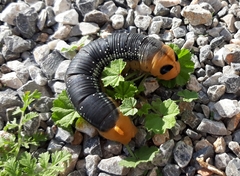
Daphnis nerii, the oleander hawk-moth or army green moth, is a moth of the family Sphingidae. It was described by Carl Linnaeus in his 1758 10th edition of Systema Naturae. Daphnis nerii is a large hawk-moth found in wide areas of Africa, Asia and Hawaii. It is a migratory species, flying to parts of eastern and southern Europe during the summer, particularly Turkey, very occasionally reaching western Europe, including England and can even reach to as far north as Scotland or even Finland.

The adults feed on nectar of a great variety of flowers. They have a preference for fragrant species like petunia, jasmine, periwinkle and honeysuckle. They are especially active in the twilight time, hovering over the flowers after sunset.

The caterpillars feed mainly on oleander (Nerium oleander) leaves, a highly toxic plant, to which the caterpillars are immune. They also may feed on most other plants of the dogbane family, such as Adenium obesum, Tabernaemontana divaricata and Alstonia scholaris in India. They also eat unbloomed flowers of Tabernaemontana divaricata at night. In England, where the species is one of the rarest migrant hawk-moths, a larva... Wikipedia →

Global Distribution

Parks Where Found

# Park Country Daily sighting probability
1 Garden Route National Park 🇿🇦 South Africa
<5%
2 Kruger National Park 🇿🇦 South Africa
<5%
3 Table Mountain National Park 🇿🇦 South Africa
<5%

Cities Where Found

# City Country Daily sighting probability
1 Durg 🇮🇳 India
~40%
2 Lucknow 🇮🇳 India
~30%
3 Chhatrapati Sambhajinagar 🇮🇳 India
~30%
4 Ho Chi Minh City 🇻🇳 Vietnam
~30%
5 Jabalpur 🇮🇳 India
~30%
6 Coimbatore 🇮🇳 India
~30%
7 Phnom Penh 🇰🇭 Cambodia
~20%
8 Hanoi 🇻🇳 Vietnam
~20%
9 Manila 🇵🇭 Philippines
~20%
10 Bengaluru 🇮🇳 India
~20%

Before you go

What are the chances of seeing an Oleander Hawkmoth in Chhatrapati Sambhajinagar?

Possible

About 30% of wildlife watchers report an Oleander Hawkmoth sighting in Chhatrapati Sambhajinagar on a given day, based on 7 verified sightings from GBIF citizen-science data. It is the 3rd most-seen of the 13 insects we can rate there. Over three days the chance rises to about 70%, and over a week to about 90%, if each day is a fresh chance.

When is the best time to see an Oleander Hawkmoth in Chhatrapati Sambhajinagar?

February and October

In those months about 50% of wildlife watchers report an Oleander Hawkmoth in Chhatrapati Sambhajinagar on a given day, against under 5% in June to September, the lowest months. Those are among Chhatrapati Sambhajinagar's driest months, with about 30 mm of rain a month against 180 mm in July.

What time of day is best to see an Oleander Hawkmoth?

Between 11 am and 2 pm

Across all the parks we cover, that three-hour window holds the most Oleander Hawkmoth sightings with a recorded time, and about half of them come between 6 am and 6 pm: it is most active around dawn and dusk.

Is Chhatrapati Sambhajinagar the best place to see an Oleander Hawkmoth?

3rd of 50

Of the 50 cities where we can rate Oleander Hawkmoth sightings, Chhatrapati Sambhajinagar ranks 3rd at about 30%. The best odds are in Durg (India, about 40%) and Lucknow (India, about 30%).

Which relatives of the Oleander Hawkmoth live in Chhatrapati Sambhajinagar?

Same order: Lepidoptera

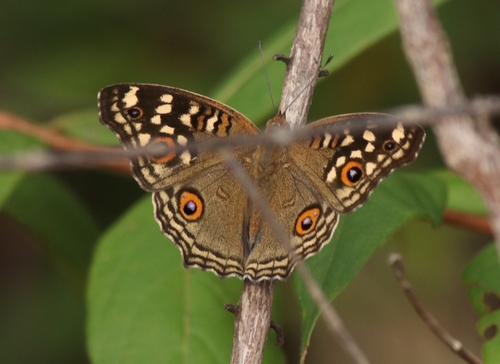
The closest relatives of the Oleander Hawkmoth that you can see in Chhatrapati Sambhajinagar (order Lepidoptera, Butterflies and Moths) are Lemon Pansy (about 40%), Plain Tiger Butterfly (about 30%) and Common Evening Brown (about 30%), with each one's daily chance of a sighting.

Where does the Oleander Hawkmoth sighting chance come from?

GBIF citizen-science records

It is estimated from how often the Oleander Hawkmoth is recorded against all the insects logged in Chhatrapati Sambhajinagar (7 verified sightings), calibrated against known sighting rates. Figures are rounded to the nearest 10% because citizen-science data supports honest approximations, not decimals, and months with records from fewer than five people show "—". How it works.

← Back to Chhatrapati Sambhajinagar