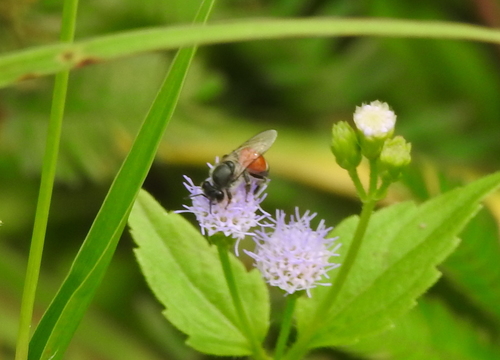
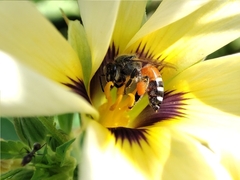
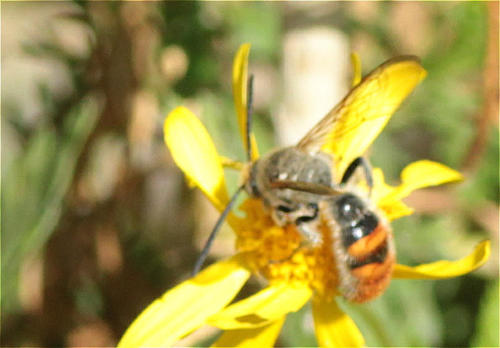
About the Red Dwarf Honey Bee
The dwarf honey bee (or red dwarf honey bee), Apis florea, is one of two species of small, wild honey bees of southern and southeastern Asia. It has a much wider distribution than its sister species, Apis andreniformis. First identified in the late 18th century, Apis florea is unique for its morphology, foraging behavior and defensive mechanisms like making a piping noise. Apis florea have open nests and small colonies, which makes them more susceptible to predation than cavity nesters with large numbers of defensive workers. The species is an important pollinator in many parts of its range and its nests are occasionally exploited as a source of wild honey.
Danish zoologist Johan Christian Fabricius first identified Apis florea in 1787. A. florea is a member of the Apis genus. The name Florea is a personal name of Romanian origin. A. florea and its sister species A. andreniformis together form the subclade Micrapis and are the most basal extant species of honey bees, diverging before the two other extant honey bee clades, Megapis (the giant honey bees) and Apis (the eastern and western honey bees and their close relatives). The timing of the Micrapis species... Wikipedia →