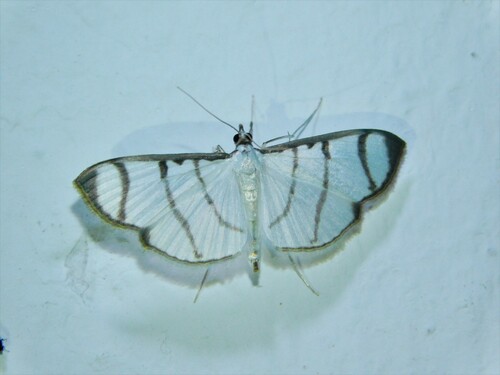
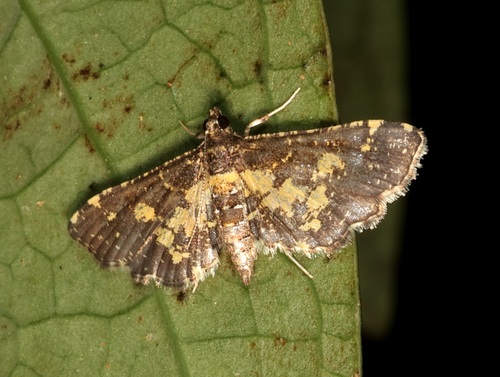
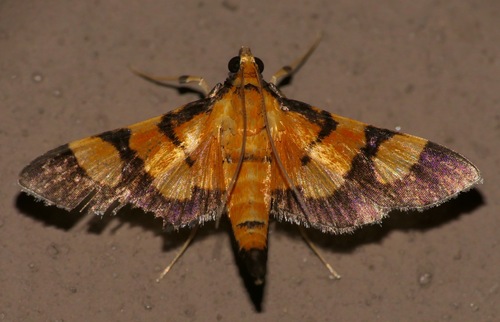
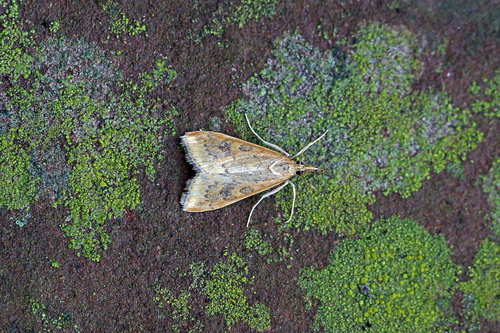
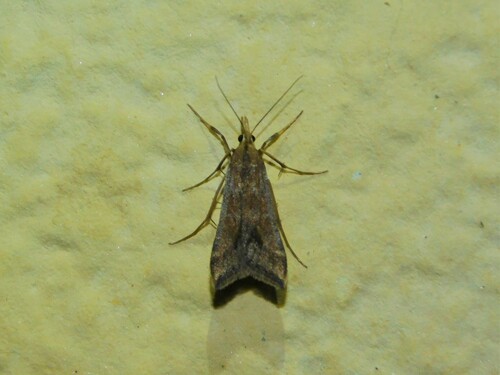
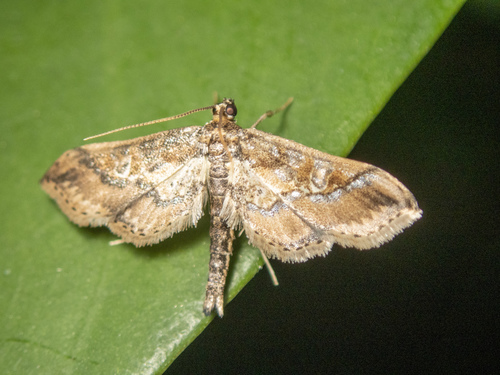
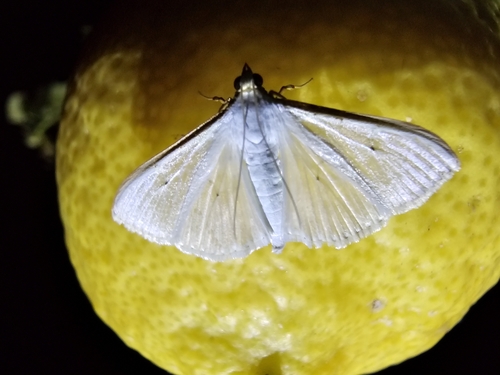
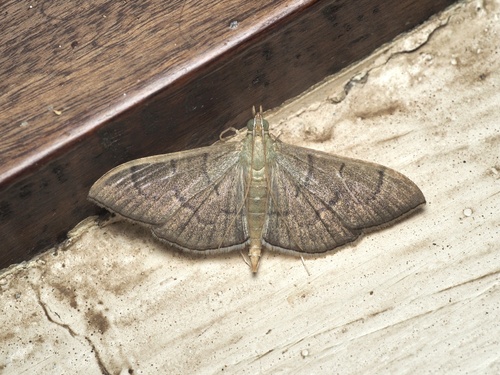
Syllepte orbiferalis

Syllepte orbiferalis

Syllepte orbiferalis

Daily sighting probability <5% · Rare
at Durban

In 3 days ~10% in a week ~30%

9 Verified sightings at Durban
March Best month

About the Syllepte orbiferalis

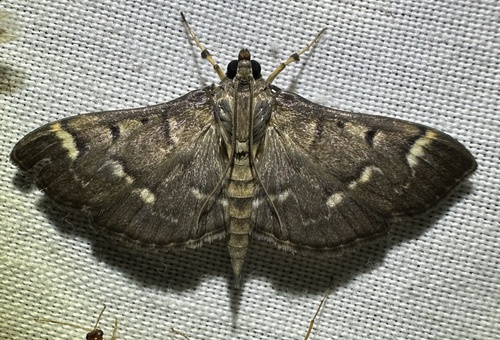
Syllepte orbiferalis is a moth in the family Crambidae. It was described by George Hampson in 1898. It is found on Réunion and in South Africa. The wingspan is about 36 mm. The forewings are pale greyish fuscous with a yellowish tinge, the forewings with an obscure oblique antemedial dark line defined by whitish on the inner side and almost obsolete towards the costa. There is a white orbicular spot and a large lunulate discoidal spot. The postmedial line has three conjoined dentate white marks on the outer edge below the costa, excurved and more or less strongly defined by white between veins 5 and 2, then retracted to near the base of vein 2 and with a white spot in the angle. The hindwings have a prominent white discoidal spot. The postmedial line is strongly bent outwards between veins 5 and 2, then retracted to near the angle of the cell and terminating on the inner margin above the tornus, more or less strongly defined by white on the outer side, usually expanding into a dentate patch below the costa. Wikipedia →

Global Distribution

Parks Where Found

# Park Country Daily sighting probability

More parks will be added in future updates.

Cities Where Found

# City Country Daily sighting probability
1 Durban 🇿🇦 South Africa
<5%

Before you go

What are the chances of seeing a Syllepte orbiferalis in Durban?

Rare

Under 5% of wildlife watchers report a Syllepte orbiferalis sighting in Durban on a given day, based on 9 verified sightings from GBIF citizen-science data. It is the 248th most-seen of the 401 insects we can rate there. Over three days the chance rises to about 10%, and over a week to about 30%, if each day is a fresh chance.

When is the best time to see a Syllepte orbiferalis in Durban?

March and April

In those months about 10% of wildlife watchers report a Syllepte orbiferalis in Durban on a given day, against under 5% in May to February, the lowest months.

Where else can you see a Syllepte orbiferalis?

Only Durban, in our data

Durban is the only city on Wallace's Line with enough records to rate Syllepte orbiferalis sightings: under 5% of wildlife watchers there report one on a given day.

Which relatives of the Syllepte orbiferalis live in Durban?

Same family: Crambidae

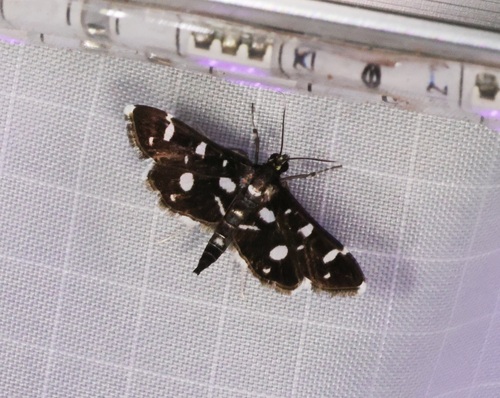
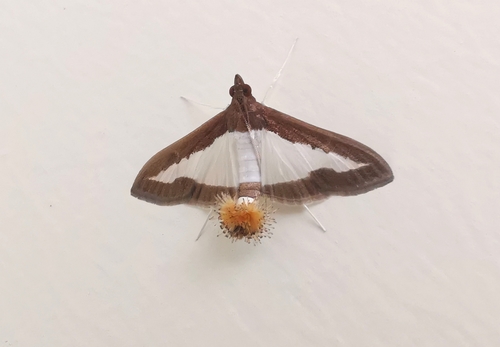
The closest relatives of the Syllepte orbiferalis that you can see in Durban (family Crambidae, Crambid Snout Moths) are Dotted Sable (about 10%), Hawaiian Beet Webworm Moth (about 10%) and Cucumber Moth (about 10%), with each one's daily chance of a sighting.

Where does the Syllepte orbiferalis sighting chance come from?

GBIF citizen-science records

It is estimated from how often the Syllepte orbiferalis is recorded against all the insects logged in Durban (9 verified sightings), calibrated against known sighting rates. Figures are rounded to the nearest 10% because citizen-science data supports honest approximations, not decimals, and months with records from fewer than five people show "—". How it works.

← Back to Durban