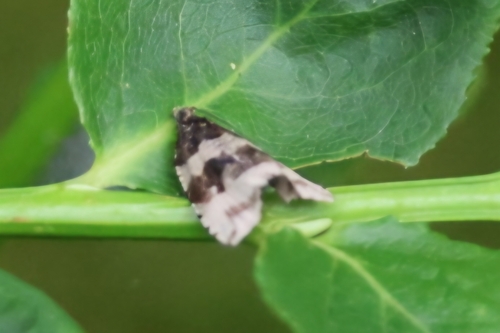
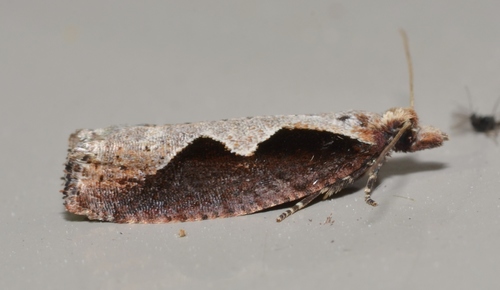
White Triangle Tortrix

White Triangle Tortrix

Clepsis persicana

Daily sighting probability <5% · Rare
at Edmonton

In 3 days ~10% in a week ~20%

10 Verified sightings at Edmonton
21 In all 2 parks From 2019 to 2026
June Best month
🌅 Crepuscular When it's spotted

About the White Triangle Tortrix

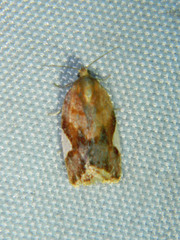
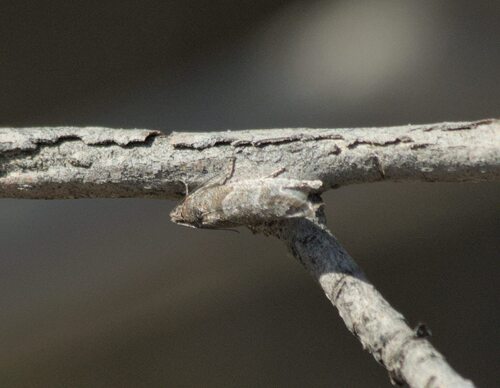
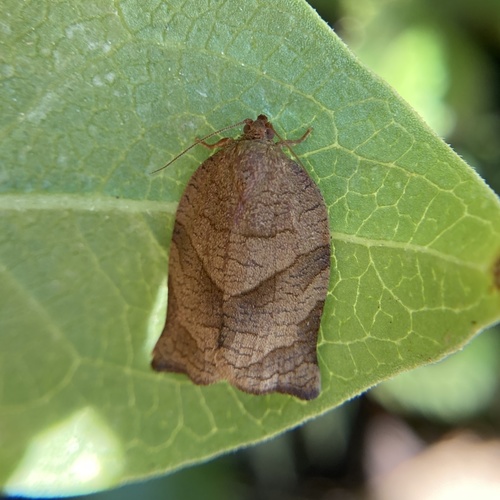
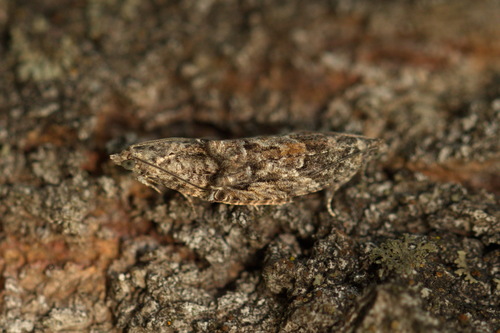
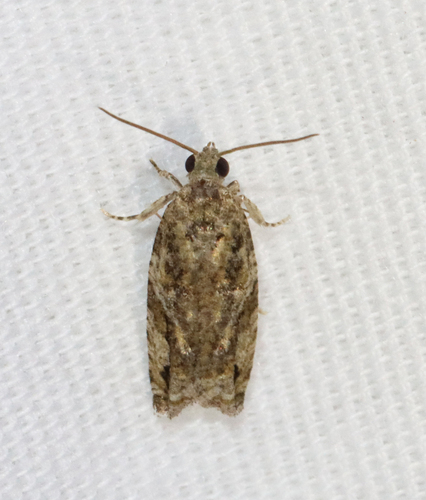
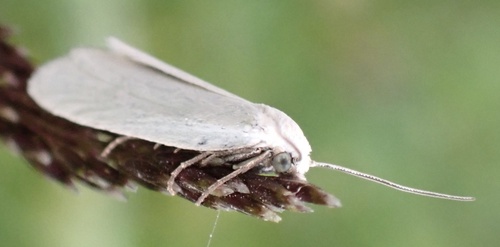
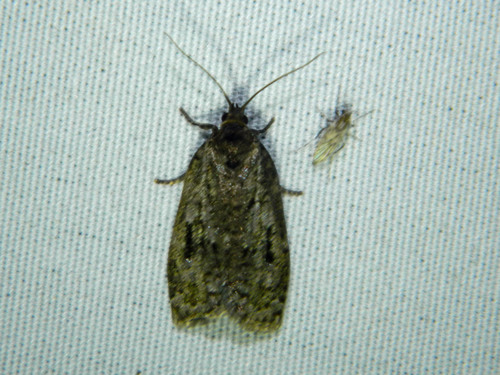
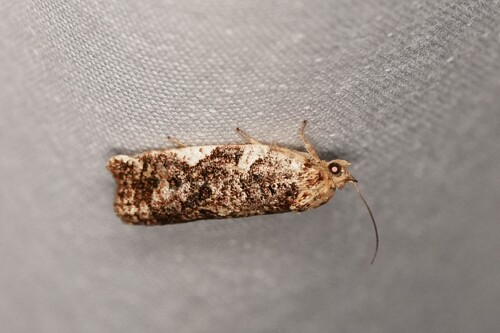
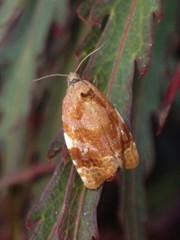
Clepsis persicana, the white triangle tortrix or the green needleworm, is a species of moth of the family Tortricidae. It is found in North America, where it has been recorded from Alaska and British Columbia to Newfoundland and south to Virginia and west to California. The habitat consists of coniferous and mixed coniferous forests.

The larva is slender and very active, with yellow head and wide, indistinct greyish stripes on the body. In Ontario, larvae have been collected in late May and June. Measures to control green needleworms have not been needed. The length of the forewings is 8.5-10.5 mm for males and 10–11 mm for females. The forewings are orange basally, becoming darker and purplish towards the termen, which is pale. Adults are on wing from June to August in one generation per year.

The larvae have been recorded feeding on a wide range of deciduous and coniferous trees, including Acer (including Acer negundo), Osmorhiza, Solidago, Alnus (including Alnus viridis, Alnus incana), Betula (Betula papyrifera, Betula nana), Corylus, Cornus canadensis, Rhododendron canadense, Vaccinium, Frasera (including Frasera fastigiata), Ribes, Maianthemum canadense, Comptonia peregrina, Fraxinus, Abies (including Abies balsamea, Abies concolor, Abies lasiocarpa), Larix (Larix occidentalis), Picea (including Picea glauca, Picea engelmannii), Pinus (including Pinus banksiana), Pseudotsuga (including Pseudotsuga menziesii), Ceanothus, Malus pumila, Prunus (including Prunus virginiana, Prunus persica), Rosa, Rubus, Populus (including Populus tremuloides, Populus balsamifera), Salix and Ulmus. They web the leaves of their host plant and feed in the calyx. Young larvae lower themselves on a silk thread and search for abandoned shelters of other Tortricidae species. If no such shelter is found, the larvae will feed on cover plants on the ground. The species overwinters as a mid-instar larva. Pupation takes place under the bark of their host plant or in amongst fallen leaves at the base of a tree. The larvae have a yellowish-green or greyish-green body and a yellowish-brown head. They can be found from April to June. Wikipedia →
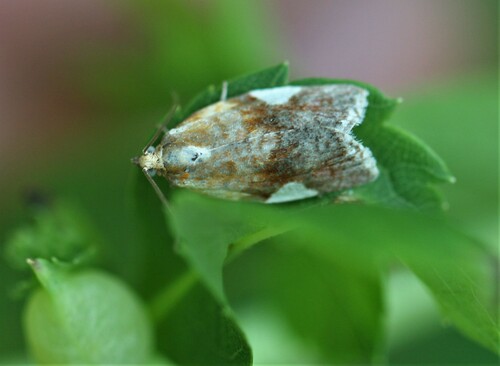
Global Distribution

Parks Where Found

# Park Country Daily sighting probability
1 Acadia National Park 🇺🇸 United States
~10%
2 Great Bear Rainforest 🇨🇦 Canada
~10%

Cities Where Found

# City Country Daily sighting probability
1 Edmonton 🇨🇦 Canada
<5%

Before you go

What are the chances of seeing a White Triangle Tortrix in Edmonton?

Rare

Under 5% of wildlife watchers report a White Triangle Tortrix sighting in Edmonton on a given day, based on 10 verified sightings from GBIF citizen-science data. It is the 218th most-seen of the 390 insects we can rate there. Over three days the chance rises to about 10%, and over a week to about 20%, if each day is a fresh chance.

When is the best time to see a White Triangle Tortrix in Edmonton?

June and July

In those months about 10% of wildlife watchers report a White Triangle Tortrix in Edmonton on a given day, against under 5% in August to May, the lowest months. Those are among Edmonton's wettest months, with about 90 mm of rain a month against 20 mm in February.

What time of day is best to see a White Triangle Tortrix?

Between 8 and 11 pm

Across all the parks we cover, that three-hour window holds the most White Triangle Tortrix sightings with a recorded time, and about half of them come between 6 pm and 6 am: it is most active around dawn and dusk.

Where else can you see a White Triangle Tortrix?

Only Edmonton, in our data

Edmonton is the only city on Wallace's Line with enough records to rate White Triangle Tortrix sightings: under 5% of wildlife watchers there report one on a given day.

Where does the White Triangle Tortrix sighting chance come from?

GBIF citizen-science records

It is estimated from how often the White Triangle Tortrix is recorded against all the insects logged in Edmonton (10 verified sightings), calibrated against known sighting rates. Figures are rounded to the nearest 10% because citizen-science data supports honest approximations, not decimals, and months with records from fewer than five people show "—". How it works.

← Back to Edmonton