Red Dwarf Honey Bee
Daily sighting probability ~10% · With luck
at Guwahati

In 3 days ~40% in a week ~70%

5 Verified sightings at Guwahati
16 In all 2 parks From 2019 to 2026
January Best month
☀️ Diurnal When it's spotted

About the Red Dwarf Honey Bee

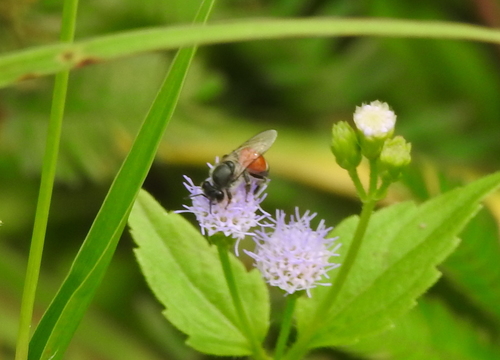
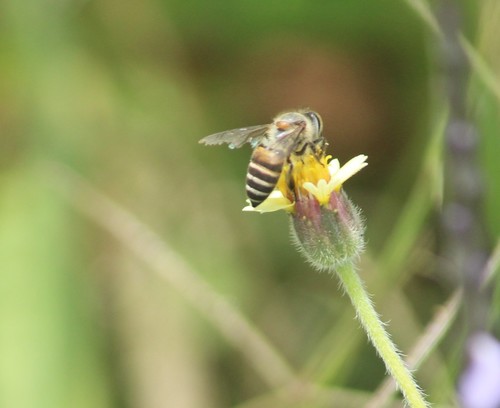
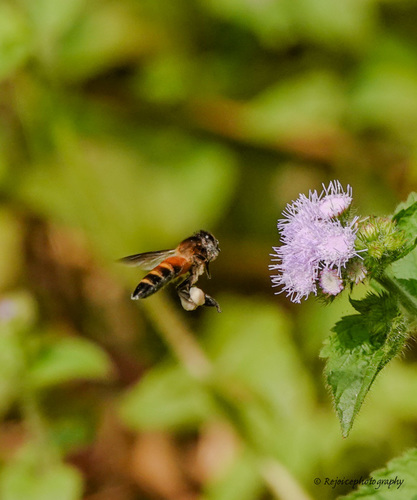
The dwarf honey bee (or red dwarf honey bee), Apis florea, is one of two species of small, wild honey bees of southern and southeastern Asia. It has a much wider distribution than its sister species, Apis andreniformis. First identified in the late 18th century, Apis florea is unique for its morphology, foraging behavior and defensive mechanisms like making a piping noise. Apis florea have open nests and small colonies, which makes them more susceptible to predation than cavity nesters with large numbers of defensive workers. The species is an important pollinator in many parts of its range and its nests are occasionally exploited as a source of wild honey.

Danish zoologist Johan Christian Fabricius first identified Apis florea in 1787. A. florea is a member of the Apis genus. The name Florea is a personal name of Romanian origin. A. florea and its sister species A. andreniformis together form the subclade Micrapis and are the most basal extant species of honey bees, diverging before the two other extant honey bee clades, Megapis (the giant honey bees) and Apis (the eastern and western honey bees and their close relatives). The timing of the Micrapis species... Wikipedia →

Global Distribution

Parks Where Found

# Park Country Daily sighting probability
1 Khao Yai National Park 🇹🇭 Thailand
~10%
2 Kaeng Krachan National Park 🇹🇭 Thailand
~10%

Cities Where Found

# City Country Daily sighting probability
1 Kuwait City 🇰🇼 Kuwait
~60%
2 Davao City 🇵🇭 Philippines
~50%
3 Doha 🇶🇦 Qatar
~50%
4 Manama 🇧🇭 Bahrain
~40%
5 Cairo 🇪🇬 Egypt
~40%
6 Abu Dhabi 🇦🇪 United Arab Emirates
~40%
7 Phnom Penh 🇰🇭 Cambodia
~30%
8 Dubai 🇦🇪 United Arab Emirates
~30%
9 Coimbatore 🇮🇳 India
~30%
10 Ho Chi Minh City 🇻🇳 Vietnam
~20%

Before you go

What are the chances of seeing a Red Dwarf Honey Bee in Guwahati?

With luck

About 10% of wildlife watchers report a Red Dwarf Honey Bee sighting in Guwahati on a given day, based on 5 verified sightings from GBIF citizen-science data. It is the 62nd most-seen of the 77 insects we can rate there. Over three days the chance rises to about 40%, and over a week to about 70%, if each day is a fresh chance.

When is the best time to see a Red Dwarf Honey Bee in Guwahati?

January

In that month about 40% of wildlife watchers report a Red Dwarf Honey Bee in Guwahati on a given day, against under 5% in February–March and May–November, the lowest months. That is one of Guwahati's driest months, with about 5 mm of rain against 370 mm in June.

What time of day is best to see a Red Dwarf Honey Bee?

Between 7 and 10 am

Across all the parks we cover, that three-hour window holds the most Red Dwarf Honey Bee sightings with a recorded time, and about 9 in 10 of them come between 6 am and 6 pm: it is a daytime animal.

Is Guwahati the best place to see a Red Dwarf Honey Bee?

25th of 32

Of the 32 cities where we can rate Red Dwarf Honey Bee sightings, Guwahati ranks 25th at about 10%. The best odds are in Kuwait City (Kuwait, about 60%), Davao City (Philippines, about 50%) and Doha (Qatar, about 50%).

Which relatives of the Red Dwarf Honey Bee live in Guwahati?

Same genus: Apis

The closest relatives of the Red Dwarf Honey Bee that you can see in Guwahati (genus Apis, Honey Bees) are Asian Honey Bee (about 30%) and Giant Honey Bee (about 20%), with each one's daily chance of a sighting.

Where does the Red Dwarf Honey Bee sighting chance come from?

GBIF citizen-science records

It is estimated from how often the Red Dwarf Honey Bee is recorded against all the insects logged in Guwahati (5 verified sightings), calibrated against known sighting rates. Figures are rounded to the nearest 10% because citizen-science data supports honest approximations, not decimals, and months with records from fewer than five people show "—". How it works.

← Back to Guwahati