About the Hope's Stag Beetle
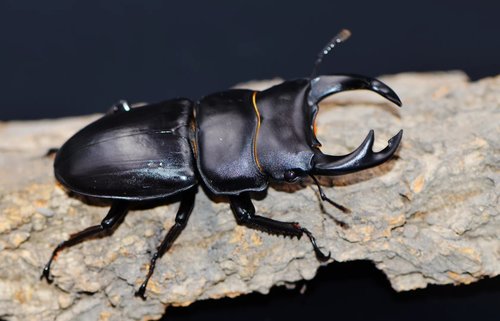
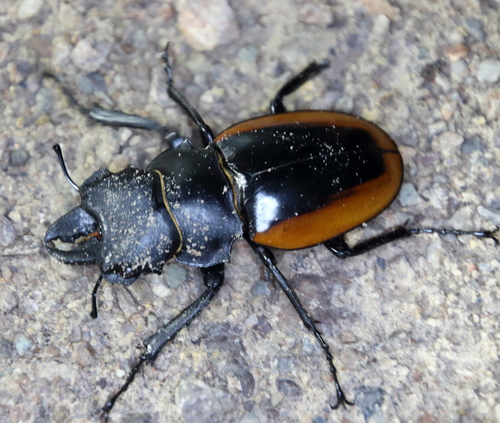
Dorcus hopei is a beetle in the family Lucanidae. The life history of Dorcus hopei is fairly similar to that of all beetles in the Lucanidae family. D. hopei are often in their larval state for around one to two years. D. hopei eggs are laid in decaying wood logs in forests of China, Korea, and Japan. The larvae feed on the decaying wood by utilizing a species of yeast, Pichia, that breaks down the xylose of the rotting wood. The larval stage is unique for its ability to survive the harsh winters of its native range, capable of surviving in temperatures as low as -15°C for 24 hours. This is due to their unique antifreeze proteins, a protein not found in any of their relative Lucanidae and very few insects in general.
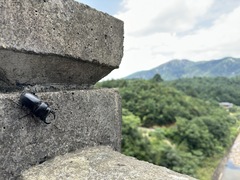
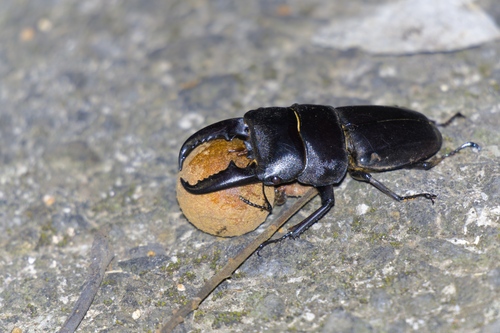
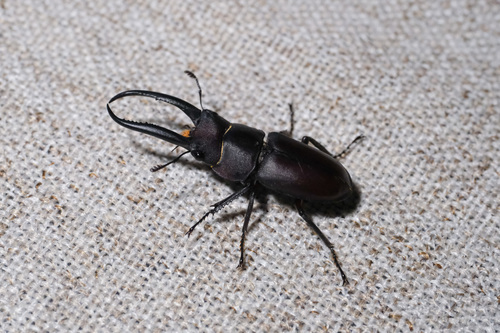
Because of their native range, the D. hopei has developed to overwinter the icy seasons in Japan, Korea, and China. The adults live for around three to five years, often on the grounds of forests. Studies have shown that the males and females often act differently from one another, often as a result of their sexual dimorphism. The males have different mandible sizes, a common trait amongst stag beetles and often use them depending on the size of them, with... Wikipedia →