Cuban Vireo

Cuban Vireo

Vireo gundlachii

Silhouette: Caleb Gordon · PhyloPic

LCLeast ConcernNTVUENCR Endemic
Daily sighting probability ~10% · With luck
at Havana

In 3 days ~20% in a week ~50%

141 Verified sightings at Havana
389 In 1 park From 2019 to 2026
May Best month
☀️ Diurnal When it's spotted

About the Cuban Vireo

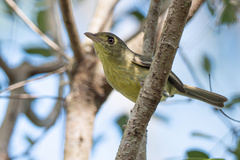
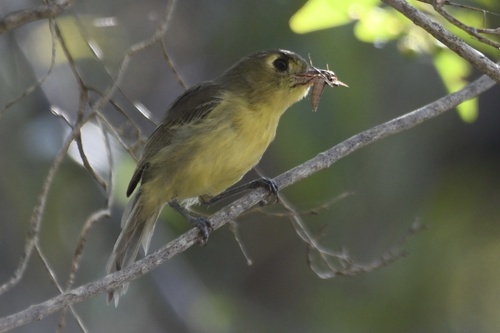
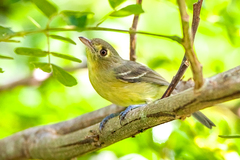
The Cuban vireo (Vireo gundlachii) is a species of bird in the family Vireonidae, the vireos, greenlets, and shrike-babblers. It is endemic to Cuba. The Cuban vireo was originally described in 1850 as Vireo gundlachii, its current binomial. At the time it had several local names including "Petit-bobo", "Juanchiví", and "Ojone". Its specific epithet honors Cuban zoologist Juan Gundlach. Some authors have treated it as a subspecies of the white-eyed vireo (V. griseus).

The Cuban vireo's further taxonomy is unsettled. The IOC, AviList, and BirdLife International's Handbook of the Birds of the World assign it these four subspecies: However, the Clements taxonomy treats it as monotypic. This article follows the four-subspecies model.

The Cuban vireo is about 13 cm (5.1 in) long and weighs about 11 to 15 g (0.39 to 0.53 oz). The sexes have the same plumage. Adults of the nominate subspecies V. g. gundlachii have an olive-gray crown, nape, and ear coverts. They have a yellow or creamy white patch from lores through the eye... Wikipedia →
Sounds

Song0:53

Cuba · 2025

© FREDERIC Lionel · XC994581 · CC BY-NC-SA 4.0

Call1:29

Cuba · 2003

© Johan DM · XC947207 · CC BY-NC-SA 4.0

Song1:26

Cuba · 2021

© Nils Navarro · XC660294 · CC BY-NC-SA 4.0

Global Distribution

Parks Where Found

# Park Country Daily sighting probability
1 Ciénaga de Zapata 🇨🇺 Cuba
~30%

More parks will be added in future updates.

Cities Where Found

# City Country Daily sighting probability
1 Havana 🇨🇺 Cuba
~10%

Before you go

What are the chances of seeing a Cuban Vireo in Havana?

With luck

About 10% of wildlife watchers report a Cuban Vireo sighting in Havana on a given day, based on 141 verified sightings from GBIF citizen-science data. It is the 61st most-seen of the 183 birds we can rate there. Over three days the chance rises to about 20%, and over a week to about 50%, if each day is a fresh chance.

When is the best time to see a Cuban Vireo in Havana?

May

In that month about 20% of wildlife watchers report a Cuban Vireo in Havana on a given day, against under 5% in February, June and November–December, the lowest months.

What time of day is best to see a Cuban Vireo?

Between 8 and 11 am

Across all the parks we cover, that three-hour window holds the most Cuban Vireo sightings with a recorded time, and about 9 in 10 of them come between 6 am and 6 pm: it is a daytime animal.

Where else can you see a Cuban Vireo?

Only Havana, in our data

Havana is the only city on Wallace's Line with enough records to rate Cuban Vireo sightings: about 10% of wildlife watchers there report one on a given day.

Which relatives of the Cuban Vireo live in Havana?

Same genus: Vireo

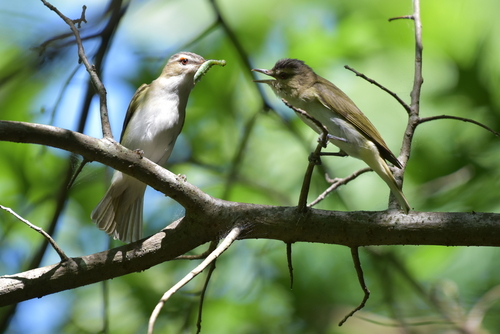
The closest relatives of the Cuban Vireo that you can see in Havana (genus Vireo, Vireos) are Red-eyed Vireo (about 10%), Black-whiskered Vireo (about 10%) and White-eyed Vireo (about 10%), with each one's daily chance of a sighting.

Where does the Cuban Vireo sighting chance come from?

GBIF citizen-science records

It is estimated from how often the Cuban Vireo is recorded against all the birds logged in Havana (141 verified sightings), calibrated against known sighting rates. Figures are rounded to the nearest 10% because citizen-science data supports honest approximations, not decimals, and months with records from fewer than five people show "—". How it works.

← Back to Havana