Pale Feathered Bright

Pale Feathered Bright

Incurvaria pectinea

Daily sighting probability <5% · Rare
at Helsinki

In 3 days ~10% in a week ~20%

5 Verified sightings at Helsinki
May Best month

About the Pale Feathered Bright

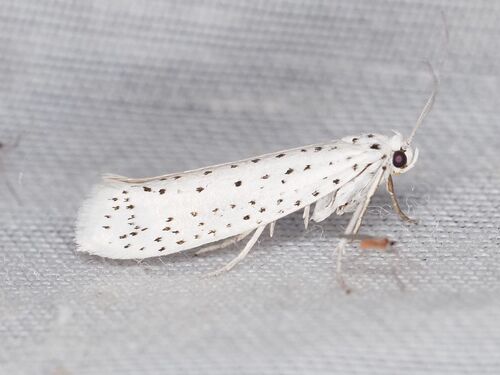
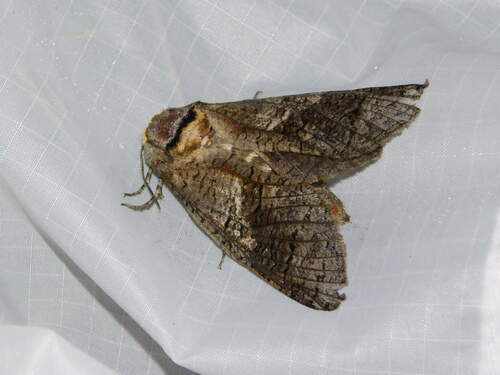
Incurvaria pectinea is a moth of the family Incurvariidae. It is found in Europe. A medium-sized (wingspan 13 – 16 mm), brownish moth. It may resemble several of the other Incurvaria species, but differs from these in that the wings are somewhat narrower, the colour paler and the pale spots at the trailing edge of the forewing less distinct. The male has comb-shaped antennae that are about 2/3 as long as the forewing, the female's antennae are filamentous with protruding hairs and about half as long as the forewing. The head is covered with long, erect, yellowish hair-like scales, and appears rather disheveled. The forewing is rather narrow, pale greyish-brown in colour. At the hind edge it has two light spots, these are not very conspicuous, less evident than in other Incurvaria species. The innermost spot is usually larger than the outermost. Sometimes the spots may be completely missing. The hindwing is greyish-brown with long, greyish-brown hairy fringes. The larva is whitish with a yellowish-brown head and greyish-brown dorsal plates on the three leading body joints. Meyrick describes it - Head pale greyish-ochreous. Forewings shining prismatic fuscous; a yellow-whitish dorsal spot before middle, and an indistinct dot before tornus. Hindwings brassy-grey.

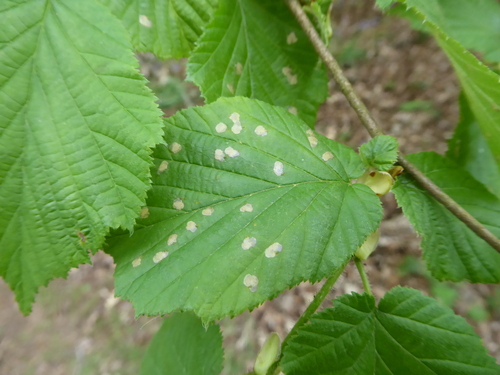
The moth flies from April to May depending on the location. The larvae feed on various deciduous trees, such as birch, hazel and apple.he species can be found almost everywhere where deciduous trees grow. The larvae develop in the leaves. The female lays several eggs on each leaf. The larva begins by creating a small, round spot mine. It then gnaws its way out, makes a casing of leaves and silk, and lowers itself to the ground, where it spends the rest of the larval period and feeds on fallen leaves. The infested leaves may be severely pierced after the larvae have left them. The adult moths fly from late April to early June. Wikipedia →

Global Distribution

Parks Where Found

# Park Country Daily sighting probability

More parks will be added in future updates.

Cities Where Found

# City Country Daily sighting probability
1 Helsinki 🇫🇮 Finland
<5%

Before you go

What are the chances of seeing a Pale Feathered Bright in Helsinki?

Rare

Under 5% of wildlife watchers report a Pale Feathered Bright sighting in Helsinki on a given day, based on 5 verified sightings from GBIF citizen-science data. It is the 732nd most-seen of the 838 insects we can rate there. Over three days the chance rises to about 10%, and over a week to about 20%, if each day is a fresh chance.

When is the best time to see a Pale Feathered Bright in Helsinki?

May

In that month about 10% of wildlife watchers report a Pale Feathered Bright in Helsinki on a given day, against under 5% in June to April, the lowest months.

Where else can you see a Pale Feathered Bright?

Only Helsinki, in our data

Helsinki is the only city on Wallace's Line with enough records to rate Pale Feathered Bright sightings: under 5% of wildlife watchers there report one on a given day.

Which relatives of the Pale Feathered Bright live in Helsinki?

Same order: Lepidoptera

The closest relatives of the Pale Feathered Bright that you can see in Helsinki (order Lepidoptera, Butterflies and Moths) are Red Admiral (about 30%), Small Tortoiseshell (about 30%) and Green-Veined White (about 30%), with each one's daily chance of a sighting.

Where does the Pale Feathered Bright sighting chance come from?

GBIF citizen-science records

It is estimated from how often the Pale Feathered Bright is recorded against all the insects logged in Helsinki (5 verified sightings), calibrated against known sighting rates. Figures are rounded to the nearest 10% because citizen-science data supports honest approximations, not decimals, and months with records from fewer than five people show "—". How it works.

← Back to Helsinki