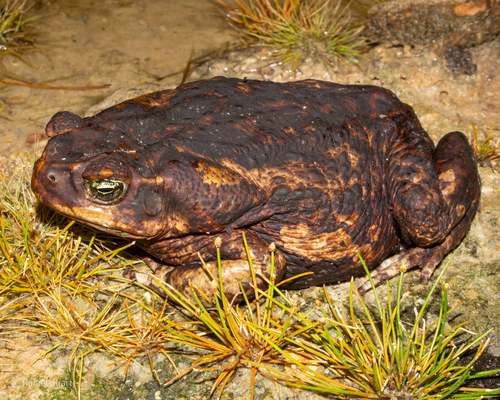
Pernambuco White-lipped Frog

Pernambuco White-lipped Frog

Leptodactylus troglodytes

Silhouette: Jose Carlos Arenas-Monroy · PhyloPic

LCLeast ConcernNTVUENCR Endemic
Daily sighting probability ~20% · Possible
at João Pessoa

In 3 days ~50% in a week ~80%

5 Verified sightings at João Pessoa
June Best month
🌅 Crepuscular When it's spotted

About the Pernambuco White-lipped Frog

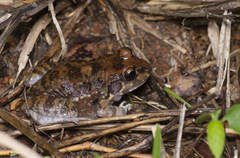
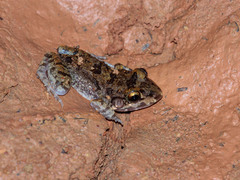
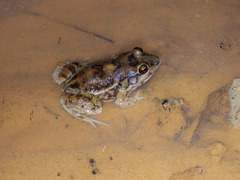
Leptodactylus troglodytes (common names: Pernambuco white-lipped frog, hole-dwelling thin-toed frog, sibilator frog) is a species of frogs in the family Leptodactylidae. It is endemic to northeastern Brazil and occurs from northern Minas Gerais and Bahia to Maranhão, Piauí, Ceará, and Rio Grande do Norte. The specific name, troglodytes, refers to its habit of breeding in underground chambers.

Adult males measure 46–53 mm (1.8–2.1 in) and adult females 45–53 mm (1.8–2.1 in) in snout–vent length. The tympanum is distinct. Males have more acuminate snout than females. Dorsal folds are absent and dorsolateral folds are indistinct or (usually) absent; lateral folds are also absent or interrupted. The belly is uniformly light.

The tadpoles grow to 43 mm (1.7 in) in total length (Gosner stage 36). This species builds foam nests in underground chambers near water. Single tunnel may have multiple chambers. Males are territorial and emit territorial as well as courtship calls, to which the female may reciprocate. Leptodactylus troglodytes is a common species that occurs in dry and moist savanna and agricultural land in the Cerrado... Wikipedia →

Sounds

Recording0:22

Brazil · 2026

© Safira · iNaturalist · CC BY-NC 4.0

Recording0:04

Brazil · 2026

© Davi Alencar · iNaturalist · CC BY-NC 4.0

Recording0:21

Brazil · 2026

© Rafael Lessa · iNaturalist · CC BY-NC 4.0

Global Distribution

Parks Where Found

# Park Country Daily sighting probability

More parks will be added in future updates.

Cities Where Found

# City Country Daily sighting probability
1 João Pessoa 🇧🇷 Brazil
~20%
2 Recife 🇧🇷 Brazil
~20%
3 Fortaleza 🇧🇷 Brazil
~10%

Before you go

What are the chances of seeing a Pernambuco White-lipped Frog in João Pessoa?

Possible

About 20% of wildlife watchers report a Pernambuco White-lipped Frog sighting in João Pessoa on a given day, based on 5 verified sightings from GBIF citizen-science data. Over three days the chance rises to about 50%, and over a week to about 80%, if each day is a fresh chance.

When is the best time to see a Pernambuco White-lipped Frog in João Pessoa?

June

In that month about 40% of wildlife watchers report a Pernambuco White-lipped Frog in João Pessoa on a given day, against under 5% in April, July–August and October–January, the lowest months. That is one of João Pessoa's wettest months, with about 230 mm of rain against 20 mm in November.

What time of day is best to see a Pernambuco White-lipped Frog?

Between 6 and 9 pm

Across all the parks we cover, that three-hour window holds the most Pernambuco White-lipped Frog sightings with a recorded time, and about 6 in 10 of them come between 6 pm and 6 am: it is most active around dawn and dusk.

Is João Pessoa the best place to see a Pernambuco White-lipped Frog?

Yes

Of the 3 cities where we can rate Pernambuco White-lipped Frog sightings, João Pessoa has the highest daily chance: about 20%. Next come Recife (Brazil, about 20%) and Fortaleza (Brazil, about 10%).

Which relatives of the Pernambuco White-lipped Frog live in João Pessoa?

Same order: Anura

The closest relatives of the Pernambuco White-lipped Frog that you can see in João Pessoa (order Anura, Frogs and Toads) are Paraiba Robber Frog (about 30%) and Cururu Toad (about 20%), with each one's daily chance of a sighting.

Where does the Pernambuco White-lipped Frog sighting chance come from?

GBIF citizen-science records

It is estimated from how often the Pernambuco White-lipped Frog is recorded against all the amphibians logged in João Pessoa (5 verified sightings), calibrated against known sighting rates. Figures are rounded to the nearest 10% because citizen-science data supports honest approximations, not decimals, and months with records from fewer than five people show "—". How it works.

← Back to João Pessoa