Brown Tussock Moth

Brown Tussock Moth

Olene mendosa

Daily sighting probability ~10% · With luck
at Kaohsiung

In 3 days ~30% in a week ~50%

23 Verified sightings at Kaohsiung
60 In all 2 parks From 2019 to 2026
January Best month
☀️ Diurnal When it's spotted

About the Brown Tussock Moth

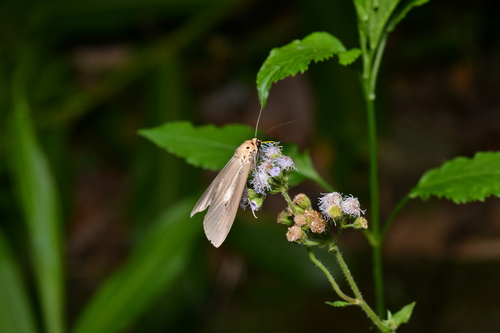
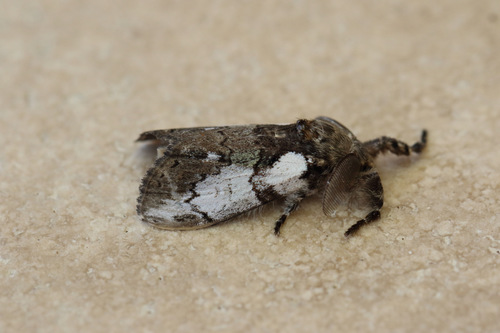
Olene mendosa, the brown tussock moth or hairy tussock moth, is a species of moth in the family Erebidae. The species was first described by Jacob Hübner in 1823. It is found in India, Bangladesh, Sri Lanka, Indonesia, Taiwan, Thailand and Australia.

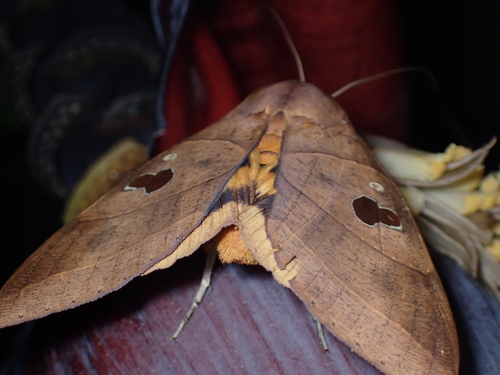
Sexes show dimorphism with variable colour morphs. The wingspan of the female is about 46–54 mm, whereas the male's is about 30–40 mm. The adult male has two morphs. The common form is smoke brown with uniformly brown forewings and pale greyish hindwings. In the forewing, black specks and a pale patch outside the subbasal line can be seen.

The adult female also has two forms with an areole on each forewing and they lack the white colored portions on forewings which is found on male. The common form has an irregular longitudinal dark brown zone in the center of forewing. The more rare form has pale colours. The underside of the wings are similar in both sexes with less pronounced markings.

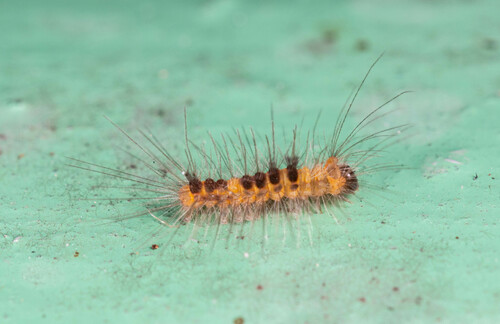
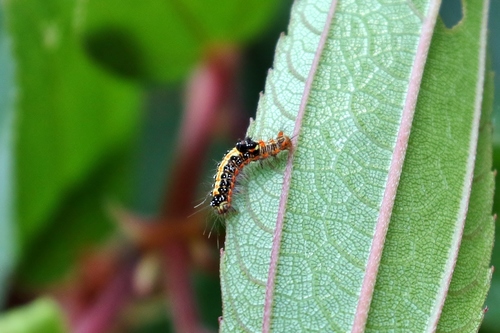
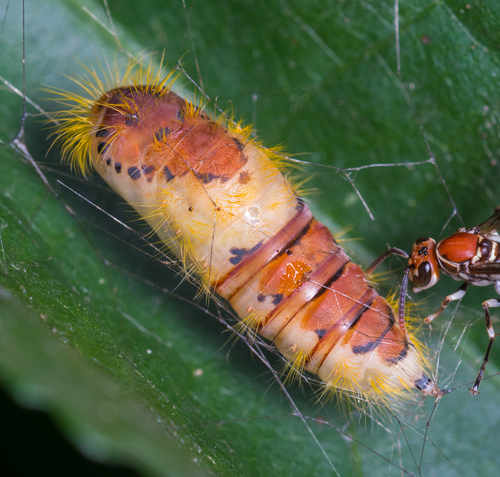
The full-grown caterpillar is 38–44 mm long. It is hairy with four white or brown dorsal tussocks. It is greyish brown with a crimson-reddish head, legs and prolegs. Head with red stripes found on full-grown caterpillar. Pupation occurs... Wikipedia →
Global Distribution

Parks Where Found

# Park Country Daily sighting probability
1 Taroko National Park 🇹🇼 Taiwan
~30%
2 Kanha National Park 🇮🇳 India
~20%

Cities Where Found

# City Country Daily sighting probability
1 Yangon 🇲🇲 Myanmar
~20%
2 Taichung 🇹🇼 Taiwan
~10%
3 Taipei 🇹🇼 Taiwan
~10%
4 Colombo [Sri Jayawardenepura Kotte] 🇱🇰 Sri Lanka
~10%
5 Tainan 🇹🇼 Taiwan
~10%
6 Kaohsiung 🇹🇼 Taiwan
~10%
7 Kochi 🇮🇳 India
~10%
8 Hyderabad 🇮🇳 India
~10%
9 Bengaluru 🇮🇳 India
~10%
10 Mumbai 🇮🇳 India
~10%

Before you go

What are the chances of seeing a Brown Tussock Moth in Kaohsiung?

With luck

About 10% of wildlife watchers report a Brown Tussock Moth sighting in Kaohsiung on a given day, based on 23 verified sightings from GBIF citizen-science data. It is the 68th most-seen of the 218 insects we can rate there. Over three days the chance rises to about 30%, and over a week to about 50%, if each day is a fresh chance.

When is the best time to see a Brown Tussock Moth in Kaohsiung?

January

In that month about 20% of wildlife watchers report a Brown Tussock Moth in Kaohsiung on a given day, against about 10% in February to December, the lowest months. That is one of Kaohsiung's driest months, with about 35 mm of rain against 440 mm in August.

What time of day is best to see a Brown Tussock Moth?

Between 8 and 11 am

Across all the parks we cover, that three-hour window holds the most Brown Tussock Moth sightings with a recorded time, and about 9 in 10 of them come between 6 am and 6 pm: it is a daytime animal.

Is Kaohsiung the best place to see a Brown Tussock Moth?

6th of 15

Of the 15 cities where we can rate Brown Tussock Moth sightings, Kaohsiung ranks 6th at about 10%. The best odds are in Yangon (Myanmar, about 20%), Taichung (Taiwan, about 10%) and Taipei (Taiwan, about 10%).

Which relatives of the Brown Tussock Moth live in Kaohsiung?

Same family: Erebidae

The closest relatives of the Brown Tussock Moth that you can see in Kaohsiung (family Erebidae, Underwing, Tiger, Tussock, and Allied Moths) are Asota heliconia (about 10%), Cocoa Tussock Moth (about 10%) and Taiwan Yellow Tussock Moth (about 10%), with each one's daily chance of a sighting.

Where does the Brown Tussock Moth sighting chance come from?

GBIF citizen-science records

It is estimated from how often the Brown Tussock Moth is recorded against all the insects logged in Kaohsiung (23 verified sightings), calibrated against known sighting rates. Figures are rounded to the nearest 10% because citizen-science data supports honest approximations, not decimals, and months with records from fewer than five people show "—". How it works.

← Back to Kaohsiung