About the Willow Rose Gall Midge
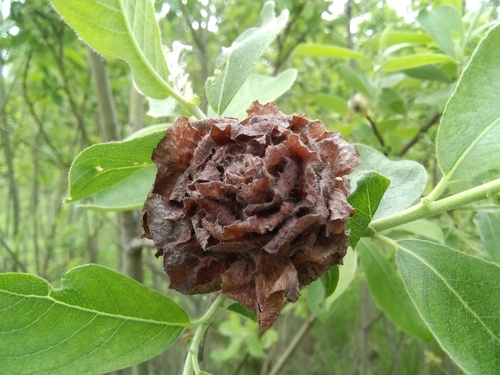
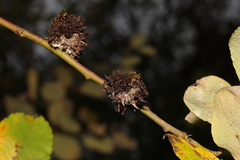
Rabdophaga rosaria is a gall midge which forms Camellia galls or terminal rosette gall on willow species. It was first described by Hermann Loew in 1850. Willows are extremely susceptible to gall induction and growth manipulation and Salix is one of the plant genera with the highest known numbers of associated galler species.
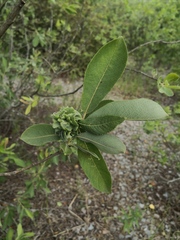
Rabdophaga rosaria is probably a group of closely related, unnamed species, possibly each restricted to one species of willow. Galls should be recorded as R rosaria and the host plant should also be recorded. The gall consists of from thirty to sixty leaves, shortened and crowded together in rosettes on white willow (S. alba), crack willow (S. fragilis), goat willow (S. caprea) and purple willow (S. purpurea) willows as well as the eared sallow (S. aurita) and grey sallow (S. cinerea). The oviposition of this species results in a chemical interaction that halts the lengthwise growth of infected willow shoots, the leaves however continue to develop and thus the characteristic "rose" forms at the tip of the affected shoot.
Rabdophaga rosaria is found on willow branches and the gall diameter depends upon the species, being... Wikipedia →